Manufacturers today are under constant pressure. Customer demand shifts overnight, global supply chains remain fragile, and holding large inventories ties up capital while adding risk. Traditional large-scale production is designed for stable, predictable markets—but struggles to keep pace.
That’s why on‑demand manufacturing is gaining momentum. According to a recent market report by Valuates, the global on-demand manufacturing service market was valued at approximately USD 5.97 billion in 2024 and is projected to reach USD 16.68 billion by 2031, with a strong CAGR of around 15.2%.
In this guide, you’ll discover how on‑demand manufacturing works, from initial prototype to scaled production. It’s strategic advantages, potential constraints, and the emerging trends defining its future.
What Is On-demand Manufacturing?
In manufacturing, long lead times and high minimum order quantities often slow down product launches and tie up working capital. Many companies face this challenge during prototype development or low-volume production: traditional supply chains may take weeks or even months to deliver, while suppliers frequently impose large minimum orders, leading to excess inventory and financial strain.
On-demand manufacturing has gained attention as a solution to these pain points. By integrating design, quoting, process selection, and production through digital platforms, it enables companies to move from prototype validation to small-batch production within shorter timelines. More importantly, this approach does not rely on large-scale production to control costs. Instead, it uses flexible capacity allocation to handle diverse, low-volume demands, helping manufacturers reduce both inventory risk and the impact of market uncertainty.
From Prototyping to Production: How the Process Works
When you adopt on-demand manufacturing, the entire workflow is designed to help you move from design validation to production without losing time or overcommitting resources. Instead of treating prototyping and production as separate stages with different suppliers, this model integrates them into one continuous process.
It usually starts with digital design and automated DFM analysis. Once you upload a CAD file, the system runs manufacturability checks—wall thickness, tolerances, undercuts—and provides real-time feedback. You get instant cost estimates and lead times based on the geometry, material, and process requirements. This upfront clarity prevents costly surprises later.
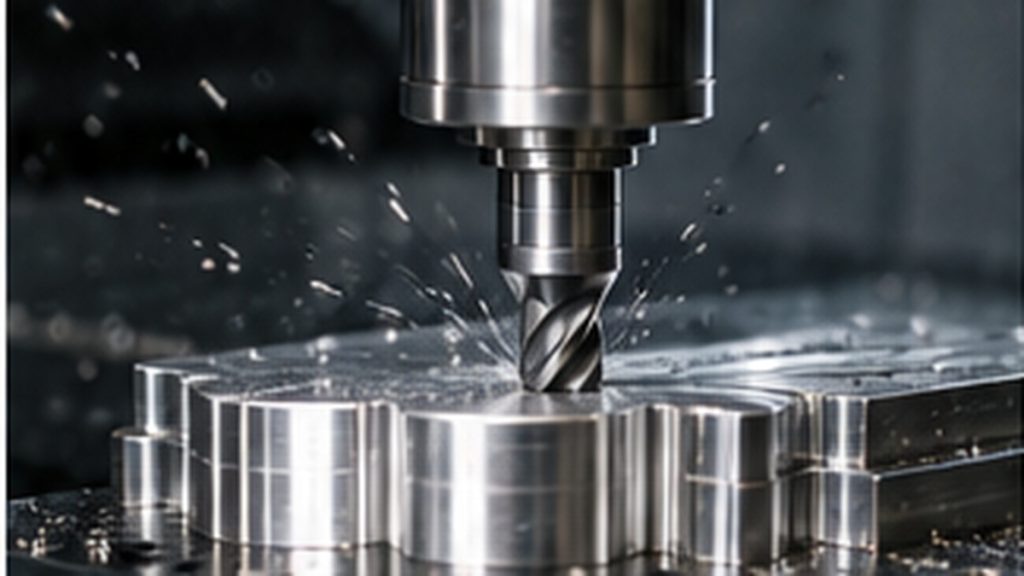
Next comes the prototype phase. For early iterations where speed matters more than unit cost, 3D printing or CNC machining delivers functional parts in days, not weeks. Many engineering teams use this stage to test designs under real operating conditions before locking in specifications.
Once your design is stable, the system can switch to low-volume production methods like vacuum casting or rapid injection molding. These processes handle batch sizes in the hundreds, keeping tooling costs low while ensuring consistent quality across parts.
Finally, if demand grows, you can transition to traditional injection molding, sheet metal fabrication, or hybrid manufacturing solutions without moving to a different supplier. The same platform scales with your needs, so you maintain a single supply chain from prototype to full production.
Here’s a simple way to view the progression:
| Stage | Typical Volume | Preferred Processes | Typical Lead Time |
| Prototyping | 1–10 units | 3D Printing, CNC Machining | 1–3 days |
| Design Validation | 10–100 units | CNC Machining, Vacuum Casting | 3–7 days |
| Low-Volume Production | 100–1000 units | Rapid Injection Molding, Sheet Metal | 1–2 weeks |
| Transition to Full Scale | 1000+ units | Injection Molding, Hybrid Solutions | 2–4 weeks |
This staged approach means you can align manufacturing methods with real demand instead of forecasts—reducing both lead times and financial risk.
Key Advantages of On-Demand Manufacturing

When you look at on-demand manufacturing from a business perspective, its real value isn’t just about making parts faster—it’s about how it reshapes your entire product development cycle.
- Faster product iterations: The first thing you’ll notice is speed. Instead of waiting six or eight weeks for tooling before you can test a single part, you can get functional prototypes in a matter of days. One of our clients in the automotive sector recently cut their design validation phase by almost 40% because they could print prototypes, test them, tweak the CAD model, and reorder improved versions within the same month. That kind of turnaround simply isn’t possible with traditional production workflows.
- Lower inventory risk: Cost control is another area where the benefits become obvious. Producing parts only when you need them keeps you from tying up capital in inventory that might sit in a warehouse for months. Or worse, become obsolete if the design changes. We’ve seen electronics manufacturers reduce their inventory carrying costs by double digits because they no longer build thousands of units just to hit a supplier’s minimum order quantity.
- Design flexibility at every stage: On-demand production also gives you design flexibility that high-volume manufacturing can’t match. If you discover a design flaw after shipping your first batch, you don’t have to scrap expensive tooling. You adjust the CAD model, upload the new file, and the next production run reflects the change immediately. Medical device companies, where every iteration must meet strict compliance requirements, have used this model to keep projects moving without waiting months for new molds or fixtures.
- Greater supply chain resilience: Finally, there’s the matter of supply chain resilience. Distributed manufacturing networks mean production can happen closer to where parts are needed. During recent global supply chain disruptions, several aerospace firms used on-demand platforms to produce components regionally, cutting lead times in half and avoiding the shipping delays that grounded competitors still relying on centralized production.
Taken together, these advantages explain why on-demand manufacturing isn’t just a stopgap solution for prototypes—it’s becoming a core strategy for companies facing rapid product cycles and unpredictable demand.
Limitations and Challenges You Should Know

While on-demand manufacturing solves many pain points, it isn’t a silver bullet for every situation. There are practical limits you need to consider before shifting your entire production strategy.
First, unit cost at high volumes remains the biggest trade-off. On-demand platforms excel at small or medium batches, but as you scale into tens of thousands of parts, the per-unit cost rises sharply compared to traditional mass production. Tooling investments for injection molding or die casting start to pay off at those volumes, making conventional methods more economical.
Second, process capabilities and material options can be narrower than in established manufacturing ecosystems. Not every on-demand supplier supports high-performance polymers, advanced surface finishes, or tight-tolerance machining. If your product demands aerospace-grade alloys or medical-grade certifications, you may find fewer options or longer lead times on these platforms.
Third, lead times still depend on external supply chains. The digital workflow shortens quoting and scheduling, but raw material shortages, regional capacity limits, or logistics delays can still disrupt delivery—especially if you source from multiple countries.
Finally, design changes and quality control require discipline. Rapid iteration is a strength, but if engineering teams push frequent design revisions without clear version control, you risk inconsistent parts across batches. Similarly, while many platforms integrate digital inspection reports, complex geometries or regulated components may still need offline verification before full-scale deployment.
On-demand vs Traditional Manufacturing: A Practical Comparison
When you’re deciding between on-demand manufacturing and traditional mass production, the choice usually comes down to three things: cost per part, lead time, and production flexibility. Both models have strengths, but the tipping point shifts as order volumes grow.
Cost and Production Scale
At low volumes, on-demand manufacturing often wins. You avoid tooling costs and can produce only what you need. But as volumes rise into the thousands, the economics change. Traditional production spreads tooling investment across more parts, so the per-unit cost drops below on-demand methods beyond a certain point.
| Factor | On-demand Manufacturing | Traditional Manufacturing |
| Initial Tooling Cost | Low or None (e.g., 3D printing, CNC) | High (e.g., $20,000–$50,000 for injection molds) |
| Lead Time | Days to Weeks | Weeks to Months |
| Flexibility | High — easy design changes between batches | Low — design changes require new tooling |
| Inventory Model | Produce on demand, minimal storage | Mass production, higher storage costs |
| Unit Cost at Scale | Higher at 1,000+ units | Lower at 1,000+ units |
Economic Crossover Point
From what we’ve seen in real projects, here’s how the cost curve behaves:
- Under 1,000 units: On-demand almost always costs less because there’s no tooling investment.
- 1,000–5,000 units: The decision depends on design stability and inventory risk. If your design is still evolving, on-demand flexibility may outweigh per-unit cost savings.
- 5,000+ units: Traditional manufacturing usually wins on cost per part — unless downtime risk or design changes justify the premium for on-demand production.
Flexibility vs. Efficiency
On-demand shines when you need design agility or distributed production close to end users. Traditional manufacturing excels when volumes are predictable, designs are frozen, and cost-per-unit dominates decision-making.
Real-world Applications Across Industries
Different industries face very different bottlenecks—downtime costs, strict compliance rules, rapid design iteration cycles, and on-demand models solve these pain points in measurable ways.
Aerospace: Cutting AOG Downtime
In aerospace, Aircraft on Ground (AOG) situations cost airlines tens of thousands of dollars per day. With on-demand manufacturing, carriers keep digital part libraries instead of physical inventory. When a component fails, they send the CAD file to a certified partner who prints and delivers it within days. Several European airlines report AOG downtime reductions of 30–40% after adopting this model, mainly because parts are produced only when needed and shipped directly to the airport.

Automotive & New Energy Vehicles: Faster Prototypes, Lower Risk
Automotive R&D cycles are shrinking fast, especially for EV startups competing on time-to-market. We’ve seen manufacturers run 500-unit pilot builds using rapid injection molding before investing in full-scale tooling. This approach cut design validation time by 6–8 weeks and avoided costly tooling changes when late-stage design tweaks were needed. Once the design stabilized, production scaled without repeating the entire sourcing process.

Medical Devices: Personalization Meets Compliance
In medical industry, surgeons now expect patient-specific instruments rather than one-size-fits-all solutions. On-demand 3D printing supports this need while integrating digital traceability—UDI labels, sterilization records, and ISO 13485 compliance steps—directly into the workflow. One orthopedic device maker reduced pre-surgery planning time by 60% while meeting all regulatory documentation requirements by using a single on-demand platform instead of multiple vendors.

Industrial Equipment & Energy: Serving Remote Locations
Mining sites, wind farms, and offshore oil rigs often wait weeks for spare parts shipped from centralized warehouses. On-demand hubs near these locations now produce low-volume replacement parts locally. A mining company in Western Australia reported a 40% drop in equipment downtime after switching to regional on-demand manufacturing centers for hydraulic fittings and pump components.
Cost Considerations and ROI Analysis

When you start looking at on-demand manufacturing seriously, cost is always the big question. You want to know when it actually saves you money and when it doesn’t. The answer usually depends on three factors: tooling investment, per-unit cost at different volumes, and the hidden costs of inventory or downtime.
Tooling costs vs. unit economics
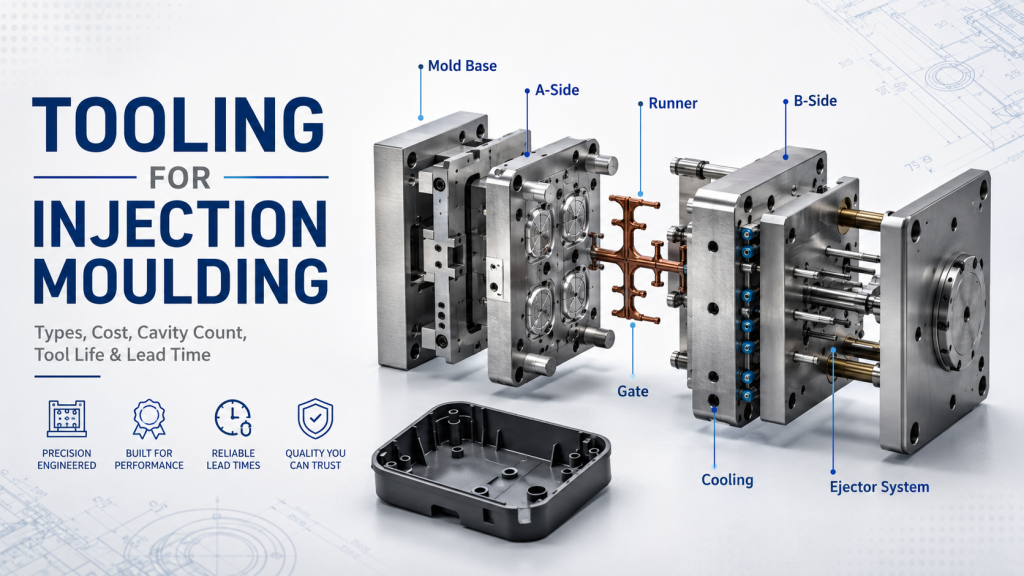
With traditional injection molding, your first dollars go into tooling. A single mold might cost $10,000 or more before you even make one part. Spread that cost over 100,000 units, and the per-part cost drops close to zero. But if you only need 500 parts for a pilot run? That mold cost never pays itself back. On-demand manufacturing skips tooling entirely, so at low volumes it often wins by a wide margin.
The crossover point matters
For most parts we’ve analyzed, on-demand production stays cheaper until somewhere between 1,500 and 3,000 units. Below that, you save money because you aren’t paying for unused inventory or idle machines. Above that, traditional production takes over because the mold cost gets spread across enough parts to make it worthwhile.
Inventory and downtime costs change the math
Per-part cost isn’t the whole story. Inventory carrying costs—storage, insurance, obsolescence—add 20–30% a year for some companies. Downtime is even worse: if a production line sits idle waiting for a new batch of parts, the lost revenue can outweigh any savings from cheaper per-part costs. We’ve seen manufacturers stick with on-demand production even at 5,000 units per year because avoiding a single day of downtime saved them more than switching to traditional production would have.
The ROI lens: When you put all of this together—tooling, inventory risk, downtime—the right question isn’t “Which method is cheaper?” but “At what volume does each method make sense?” On-demand wins when you need speed, flexibility, or risk reduction. Traditional manufacturing wins when volumes are high, designs are stable, and you can afford to wait for tooling lead times.
Future Trends in On-demand Manufacturing
If you look ahead five years, on-demand manufacturing won’t just be about producing parts faster. It will be about creating a fully connected, data-driven production ecosystem. Here’s where things are headed:
1. Digital supply chains with distributed production hubs
Instead of routing every order through a single facility, companies are building regional production networks linked by cloud platforms. Your CAD file might be automatically routed to the closest or most cost-efficient site, cutting both lead times and logistics costs.
2. AI-driven process optimization
AI tools are moving beyond quoting and into real-time production decisions. We’re already seeing machine learning models predict part quality, schedule jobs across multiple plants, and even suggest design tweaks before printing or machining starts. For you, this means fewer delays and less waste.
3. Sustainability and carbon tracking
Future platforms will embed energy-use and carbon-footprint data directly into the quoting process. You’ll be able to choose not just the fastest or cheapest option but also the lowest-emission supplier—something already influencing procurement in aerospace and consumer electronics.
4. Hybrid manufacturing models
The line between additive and traditional manufacturing will blur. We expect to see workflows where 3D printing handles low-volume or custom parts, while CNC or injection molding takes over as volumes climb—without you needing to switch suppliers or redesign the entire process.
Common Misconceptions and Pitfalls
On-demand manufacturing solves real problems, but it isn’t a magic bullet. We’ve seen companies make the same mistakes when adopting it, often because they expect too much or use it in the wrong scenarios.
- Assuming it’s always cheaper: At low volumes, on-demand often beats traditional methods because you avoid tooling costs and long lead times. But as volumes scale, the per-part cost eventually favors conventional production. If you ignore this crossover point, you might end up paying far more per unit than necessary.
- Overlooking production limits: Not every material, tolerance, or surface finish works well in an on-demand setup. Some companies push for aerospace-grade precision on parts meant for prototype validation, only to face delays or higher costs when the platform isn’t built for that level of complexity. Matching your part requirements to the right process is critical.
- Relying on one technology for everything: Because 3D printing gets the headlines, teams sometimes assume it’s the default choice for all on-demand needs. In reality, CNC machining, sheet metal fabrication, or rapid injection molding often deliver better results for strength, accuracy, or cost—especially beyond the prototype stage. Using the wrong process can limit both part quality and scalability.
Conclusion: Making On-Demand Manufacturing Work for You
When should you switch to traditional manufacturing?
The smartest approach we’ve seen is running a clear cost-per-unit and lead-time comparison early in the planning stage. That analysis reveals whether on-demand or traditional production fits your needs today—and when to switch later as demand grows.
Start with a design feasibility review or request a fast quote from our team. We’ll help you model costs, lead times, and risk factors so you can make the right decision before production starts.