Rapid Prototyping Services
Bring your ideas to life with our on-demand rapid prototyping services online. It’s the best way to see, touch, and examine your design in real life, make changes, and ensure your design is perfect before going to market.
- Fast Turnaround: Design to sample in just 5 days
- Free DFM Support
- CTQ Checks & Inspection Options (Reports available on request)
- All uploads are secure and confidential
Rapid Prototyping with Kemal
At Kemal, we support plastic and metal prototypes through CNC machining, 3D printing, vacuum casting, and rapid tooling.
Our engineers review your model for manufacturability, flag tolerance and feature risks, and propose practical adjustments. For critical interfaces, we define datums and CTQ checks so prototype results carry cleanly into pilot builds and later production.
Type of Rapid Prototyping
Rapid Prototype Manufacturing Capabilities
With Kemal’s rapid prototyping services online, getting physical prototypes of your product design in your hands has never been easier. As a leading rapid prototyping company, we offer a range of machining options, as well as consulting and post-production services.
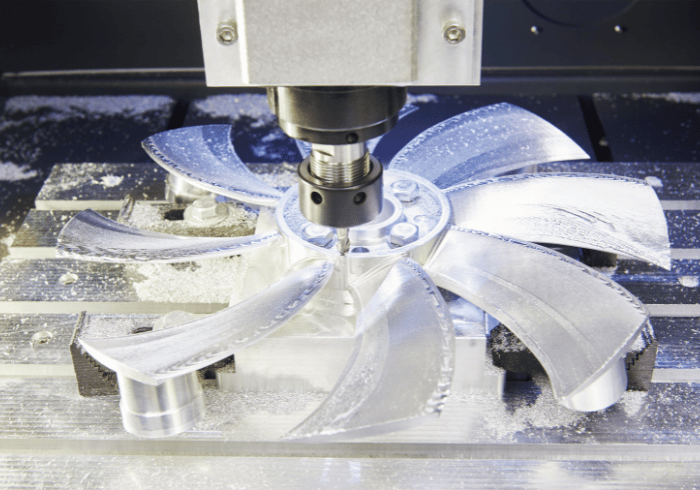
We use the latest CNC machining technology to produce spot-on prototypes in as short a time as possible.
From custom prototyping to on-demand sheet metal parts production, we offer low-cost solutions for whatever you need.
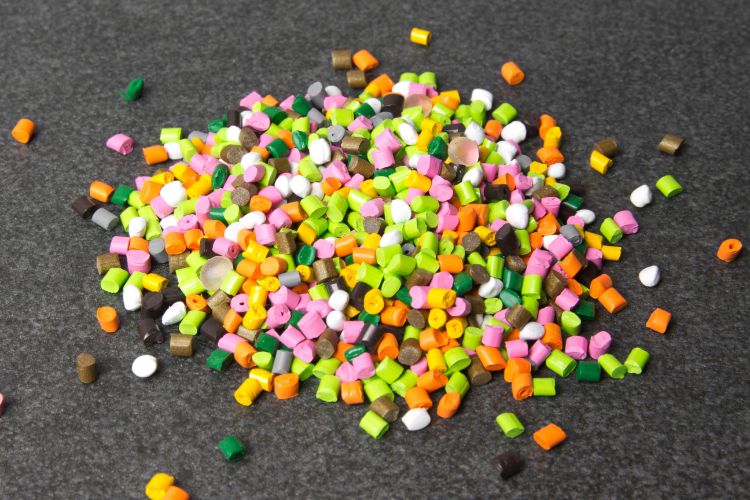
We provide 3D printing rapid prototyping services for fast plastic and metal prototypes at a low cost.
We offer reliable vacuum casting for prototypes and low-volume production of highly detailed elastomer parts.
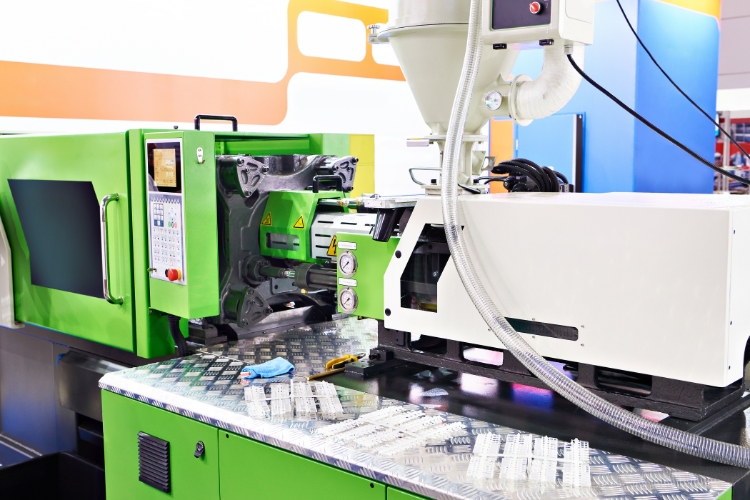
Rapid Injection Molding Prototyping quickly produces functional prototypes using fast-made molds and the injection molding process.
Rapid Prototyping Technical Specifications
Rapid CNC Prototyping | Detailed Technical Specifications |
Machining Processes | Offers high-precision 3-axis, 4-axis, and 5-axis milling, as well as precision turning to meet diverse production needs. |
Material Selection | A wide range of materials available, including aluminum alloys, titanium alloys, stainless steel, and plastics, with custom material options. |
Surface Finishing | A variety of surface treatment options such as bead blasting, polishing, electroplating, anodizing, etc., to achieve different aesthetic and functional requirements. |
Tolerance Precision | Tolerances as tight as +/- 0.0008″ (0.020mm) to meet strict design and manufacturing standards. |
Minimum Order Amount | No MOQ! Our “No Minimum Order Quantity” policy keeps initial costs as low as possible. |
Lead Time | We ensure delivery within 5 to 15 days, providing a quick response to customer needs and enabling early testing and production phases. |
Why Choose Us for Rapid Prototyping Services Online
In today’s highly competitive market, quickly transforming ideas into tangible products is crucial. Whether developing new concepts or refining existing designs, rapid prototyping is key to accelerating the development process. Kemal specializes in providing you high-quality, fast, precise, and flexible prototyping services.
No MOQ
No order is too small. Our “No Minimum Order Quantity” policy keeps initial costs as low as possible.
Consistent High Quality
We hold quality control certifications and have a rigorous inspection process to ensure error-free prototypes.
Strong Manufacturing Capabilities
We’re a one-stop machining solution! From prototypes to final full-scale production, we can help.
Fast Lead Time
You’ll get your prototype in 7 to 10 days, thanks to our advanced equipment and highly qualified staff.
Warranty & After-Sales
Enjoy peace of mind with after-sales troubleshooting and a rock-solid warranty.
24/7 Engineering Support
Our engineering support is ready to help you select the right materials, finishes, and tooling for your project.
Our Rapid Prototype Manufacturing Order Process
From quotation to final production, our order process is easy and seamless. Here’s how it works.

Upload a CAD File
Send us your design details and specs. We’ll send you an (almost) instant quote so you can plan your budget.

Confirm Surface, Material and etc.
Our Team Will Confirm Surface, Material With customer, and quote to customer base on the information provided.

Manufacturing Begins
Once we get your approval, we’ll start the manufacturing process.

Parts are Shipped!
Depending on the complexity of your order, we’ll send your prototype within 7 to 10 days.
If your file format is not listed, feel free to contact our customer service team, and we will assist you with the conversion.
Rapid Prototyping Materials We Offer
We source more than 60 materials for your rapid prototyping needs, including both plastic and metal. If we don’t have what you need, we’ll find it for you.
Aluminum
High strength makes aluminum perfect for fast, accurate prototypes.
Excellent choice for CNC machining and casting.
Copper
Perfect for complex prototypes thanks to its flexibility.
Creates heat- and corrosion-resistant parts.
Brass
Durable enough to withstand chemical damage and climate stress.
Often used in electronic and automotive parts.
Stainless Steel
Resistant to corrosion and extremely strong.
Great choice for machining, welding, and various surface textures.
PLA
Low melting point, easy to print and mold, ideal for 3D printing.
Suitable for the rapid creation of low-strength prototypes, such as concept validation and visual design representation.
ABS
Excellent durability and high strength, ideal for producing robust parts.
Commonly used in creating mechanical parts that require strength and durability.
Nylon
Superior abrasion resistance and great tensile strength.
Ideal for creating long-lasting, functional prototypes that need to perform under stress. Often used for parts such as gears, bushings, and other components that require wear resistance and durability.
Resin
Resin offers a smooth, high-quality finish, making it ideal for detailed models.
Primarily used in SLA (Stereolithography) and DLP (Digital Light Processing) 3D printing. Manufacturing highly accurate and detailed parts.
Plastic (PC & PP)
Excellent strength and flexibility, resistance to chemicals, moisture, and temperature variations.
Ideal for parts that need to withstand stress and impact.
- We can source any other material on request, but quotes take up to 48 hours. 50+ metals and plastics.
Rapid Prototyping for Plastic & Metal Parts
Plastic Rapid Prototyping
Fast plastic prototypes for appearance, fit, and functional validation.
Metal Prototyping Services
Machined and 3D printed metal prototypes for strength, thermal performance, and critical interfaces.
Types of Rapid Prototype
We’ve been producing excellent prototypes and providing cost-effective solutions across industries since 1995. Here’s a sneak peek at what we can do for you.
Concept Model
- Represents the initial design concept Not a functional model
- Not a functional model
Display Prototype
Smaller, partly functional prototype that displays the USPs of the final product.
Functional Prototype
Fully functioning, made to test the final product’s functionality and resistance
Pre-production prototype
Display the final design in full functionality to ensure it is optimized for mass production.
Industry Application of Rapid Prototyping Process
Rapid prototyping processes offer innovative, cost-effective solutions for both prototyping and production parts across a wide range of industries. With over 20 years of experience in the 3D printing industry, Kemal has successfully delivered millions of custom parts and prototypes to clients across sectors such as aerospace, automotive, medical, and more.
- Rapid prototyping is employed to create lightweight, complex parts with high precision.
- It helps in testing prototypes of engine components, interior parts, and structural elements.
- Utilized to create custom prosthetics, implants, surgical instruments, and medical devices.
- Helps in producing patient-specific solutions and reducing time in medical device development.
- Used for designing and testing car parts, tools, and fixtures.
- Allows for quick iterations of components, improving design and reducing time to market.
- Used for developing prototypes of gadgets, electronic devices, and components like casings and internal structures.
- Enables faster product cycles and adjustments based on user feedback.
Happy Customers We’ve Worked With
Kemal has had the privilege of working with some of the biggest brands in the world. If they trust us, you know you can too. You could be next!
FAQ's
How much does rapid prototyping cost?
Rapid prototyping cost varies by part size, geometry, material, quantity, tolerance, and finishing.
3D Printing (SLA/SLS/FDM): typically $50–$500+ for small parts; larger or high-detail builds cost more.
Plastic CNC Machining: often $100–$1,000+ per part depending on machining time and tolerance requirements.
Vacuum Casting: usually includes a silicone mold fee (often a few hundred to ~1,000+) plus per-part cost, so total projects commonly land in the hundreds to a few thousand range.
Rapid Tooling Injection Molding: typically requires a prototype aluminum mold (often ~$2,000–$5,000+) plus per-part pricing; best when you need production-like material behavior or small batches.
To get an accurate quote, upload your CAD (STEP/IGES) and share target material, quantity, and any critical tolerances/finish requirements. We’ll recommend the most cost-effective route and confirm price and lead time.
Differences between 3D printing and CNC machining — how do I choose?
In practice, the right choice depends on what you need the prototype to validate.
If the primary goal is speed and geometry validation—such as checking overall envelope size, ergonomics, or complex internal shapes—3D printing is usually the fastest option. It supports rapid iteration and complex geometries with minimal setup. The trade-off is that dimensional accuracy, surface finish, and material properties are process-dependent, and the printed material may not fully represent the final production-grade plastic.
If the goal is fit and functional verification on critical interfaces—including hole locations, mating faces, sealing lands, bearing seats, snap features, or other CTQ dimensions—CNC machining is typically the safer choice. In these cases, CNC milling is commonly used to control flat datums, pockets, and tight positional tolerances. Because the part is cut from real engineering plastics (such as ABS, PC, PA, POM, or PP), dimensional control, datum integrity, and repeatability are much closer to production intent. This is critical when the prototype must assemble correctly and reflect real-world functional behavior.
A practical rule of thumb we use internally:
– Does the prototype need to assemble and pass a dimensional or functional check? → CNC machining
– Does the prototype mainly need to validate geometry quickly? → 3D printing
If you’re unsure, share your CAD along with (1) target material, (2) quantity, and (3) which features are CTQ. We’ll recommend the most cost-effective process—and, when appropriate, quote both options so you can balance speed against functional fidelity.
Can rapid prototyping be used for final product manufacturing?
Sometimes. For low volumes, CNC (engineering plastics) or certain 3D printing processes can produce end-use parts. When you need production-like material behavior and repeatability for small batches, rapid tooling injection molding is usually the best bridge-to-production route. Share your material, operating conditions, and quantity—we’ll recommend the right process and quote accordingly.
Can Rapid Prototyping Be Integrated with Later Production Processes?
Yes. We plan rapid prototyping with manufacturing intent, so the work you do in prototype builds carries forward into pilot runs and production instead of being “one-off” samples.
In practice, the transition usually follows one of these paths:
Prototype (fast iterations): 3D printing or quick CNC to validate geometry, assembly, and design risks.
Pilot / bridge production (small batches): CNC for functional parts in engineering plastics, vacuum casting for cosmetic short runs, or rapid tooling injection molding when you need production-like material behavior and repeatability.
Production: full-scale tooling/molding or a stable machining process with defined datums, tolerances, and inspection requirements.
To keep the transition smooth, we carry over the same fundamentals across stages—datums and CTQ features, tolerance strategy, surface/texture requirements, and an agreed inspection plan. If you share your expected ramp volume and target material early, we can recommend a prototype route that minimizes rework when you move to production.
What files do you need for an accurate quote?
For the fastest and most accurate quote, please provide:
3D CAD: STEP (.stp/.step) preferred; IGES (.igs) also accepted.
2D drawing (if available): PDF/DWG with critical dimensions (CTQs), tolerances, GD&T, and any surface finish notes.
Material & process intent: target material (e.g., ABS/PC/PA/POM/PP) and preferred process (CNC / 3D printing / vacuum casting / rapid tooling) if you already know it.
Quantity & target lead time: prototype qty per iteration and required delivery date.
Finish & appearance requirements: texture, gloss/matte, paint-ready, color, or cosmetic requirements.
Assembly context (optional but helpful): mating parts, clearance requirements, and any “must-fit” interfaces.
If you only have early-stage files (e.g., STL, screenshots, or a draft model), send them anyway. We can review and advise what’s needed to quote and manufacture reliably.
If your file format is not listed, feel free to contact our customer service team, and we will assist you with the conversion.
How do you support prototype-to-production transition?
We treat prototypes as the first step of production—not one-off samples—so the decisions you make early can scale with minimal redesign.
During prototyping, we align on datums and CTQ features (the dimensions that must not move), then select a process and material that matches your validation goal (appearance, fit, or functional testing). As we build, we capture what matters for scale-up: tolerance stack risks, warpage/shrink tendencies (for plastics), surface/texture requirements, and any assembly interfaces.
When you’re ready to ramp, we recommend the most stable path for your volume and performance needs—bridge production via CNC, vacuum casting for short-run cosmetic parts, or rapid tooling injection molding for production-like material behavior and repeatability. We carry forward the same CTQ plan and, if required, add FAI/dimensional reports so the pilot run becomes the baseline for production.
Do you protect IP and offer NDA?
Yes. We can sign an NDA before you share full design details. Your CAD files, drawings, and project data are handled under controlled access (only the assigned project team can view them), and we do not share customer designs externally without written approval. If you have specific security or compliance requirements (restricted file sharing, redacted prints, or limited distribution), tell us upfront and we’ll follow your workflow.