Many production problems trace back to the supplier selection stage. A mold that requires repeated rework, a batch that misses tolerance, or a delay that pushes back your product launch—these issues often happen because the manufacturing partner was never a good fit for your technical requirements or project scale.
A reliable partner does more than “make the part.” They help you catch risks early, control cost changes, and keep production stable from prototype to mass manufacturing. Choosing the right partner upfront is one of the most effective ways to protect quality, timelines, and your overall project budget.

A reliable manufacturing partnership is essential for business success (Image Source: Freepik)
Define Your Manufacturing Needs Before Evaluating Suppliers
Many production issues, such as incorrect quotes, rework, and delays, begin long before the factory starts building anything. They happen because the project requirements were not defined clearly from the start.
Before comparing suppliers, make sure you understand and document the basics of your product.
The three points below are the foundation for choosing the right partner:
1. Product Specifications
A supplier can only quote accurately when they understand what your product requires.
To make that possible, the technical package should include the essentials:
- 3D and 2D drawings
- Material specifications
- Tolerance requirements
- Surface finish expectations
- Any functional or assembly constraints
When these details are clear from the start, you avoid misunderstandings and prevent costly changes later in the process.
2. Volume and Scalability
Your production volume shapes what kind of supplier you should work with. A partner who fits a prototype build may not be the right choice once your product enters mass production.
To plan effectively, make these points clear from the start:
- Your current volume — prototype, small batch, or ongoing production.
- Your expected growth — whether volume will increase in the next 6–12 months.
- Your production path — from prototype → pilot → mass production.
- The supplier’s capacity — whether they can scale without delaying delivery.
Different manufacturers specialize in different stages of volume.
If your volume expectations are vague, you may choose a partner who cannot support future demand—or one whose minimum volume is already too high for your current stage.
Clear volume planning ensures you select a supplier who can support both your first run and your long-term product roadmap.
3. Specialized Capabilities
Not every manufacturer is equipped for every type of product. Your partner should have the technical strengths that match the specific demands of your design.
Look for evidence that they can support the work you need:
- Engineering and DFM support — a team that can refine your design before tooling begins.
- Hands-on experience with your required processes—such as injection molding, CNC machining, 2K molding, or overmolding.
- Familiarity with your industry’s standards—whether automotive, medical, or consumer electronics.
- Relevant past projects—proof that they’ve solved similar challenges before.
A supplier with aligned technical capability reduces rework, shortens lead time, and minimizes risk throughout development.
When your requirements are clear, suppliers quote more accurately, projects move faster, and the chance of rework or miscommunication drops dramatically.
Evaluate Technical Capabilities That Actually Impact Your Project
Choosing a manufacturing partner is not only about whether they “can make the part.” What matters is whether they can support the entire production process with stable, predictable, and technically sound capability.
Below are the factors that truly influence outcomes, based on how Chinese factories work in reality.

1. In-House Manufacturing vs. Outsourcing
The biggest difference between a reliable supplier and a risky one is how much of the work they handle internally.
A factory that controls its own CNC machining, EDM, polishing, and assembly delivers more stable lead times and better quality.
In contrast, small workshops often outsource these steps, which leads to:
- Delays when subcontractors get busy
- Inconsistent tolerances
- Weak project control and unclear responsibility
How to tell if a supplier has real in-house capacity?
Ask for photos/videos of their toolroom, equipment list, and number of technicians.
A strong supplier will show you their machines and operators without hesitation.
2. Quality Control That Actually Matters in China
All suppliers claim to have “QC systems,” but the strength of their process varies widely.
You want a partner whose QC can catch problems early—before tooling or production mistakes become expensive.
Good manufacturers typically provide:
- Steel certificates (COA) to verify actual material
- Dimensional inspection reports / CMM data for critical areas
- Trial run reports (T1, T2) documenting mold performance
- FAT (Factory Acceptance Test) for complex tools
What to watch out for?
Some factories only do visual checks and simple caliper measurements.
This is common in low-cost shops and often results in rework, poor tolerances, or unstable production.
3. Industry Experience & Relevant Case Work
Experience in your industry reduces risk more than any single factor.
A supplier familiar with your product category already understands:
- Common failure modes
- Required tolerances and cosmetic expectations
- Certification or compliance requirements
- Typical design pitfalls
How to verify real experience (without being fooled)?
Ask for case studies with photos of molds, parts, and QC reports—not just a list of brand names.
Good suppliers can explain exactly what challenges they solved and how.
4. Technology & Equipment That Directly Influence Results
Not all equipment matters equally.
Marketing terms like “AI” or “robotics” sound impressive, but the real question is whether they have the tools that affect your part quality.
Equipment that makes a real difference:
- High-precision CNC machining centers (for accuracy and surface quality)
- Multiple EDM machines (for complex details and faster turnaround)
- 5-axis or deep-hole drilling when needed for complex cooling channels
- Moldflow / DFM capability for early issue prevention
Equipment that sounds fancy but usually doesn’t affect your project:
- General automation that doesn’t touch tooling
- Robots are used only for part picking
- Non-specialized factory software
Focus on what impacts your mold, not what looks modern.
A partner with strong in-house manufacturing, proven QC, relevant industry experience, and the right equipment will deliver stable quality and predictable lead times.
These are the technical capabilities that truly matter.
Red Flags That Signal an Unreliable Manufacturing Partner
Not every supplier is ready for serious production work.
Many of the problems you run into, such as late deliveries, mold rework, and unexpected cost increases, can be traced back to warning signs that were visible from the very first conversation.
Below are the red flags that matter most when choosing a manufacturing partner.
1) Quotes That Don’t Specify Steel Brand or Grade
A quote that simply says “P20 mold” or “H13 mold” without listing the steel brand (e.g., LKM, ASSAB, Finkl, Dongbei) is a major warning sign.
Unspecified steel often means low-grade domestic material with inconsistent hardness. This reduces mold life, stability, and surface quality.
A reliable supplier always names the exact steel brand.
2) No DFM Support Before Cutting Steel
If a supplier does not provide a DFM review—or treats it as optional—you should walk away.
Most mold issues come from missing gate analysis, wall-thickness checks, parting line decisions, or cooling layout errors. Skipping DFM almost guarantees higher rework costs later.
Good suppliers will not start tooling until DFM is approved.
3) Heavy Outsourcing (More Than 50%)
Heavy outsourcing is one of the biggest risks when working with low-cost suppliers. Some shops send CNC, EDM, polishing, and even assembly work to small subcontractors. Prices look attractive, but the hidden risks grow quickly.
When too much of the process is outsourced, you lose control in several ways:
- Lead times become unstable because each outsourced step depends on another workshop’s schedule.
- Quality becomes inconsistent as different shops follow different machining habits and inspection standards.
- Accountability disappears when defects occur—each subcontractor blames another, and problems take longer to resolve.
A reliable mold maker keeps the core work in-house. You can see their machining centers, EDM units, and QC equipment on the factory floor. This is the kind of supplier that delivers predictable results.
4) Quotes That Exclude Trial Runs (T1/T2)
Some suppliers keep their quotes low by excluding mold trials or offering only a single T1 shot. It looks cheaper on paper, but the cost rises quickly once corrections are needed—as every additional trial becomes an extra charge.
In reality, most molds require more than one iteration to reach stable quality. When a supplier excludes T1/T2, they’re shifting the financial risk to you and masking the true cost of the project.
A trustworthy mold maker includes at least the first two trials in the base price. It shows they stand behind their engineering work and expect to deliver a mold that meets requirements, not one that needs endless paid adjustments.
5) No CMM or Dimensional Inspection Capability
Some factories rely only on calipers and visual checks. This is not enough for parts with tight tolerances or assemblies.
Without proper measurement, you risk mismatch, flash, poor fit, or repeated rework.
A capable partner provides CMM reports—especially for functional dimensions.
6) No Dedicated Project Manager
If you’re passed from a salesperson, factory, and engineer with no single owner of the project, expect miscommunication. Many details also start slipping.
You send feedback to a salesperson, the engineer never sees it, and the factory acts on outdated files. Most delays and tooling mistakes begin with this kind of communication gap.
A reliable supplier assigns one project manager who follows your design, revisions, quality requirements, and timeline from start to finish. With a single point of contact, decisions stay aligned, and the project moves forward without confusion.
7) Vague or Risky Payment Terms
Unclear payment terms, such as a simple “50% upfront, 50% before shipment” with no milestones, leave too much room for risk. Without defined checkpoints, you may pay before the mold is properly tested or before issues are resolved.
A reliable supplier ties each payment to clear stages such as DFM approval, T1 samples, or final acceptance tests. This structure protects your project and shows the supplier is confident in their process.
There’s a simple rule of thumb: if a supplier is unclear at the beginning, they will be unclear later when the stakes are higher. The partners worth working with are the ones who are transparent from day one—about materials, timelines, QC steps, and anything that affects your project.
How to Compare Manufacturing Quotes the Right Way
Comparing quotes isn’t about picking the cheapest number. It’s about understanding what’s actually included, what’s missing, and what will cost you more once the project starts. A structured comparison reveals which supplier is truly capable—and which one is cutting corners.
1) Start by Checking the Structure, Not the Price
A reliable supplier never sends a one-line quote. A proper quotation has a clear structure that shows how the price is built. At a minimum, it should include:
- Engineering and DFM involvement
- Material type、brand、and certification
- Key manufacturing steps (CNC, EDM, polishing, assembly, etc.)
- QC methods and deliverables (CMM, inspection reports, sample approval)
- Tooling specifications if the project involves molds
- Lead time, delivery terms, and conditions
When these items are stated clearly, you can understand what you are actually paying for. If the quote only shows a total number and a delivery date, there’s no way to compare it with others, and the missing information usually becomes the first sign of risk.
2) Identify Low-Price Traps Before They Become Expensive
Some suppliers lower the initial quote by quietly removing parts of the scope. On paper, the price looks great, but the missing items always return later as extra charges or delays. Common examples include:
- Fewer or no trial runs (T1/T2)
- Limited QC reports or no dimensional inspection
- Basic steel instead of branded steel
- Excluding textures, strict tolerances, or surface finishing
- No spare parts or maintenance support
- No dedicated project manager
When these elements are stripped out, the supplier can present a very low number upfront—but the real cost shows up once the mold enters testing and adjustments begin.
A quote that looks “too clean” or unusually cheap usually means you’ll pay the difference later in rework, schedule slips, or hidden add-ons.
3) Compare the “Total Cost of Ownership,” Not Just the Quote
Two suppliers may show similar prices, but their long-term costs can be completely different. The real value comes from what is included—and what risks are removed.
When reviewing quotes, look for signals such as:
- How many revisions are included, and what counts as “free”?
- Whether rework costs are capped or charged on a case-by-case basis
- Availability of maintenance, spare parts, and after-sales support
- Whether the supplier provides dimensional reports and validation data
- Realistic lead time based on their actual capacity
- Whether core processes (CNC, EDM, polishing) are done in-house
A shop that controls quality, manages revisions properly, and supports you after delivery may cost a little more upfront—but it saves far more during testing, production, and future tooling updates.
Choosing based on TCO protects your timeline, your budget, and your product reliability.
4) Make Sure Every Supplier Is Quoting the Same Scope
Price gaps often come from inconsistent assumptions—not from real cost differences.
If each supplier interprets your RFQ in their own way, the quotes become impossible to compare.
Before comparing numbers, align the scope by confirming that every supplier is working from:
- The same 3D and 2D files
- The same material grade and surface requirements
- The same cavity count, mold-life target, and gating/cooling approach
- The same tolerance and cosmetic expectations
Once the scope is unified, the quotes finally represent the same work.
Only then can you identify which supplier is truly competitive and which one is simply guessing.
5) Ask for Clarification Before Making a Decision
Good manufacturers answer questions directly and explain why their quote looks the way it does. Poor ones avoid details or give inconsistent explanations.
The way a supplier reacts during the quotation stage is usually how they behave during production.
All in all, you don’t find the right partner by chasing the lowest quote. You find them by choosing the supplier who gives you the clearest scope, the fewest surprises, and the confidence that nothing is hidden. Once the details are transparent, the real value becomes easy to see.
Before you invite suppliers to quote, you need to make sure the information you provide is complete and consistent. Many pricing problems, delays, and mold design changes happen simply because the RFQ was unclear. That’s why the next step is crucial: preparing a structured RFQ that every supplier can interpret the same way.
Related Reading:
https://www.kemalmfg.com/injection-molding/quoting/
https://www.kemalmfg.com/china-injection-mold-pricing/
https://www.kemalmfg.com/injection-molding-cost/
Choosing Kemal for Your Injection Molding Manufacturing Partner
Decades of proven experience. Kemal Manufacturing has been manufacturing molds and injection-molded parts since 1995.
Choosing the right manufacturing partner is ultimately a long-term investment in your product’s stability and growth. If you want a second opinion on your project or a quick technical review, we’re available to help you evaluate it before you commit.
FAQ
How do I know if a supplier is outsourcing most of the work?
Most reliable manufacturers complete core processes, such as CNC machining, EDM, polishing, and assembly in-house.
If a supplier outsources heavily, you will notice one or more of these signs:
- They can’t show photos or videos of their workshop when you ask for them.
- Lead times change frequently, especially after you place the order.
- They avoid technical questions or need “to check with the factory.”
- Their quote looks unusually low compared to others for the same scope.
- They offer many different product categories, which usually means they act more like a trader.
If you want to be sure, ask for:
- A list of what processes are in-house vs. outsourced
- Photos or video tours of their CNC, EDM, polishing, and assembly areas
- Names of key machines (brand, model, quantity)
- A sample production schedule or workflow chart
A trustworthy supplier will share this information openly.
If they hesitate, outsourcing is very likely.
What should be included in a complete manufacturing quote?
A complete quote should tell you what you are paying for and what the supplier is responsible for. At a minimum, it should include:
- Engineering & DFM scope: What will be reviewed (tolerances, draft, material flow, risk points).
- Material details: Exact grade, brand, and certification requirements.
- Manufacturing steps: CNC, EDM, polishing, mold assembly, surface finishing, inspection, etc.
- Quality control items: CMM reports, sample approvals, in-process checks, and inspection standards.
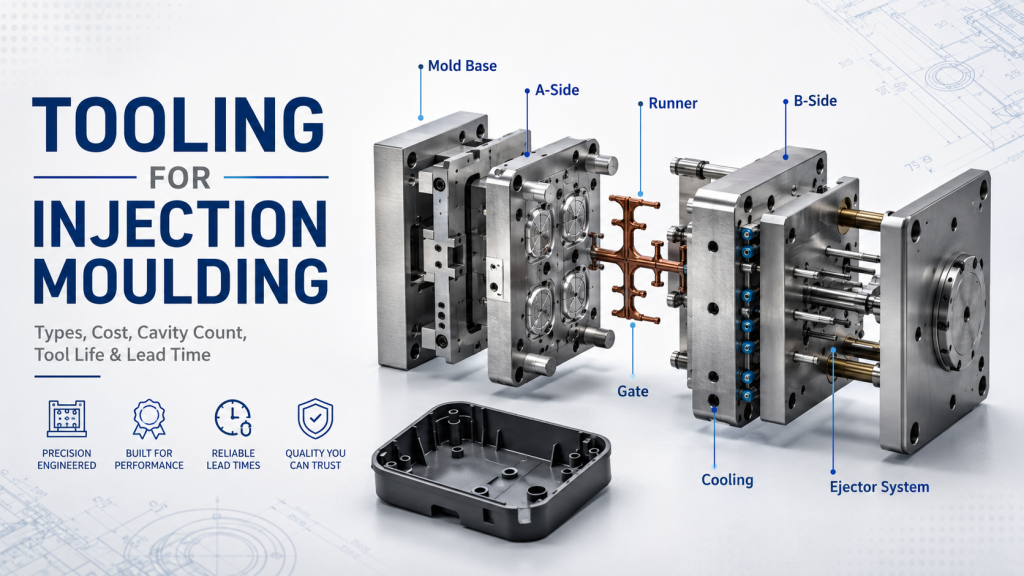
- Tooling or mold specifications (if relevant): Mold base standard, steel grade, cavity count, mold life, cooling design, gate type.
- Lead time & delivery terms: T0/T1 timing, final delivery time, EXW/FOB/CIF terms.
- Revision or rework policy: What changes are free vs. paid, and how many iterations are included.
- After-sales or maintenance support: Spare parts, warranty conditions, mold maintenance plan.
A quote that includes these items is structured, transparent, and safe to compare.
If any of these elements are missing, the “low price” may hide future costs.
What documents should a reliable manufacturer provide before production?
A reliable supplier will always provide the key documents you need to confirm the design, the process, and the quality expectations before production begins. At minimum, you should receive:
- DFM Report (Design for Manufacturing): Shows draft angles, parting line, gate options, risk areas, wall thickness review, and suggested improvements.
- 2D/3D Drawing Confirmation: Final approved files with dimensions, tolerances, materials, and surface requirements clearly marked.
- Mold Design Proposal (if tooling is involved): Including parting line, gate type, cooling layout, ejection system, steel grade, and cavity count.
- Production Plan / Timeline: T0/T1 timing, final delivery date, and key milestones.
- Quality Control Plan: Inspection criteria, sampling method, checkpoints, and required reports (e.g., CMM, first-article inspection).
- BOM (Bill of Materials) (for assemblies): Materials, components, and specification list.
- Contract / PO with defined terms: Payment stages, revision policy, warranty, and after-sales responsibilities.
If a supplier cannot provide these documents—or avoids sharing them—your project is at risk of misalignment, rework, and delays. A reliable manufacturer is always transparent before production starts.
How can I avoid hidden costs when working with Chinese suppliers?
Hidden costs usually come from unclear scope or missing details in the early stages. You can avoid most of them by making sure the supplier commits to clear terms before production. Focus on these actions:
- Ask for an itemized quote—not a lump-sum price. The quote should list steel grade, mold life, number of trial runs, QC reports, surface finish, and include revisions.
- Confirm what counts as a free revision and what triggers extra charges. Many hidden costs come from rework fees when the rules were never defined.
- Request a detailed DFM before approving the price. DFM exposes slides, lifters, cooling needs, and tolerance risks—items that often increase cost if discovered too late.
- Clarify shipping, packing, and logistics responsibilities. Confirm if the quote is EXW, FOB, or CIF, so you know who pays for freight, duties, and customs.
- Verify whether QC reports are included. CMM reports, first-article inspection, and material certificates are often extra unless stated upfront.
- Check if tooling maintenance and spare parts are included. For long-term production, these items can become significant costs later.
When all details are documented early, hidden costs have nowhere to appear. The key is transparency—in your RFQ and in the supplier’s quote.