When you choose a contract injection molding supplier, you hand over DFM, tooling decisions, and day-to-day process control for your parts. If that team is weak, you see it in slipped tooling milestones and extra T0/T1/T2 loops. CTQs are never fully met, and yields move around as you ramp. This article helps you check those points up front, so you can work with a supplier who keeps your program stable instead of adding risk.

What Is Contract Injection Molding?
In contract injection molding, you are not only outsourcing press time. You are asking one supplier to take contractual responsibility for how your plastic parts are engineered, tooled, produced, and delivered.
In practice, that usually covers four areas:
- Engineering support – DFM reviews on your models and drawings, process-window suggestions, and early identification of quality and cosmetic risks.
- Tooling – Mold design and build (or takeover of existing tools), trial planning, tooling changes, and ongoing maintenance.
- Production – Injection molding with defined parameters, process control around your CTQs, and capacity planning to support ramp and steady-state demand.
- Value-added and delivery – Secondary operations and assembly if required, packaging and labeling to your standard, traceability records, and any documentation needed for your customer or regulator.
Contract injection molding vs. “just molding.”

A “just molding” supplier behaves like a machine shop: you provide the tool and instructions, they focus on running parts to a cycle time.
A contract molder acts more like an external manufacturing department: they own the result, from DFM and tooling decisions through to stable mass production and documented delivery.
When you actually need a contract molder
You are in contract molding territory when one or more of these apply:
- You need one supplier to handle tooling and production and keep the schedule on track.
- Your parts have defined CTQs, cosmetic standards, traceability, or compliance requirements that demand a controlled process.
- You prefer to bundle secondary operations or assembly with molding to avoid managing multiple vendors.
- You are planning a tooling transfer or supplier change and need a partner who can take over and re-validate existing tools.
Once you are clear that your program fits this pattern, the next step is to evaluate which suppliers can reliably own that full scope, rather than selecting only on the machine list and unit price.
Confirm Fit: Is This Supplier Truly “Contract” and a Match for Your Program?
Before you compare quotes, you need to be clear on what you are actually asking a supplier to take on. That makes it much easier to see who is a genuine contract molder and who is simply offering machine time.
Define Your Requirements First
Start with your own side of the picture. Write down, in concrete terms, what the program needs:
- Expected annual volume and batch pattern (prototypes, pilot, ramp, steady state)
- Material family and any special grades (UL, medical, food-contact, etc.)
- Key dimensions and CTQs, plus any cosmetic class or surface requirements
- Use environment (temperature, chemicals, mechanical load, lifetime expectations)
- Delivery model: single shipments, phased releases, VMI, safety stock, buffer strategy
- Documentation and compliance needs: FAI/PPAP, Cpk targets, traceability level, certificates
If you can’t describe these points clearly, most suppliers will fill in the gaps with their own assumptions. That is usually where misalignment starts.
Scope Coverage
Once you know your own requirements, check whether each candidate supplier can realistically cover the full scope, not just one slice of it. For a contract molder, the chain typically looks like this:
- DFM review and manufacturability feedback
- Mold design and build, or structured takeover of existing tooling
- Trials and approval samples (T0/T1/T2) with dimensional reports
- Production molding with defined parameters and process controls
- Secondary operations and assembly, if your parts need them
- Packaging, labeling, and logistics to the agreed standard
Ask who coordinates these steps. A contract molder should be able to point to a project engineer or program manager who owns the schedule, issues, and communication, rather than pushing you to coordinate multiple internal teams yourself.
Program Fit
Even if a supplier covers the full scope on paper, they may not be the right fit for your specific parts.
Look for alignment on:
- Typical product types – Do they routinely run parts similar to yours (e.g., visible housings, structural brackets, seals, connector overmolds)?
- Core processes – Are your key needs (insert molding, overmolding, 2-shot, LSR, thin-wall molding, cleanroom production) part of their normal workload, or exceptions?
- Industry experience – Do they understand the expectations and language of your sector (medical, automotive, electronics, industrial), including how quality and documentation are usually handled?
A supplier who mainly runs high-volume commodity parts may not be the best choice for a low-volume, high-documentation medical device, and the opposite is also true.
Shortlist: Five Quick Questions
You can narrow the field quickly with a short set of yes/no questions at the first contact. For each supplier, ask:
- Do you provide formal DFM feedback as part of your standard process?
- Do you design and build molds in-house, or take full responsibility for tools built by your partners?
- Can you handle the secondary operations and/or assembly steps this program requires?
- Can you provide batch-level traceability and the documentation package we need (e.g., FAI/PPAP, measurement reports)?
- Can you share redacted examples of trial reports and inspection data from similar programs under NDA?
If you get several weak or vague answers here, that supplier is unlikely to behave as a true contract injection molding partner later in the project.
Quality System & Compliance: Can They Pass Your Audit Requirements?
In contract injection molding, the quality system is what keeps your CTQs, documentation, and traceability under control once production starts. If that system is weak, you will see it in unclear inspection results, missing records, and slow, unstructured responses when something goes wrong.
Certifications & Quality Framework
Start with the basics: does the supplier’s certification level match your sector and your risk?
- ISO 9001 for general industrial work
- ISO 13485 for medical devices
- IATF 16949 for automotive programs
Then look past the certificates. Ask how the system is applied around molding:
- Do they run structured IQC / IPQC / OQC, or only final checks?
- Is there a control plan for each part (or family), tied to CTQs and process steps?
- Do they use PFMEA before production to identify risks, or only as a reaction tool?
- How are work instructions created, updated, and released to the shop floor?
- How is calibration planned and documented for gauges and measuring equipment?
You want to see a system that is used in daily production, not just prepared for external audits.
Inspection & Metrology Capability
A supplier can only hold your tolerances if they can measure them repeatably.
Focus on two questions:
- Can they measure what matters on your part?
- Do they have the right equipment for your CTQs: CMM, optical measurement, surface roughness, color and gloss, hardness, etc.?
- Are there defined inspection methods and sampling plans for those characteristics?
- Is the measurement system itself under control?
- Have they run GR&R / MSA on critical gages and fixtures?
- What do they do when a gauge drifts or shows poor repeatability?
If they cannot show credible examples of data and methods here, any discussion about capability and tolerances is on weak ground.
Traceability & Record Retention
Traceability determines how quickly you can understand the scope of a problem in the field.
Clarify:
- How are material batches tracked from receipt to finished goods?
- How are production lots defined – by date, shift, press, cavity, or a combination?
- Which process parameters are recorded automatically, and how long are those records kept?
- How are mold maintenance events logged, and can they be linked back to specific lots?
- What information appears on the label: batch ID, date code, cavity or tool ID, inspection status?
By the end of this discussion, you should know how quickly you could reconstruct which lots are affected, which material was used, and what process window was applied.
Change Control
Drawings change, materials change, and customers refine requirements. Without robust change control, your prints, tools, and delivered parts will drift out of alignment.
Ask the supplier to walk you through a real example:
- How is an ECN/ECR raised, reviewed, and approved?
- How are revisions managed on drawings, models, and work instructions?
- How are sample approvals handled for changes – FAI, PPAP level, PSW or equivalent?
- How are changes in tooling, material, or process parameters documented and released to production?
You should see a clear chain from an approved change to updated documents, updated instructions on the line, and correctly labelled parts.
Audit Q&A: Key Questions to Test the System
In an RFQ call or audit (remote or on-site), a focused set of questions will show you very quickly how mature the system is. For example:
- Which quality certifications do you hold today, and which sites do they cover?
- Can you share a control plan example for a molded part similar to ours (with sensitive data removed)?
- How do you link CTQs from our drawing to specific inspection steps and frequencies?
- What metrology equipment do you use for dimensional layouts on new tools?
- Can you show a recent GR&R / MSA study on a critical measuring device?
- How do you assign lot numbers, and what information can you see when you look up a lot?
- Which process parameters are recorded automatically during production, and how long do you retain that data?
- How do you document and schedule mold preventive maintenance, and how is it linked to production history?
- Walk me through a recent engineering change: what triggered it, how it was approved, and how it was released to the line.
- What is your standard approach for FAI or PPAP when we release a new tool or a significant change?
- When a customer complaint comes in, what is your standard investigation and response process?
You are not testing their vocabulary. You are checking whether there is a working system behind the certificates—one that can support your program without you having to manage every detail yourself.
Tooling Competence: Mold Design, Build, Trials, and Maintenance
For injection molding, most long-term problems start at the tool. If the mold design and build are weak, no amount of process tweaking will give you stable parts. In this step, you want to see whether the supplier can design, build, and maintain tooling that supports your CTQs over the full life of the program.
DFM Depth: Do They Give Real Input, Not Just “OK”?

A DFM that only says “feasible” is not enough. You need a supplier who can explain where the risk is and what trade-offs you have.
Ask them to show you, on one of your parts or a similar one:
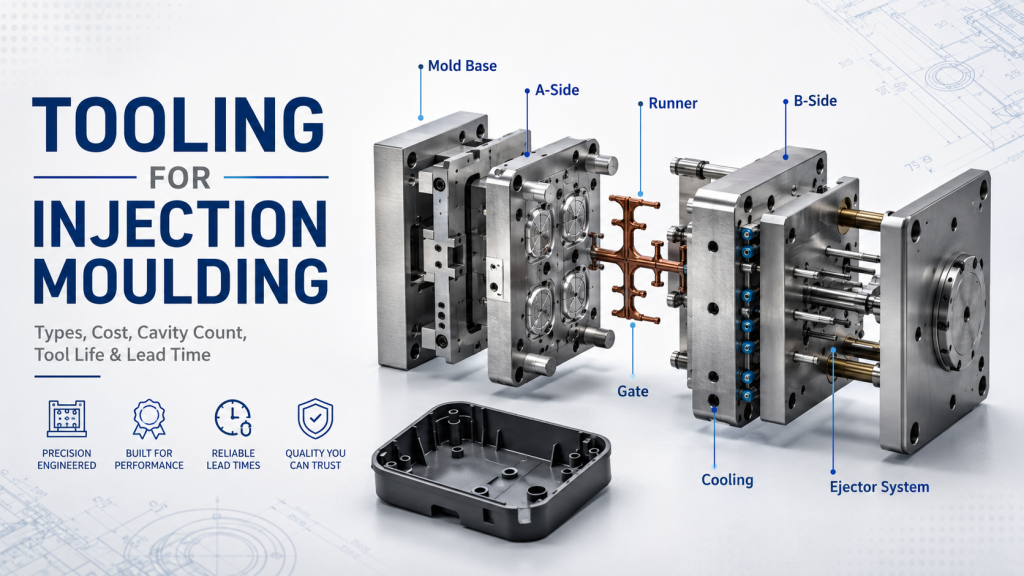
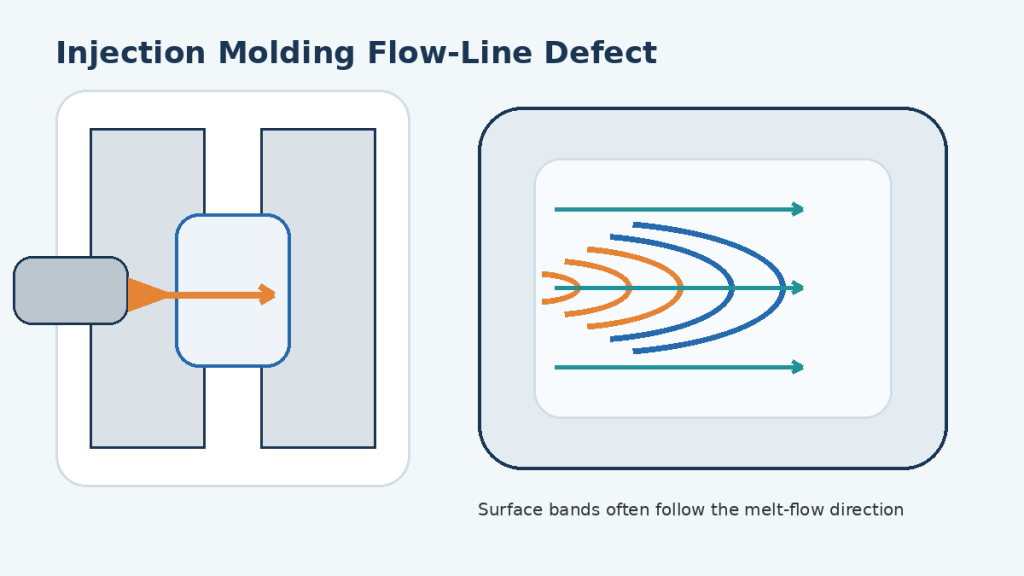
- How they propose gate type and location, and what that means for flow, weld lines, and cosmetic areas.
- How they set the parting line, draft, wall thickness, ribs, and radii to reduce sink, warpage, and sticking.
- How do they think about venting and cooling layout for thick vs. thin sections?
- How they handle steel-safe conditions and critical dimensions that may need adjustment after T0.
You are looking for specific comments tied to your geometry, not generic statements. A strong contract molder will be able to walk you through a few key risk features and how they plan to control them.
Tool Build Capability: Can They Deliver a Robust Mold on Schedule?
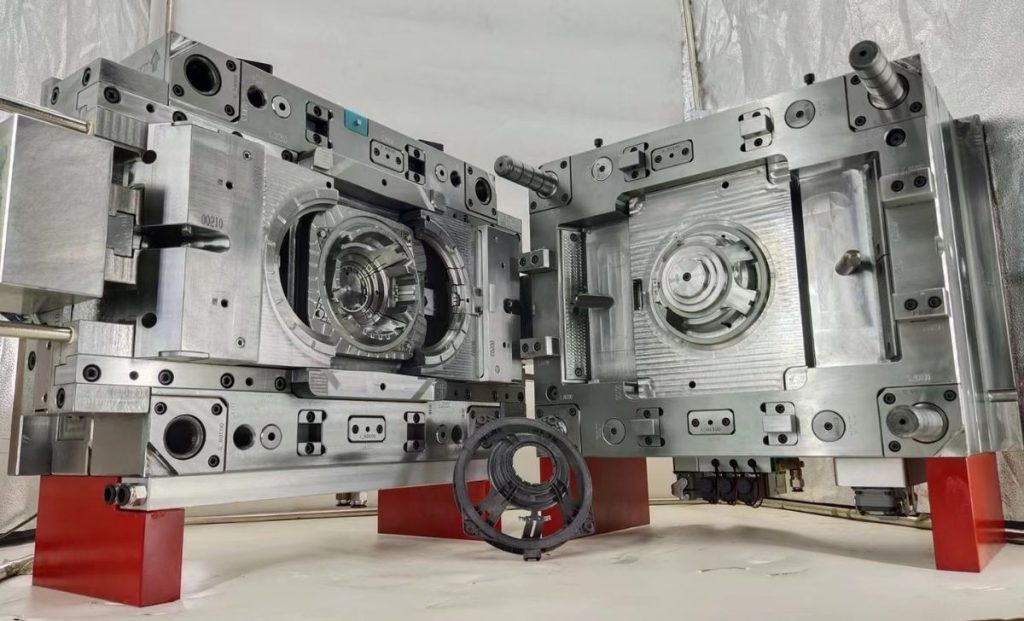
Once the DFM is set, the question becomes whether they can actually build the tool you need and take responsibility for its performance.
Clarify:
- Which parts of the tool build are done in-house and which are done by partners, and who carries full responsibility for quality and schedule?
- What steel grades they typically use (for example, P20, H13, S136, stainless) and how they choose between hot runner and cold runner designs.
- How do they specify tolerances, surface finishes, and cavity balance in the tool design?
- How they run design reviews before cutting steel: who attends, what is checked, and how decisions are recorded.
- What a typical timeline from design release to T0 looks like for a mold at the size and complexity you are planning.
The goal is to understand whether tooling is a core strength or just a black box they buy from somewhere else.
Trial Process: What Happens at T0, T1, and T2?
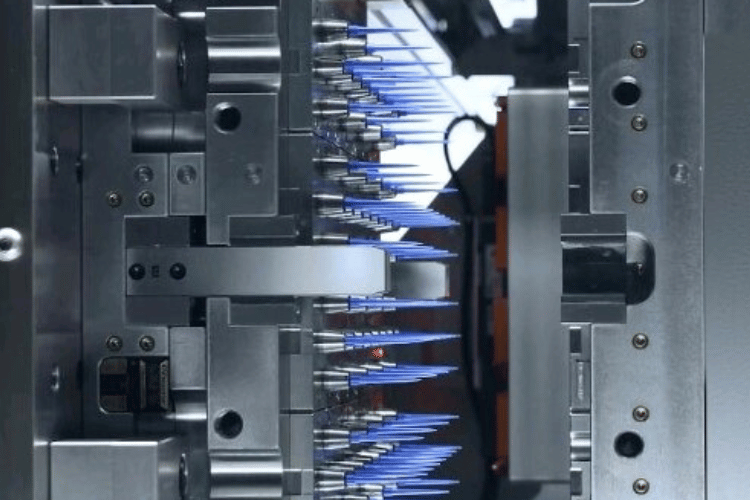
Trials are where tooling decisions meet reality. A good supplier will have a structured approach to T0/T1/T2, not just “shoot some parts and see.”
Ask them:
- What is the objective of T0 on a new tool, and what data do they capture (process settings, dimensional snapshots, visual issues)?
- How they define acceptance criteria for T1 and T2—dimensionally, cosmetically, and functionally.
- What goes into a standard trial report: process parameters, part photos, defect description, and recommended changes.
- How they handle dimensional layouts for CTQs: sampling plan, measurement method, and reporting format.
- How quickly can we implement tool changes between trials and close out open issues?
You want to see a repeatable trial process that closes issues between rounds instead of doing endless loops with vague reasons.
Preventive Maintenance: Will the Tool Stay Stable Over Its Life?

Even a good mold will drift if it is not maintained. Preventive maintenance is what keeps early results and late results aligned.
Discuss:
- How they define PM intervals—by shot count, time, or part condition.
- What tasks are done at each level of maintenance (cleaning, polishing, replacing pins, checking vents, verifying critical dimensions).
- How they manage spare components for high-wear items such as gates, pins, bushings, inserts, and hot runner parts.
- How PM events are documented, and whether those records can be linked back to production lots if needed.
You are checking whether they treat molds as production assets with a documented plan, not as consumables that run until they fail.
Tooling Transfer: If You Already Have Molds
If you are moving existing molds to a new supplier, their approach to tooling transfer will strongly influence your ramp-up risk.
Ask for their standard process when taking over a tool:
- How they inspect the incoming mold: condition, design, steel, vents, cooling, wear points.
- How do they decide what needs repair, refurbishment, or modification before serious production?
- How they run the first trial on a transferred tool and what they measure to establish a baseline.
- How do they build a dimensional and process baseline so that later changes can be compared back to something concrete?
- How they handle missing documentation (no drawings, no history) and how they communicate risks and limitations to you.
A supplier with real tooling transfer experience should be able to describe this in detail and show examples.
Tooling Evidence Pack: What You Should Request
Before you rely on any supplier’s tooling competence, ask for a small, focused evidence pack under NDA. For example:
- A DFM report for a molded part similar in complexity and requirements to yours.
- Selected pages from a mold design (2D/3D snapshots) showing gating, cooling, and parting line decisions.
- A trial report (T0/T1/T2) including process settings, issues found, and corrective actions.
- A dimensional layout for CTQs on a new or modified tool.
- A sample mold preventive maintenance record showing what was done and when.
Reviewing these together with the supplier gives you a much clearer picture of how they handle tooling in real programs—not just how they describe it in a capability list.
Manufacturing Capability: Can They Run Your Parts Consistently at Volume?
At this point, you want to know whether the supplier can do two things:
- Match your parts with the right equipment and capacity, and
- Keep molding conditions stable when you move from samples to real production.
1. Press Range & Capacity
Check basic fit first:
- Does their tonnage range comfortably cover your projected part size and clamp force needs?
- How many presses do they have in that band, and how many are already tied up with long-term work?
Then ask how they plan capacity:
- How far ahead do they schedule repeat orders?
- What happens if a key press goes down or demand spikes—do they have backup presses or extra shifts?
You want your program to be in a real plan, not just “we’ll try to find a free machine.”
2. Stable Molding Conditions
You are not looking for a supplier who just “tunes the machine until parts look OK”. You need them to run the same conditions and get the same result, lot after lot.
For a similar part, ask:
- Which molding parameters do they consider critical (melt temperature, mold temperature, switchover point, holding pressure/time, cooling time)?
- How those settings were established during trials.
- Which parameters are recorded automatically during production, and what happens if a value drifts?
- How often do they do first-article checks and in-process inspections?
If they can show you a sample run with real settings and inspection data, that is much more convincing than a general statement about “good quality”.
3. Material Handling & Basic Error-Proofing
Many “mystery” problems come from material and handling.
Clarify:
- How they control drying for hygroscopic materials, and whether they check moisture when it is critical.
- Their regrind policy for your parts (allowed or not, percentage limit, how they control it in practice).
- How do they prevent grade or color mix-ups at the machine?
Then look at how they reduce avoidable variation:
- Do they use robots, fixtures, or trays to keep handling consistent and protect parts?
- Are there clear work instructions at the press for your part, with photos of acceptable and rejected conditions?
4. Secondary Operations & Assembly (If You Need Them)
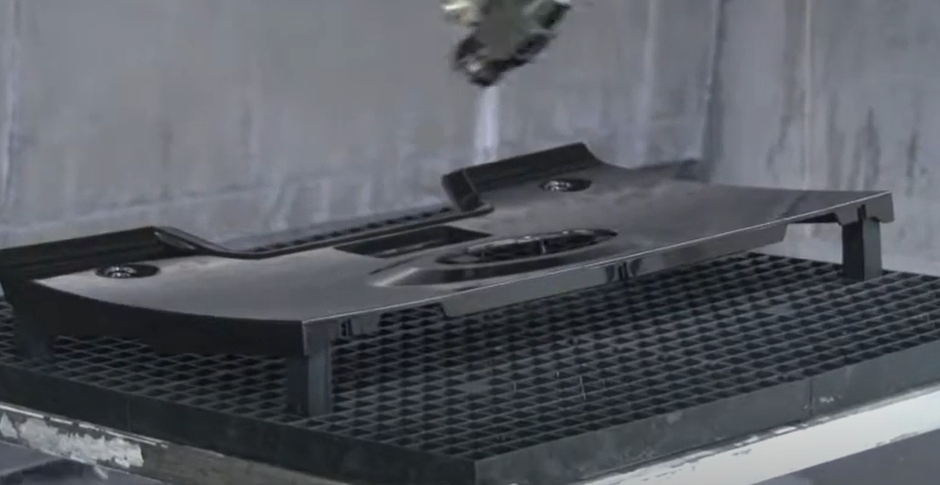
If you expect the supplier to handle welding, printing, coating, or assembly as well, keep the questions simple:
- Which of these operations do they run regularly today?
- How do they link these steps back to molding lots in their routing and traceability?
You want a controlled flow from molding through secondary steps, not isolated islands that are hard to trace.
Quoting Transparency: Will the Quote Stay Stable After You Start?

Price alone does not tell you much. What matters is whether the supplier can explain what drives the price and when it might change. A transparent quote is easier to compare and far less likely to “creep” after the project has started.
Cost Breakdown
Ask every supplier to break the quote into at least two blocks: tooling and piece price.
For tooling, you want to see how they think about:
- Mold base and cavities
- Hot runner vs. cold runner and related hardware
- Steel selection and any special coatings or surface treatments
For piece price, you want to see the main drivers, for example:
- Resin and additive cost assumptions
- Cycle time and expected press rate
- Direct labor vs. automation content
- Inspection and measurement effort
- Secondary operations and assembly steps
- Packaging, labeling, and any special handling
- Scrap and rework assumptions built into the unit price
A supplier who can walk you through these items with numbers (not just percentages) is much easier to work with when you discuss changes later.
Assumptions & Exclusions
Quotes always contain assumptions. You want them written down rather than hidden.
Clarify:
- How they handle material price changes – index link, periodic review, or fixed for a period
- What is included in the price for engineering changes (DFM iterations, minor tool adjustments), and what counts as chargeable rework
- Who pays for scrap and rework in different scenarios (supplier-caused vs. drawing change, for example)
- Whether documentation packages such as FAI, PPAP, capability studies (Cpk), and control plans are included or quoted separately
If these points are not defined before you place the order, they usually show up later as unexpected line items.
Lead Time & Delivery Commitment

You also need to know whether the quoted lead times are backed by a plan, not guesses.
For tooling, ask for:
- A simple milestone plan from PO to T0/T1/T2 and final approval
- The typical recovery options if a task slips (extra shifts, parallel work, added resources)
For production, clarify:
- Standard order lead time once the part is approved
- Any service level they commit to (for example, ship within X days for repeat orders)
- Whether they can support safety stock or buffer stock, and under what conditions
- How they handle a supply interruption – backup tools, backup presses, or alternate sites if available
You want to see concrete numbers and scenarios, not only “we can be flexible if needed.
RFQ Input Checklist: What You Should Provide to Get a Reliable Quote
Quote quality depends heavily on the information you share. A short RFQ checklist helps both sides.
At a minimum, include:
- 3D model and latest drawing revision
- Material specification and any approved alternates
- Estimated annual volume and typical order size
- Target tool life, number of cavities (if known), and any hot runner preference
- Key dimensions and CTQs, and any cosmetic class or surface requirements
- Required documentation (FAI, PPAP level, capability data, certification needs)
- Expected delivery pattern (one-time, ramp, steady demand, safety stock)
- Any planned secondary operations or assembly you want the supplier to include
If you send this level of detail to each candidate, you will get quotes that are easier to compare—and far less likely to change once the work begins.
Communication & Project Management

On paper, many suppliers look similar. In practice, the difference is often how they communicate with you and how they run the project day to day. You want a partner who answers technical questions quickly, keeps you informed without noise, and closes issues instead of letting them drift.
Engineering Access
You should be able to speak directly with the engineer who owns your program. When you discuss an RFQ or DFM, pay attention to who is actually in the call. If every technical point has to go through sales and comes back slowly, that will not improve once tooling starts. A good sign is a named project engineer who can explain your part, your risks, and the next steps in their own words.
How They Handle Issues
Every program will have problems at some point; what matters is how they are managed. Ask the supplier to show you one recent issue from another job and walk you through how it was logged, who owned it, what actions were taken, and when it was closed. If they can only describe this in very general terms, you should not expect a structured response when something goes wrong on your part.
How You Stay Informed
You also need a clear picture of how you will get updates without having to chase them. During quoting, ask what you would see after each trial (for example, a short report with settings, main findings, and next actions) and what you would see during ramp-up (for example, brief updates on output, scrap, and key issues). If they can describe this simply and concretely, you have a realistic sense of how the cooperation will feel once the program is running.
Common Red Flags and What They Usually Lead To
Even with a good checklist, some warning signs should immediately make you cautious.
1. DFM feedback lacks part-specific action
If DFM feedback does not address gating intent, venting strategy, wall transitions, parting line and draft, cooling intent, and steel-safe planning for CTQs, then design risk is not being reduced before steel-cut. As a result, tool trials become the primary method of discovery, which increases trial iterations and turns CTQ misses into recurring “design versus process” disputes.
2. Certifications exist, but production controls cannot be demonstrated
If the supplier holds certifications but cannot provide a live control plan, a recent MSA/GR&R example, and a documented engineering change case, then the quality system is not operating as a production control mechanism. In practice, this leads to inconsistent inspection outcomes, incomplete records when traceability is required, and slow, unstructured corrective actions when problems occur.
3. Quotes are not tied to defined scope and cost drivers
If the quote provides only a tooling price and a unit price without stating assumptions, inclusions and exclusions, inspection and reporting scope, and change-cost rules, then the commercial scope is not controlled. Once trials begin, missing scope becomes chargeable work, which commonly results in unexpected costs for samples, reports, and “out-of-scope” changes, along with schedule volatility.
4. No named engineer owns technical decisions
If technical communication is routed through sales and there is no identified engineer accountable for DFM decisions, tooling actions, and process parameter control, then ownership is unclear. That lack of ownership typically appears later as slow answers, inconsistent technical direction, and decisions made without documented rationale, which increases the likelihood of milestone slippage.
5. Capability claims are not supported by evidence
If the supplier cannot share redacted examples of trial reports, CTQ dimensional layouts, mold preventive maintenance records, and a closed corrective action, then capability remains unverified. Without evidence, it is not possible to confirm how they run trials, close issues, and maintain process stability, which increases the probability of late discovery and repeated loop cycles after PO.
You need one whose controls and evidence match your part risk and program requirements. When multiple red flags appear together, treat the supplier as high risk unless objective evidence can close the gaps.
Conclusion
Choosing a contract injection molding supplier is a risk-transfer decision, not just a price decision. Vet DFM depth, tooling discipline, and process/data control before PO—those three determine whether CTQs hold and yields stay stable through ramp. If a supplier cannot show real examples (trial reports, CTQ layouts, control plans, traceability), treat it as a program risk—not a gap you can “manage later.”