In injection molding, the spotlight often falls on hot runner systems for their speed and material efficiency. But in many real-world projects—especially low-volume production, frequent color changes, or cost-sensitive tooling—cold runner injection molding remains a practical and sometimes superior choice.
Cold runner systems offer lower upfront mold costs, simpler maintenance, and better material compatibility for certain heat-sensitive polymers. For startups validating product designs or manufacturers producing thousands—not millions—of parts per year, cold runners often strike the right balance between tooling investment, production flexibility, and part quality.
This guide walks you through everything from how cold runner systems work, when to choose them over hot runners, cost trade-offs at different production scales, to design guidelines and troubleshooting tips—so you can make informed decisions for your next molding project.
What Is Cold Runner Injection Molding?

Cold runner injection molding uses a runner system at ambient temperature to deliver molten plastic from the injection molding machine’s nozzle into the mold cavities. Unlike hot runner systems that keep plastic molten inside heated channels, cold runners solidify along with the part and are ejected as scrap or regrind material after each molding cycle.
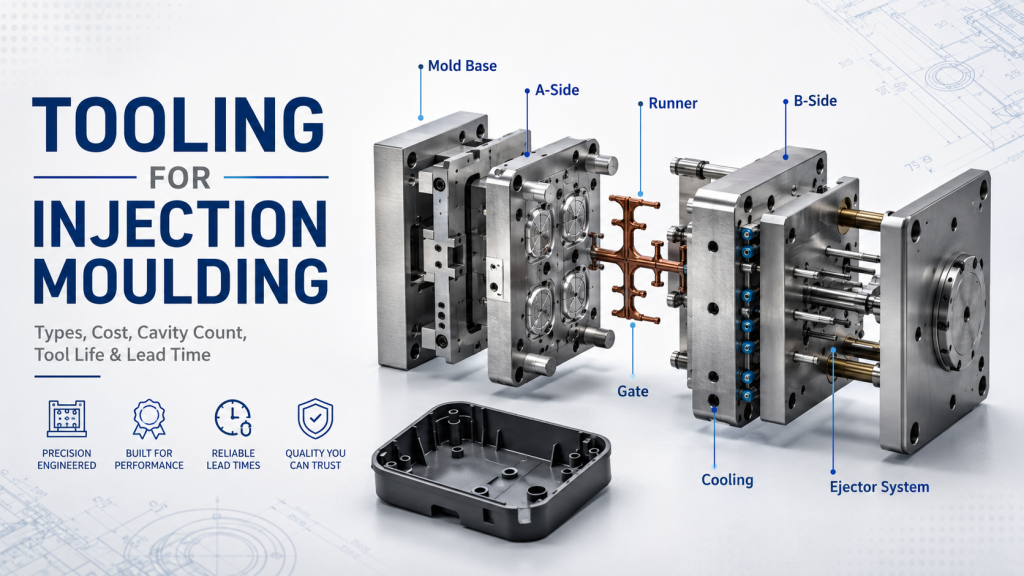
A typical cold runner system has three main components:
- Sprue: The main vertical channel carrying molten plastic from the machine nozzle into the runner network.
- Runners (distribution channels): Horizontal passages distributing molten material evenly into each cavity.
- Gates: Small openings controlling the flow into each part cavity.
Because the entire runner solidifies with the part, the runner system is separated and removed when the mold opens. This design keeps tooling simpler and less expensive but creates extra material that must be trimmed or recycled.
Two-Plate vs. Three-Plate Cold Runner Molds
Cold runner molds come in two main configurations:
- Two-Plate Mold: The most common design. When the mold opens, both the part and the solidified runner remain together and are ejected as a single unit. Operators or automated systems then separate the parts from the runner.
- Three-Plate Mold: Adds an extra plate, allowing parts and runners to be separated automatically when the mold opens. This reduces manual handling but increases mold complexity and cost.
In both systems, cold runner molds operate at room or near-room temperature, simplifying mold construction but increasing cycle time because each shot includes both parts and runners that must cool and eject before the next cycle begins.
Cold Runner vs Hot Runner: Making the Right Choice

Choosing between cold runner and hot runner systems is rarely a matter of preference—it’s a production economics and design decision. Each system brings unique advantages and trade-offs, and understanding them in the context of part volume, material type, cycle time, and tooling cost is essential for manufacturers.
1. Tooling Investment vs. Part Volume
Cold Runner Systems: Tooling costs are 30–50% lower because no heated manifolds, temperature controllers, or complex insulation systems are needed. For low-volume production—under 10,000 parts annually—cold runners often provide a faster return on investment.
Hot Runner Systems: Tooling costs can reach $40,000–$100,000+, but runnerless molding eliminates waste and shortens cycle time. At volumes above 100,000 parts annually, hot runners often become the more economical choice due to lower material waste and labor costs.
2. Material Waste and Recycling
Cold runner parts always include solidified runners that must be separated and either re-ground or discarded. For materials like ABS or polycarbonate, regrind may be acceptable up to 20–30%.
For medical or food-grade resins, recycling is often impossible due to contamination rules, making hot runners more attractive despite higher tooling costs.
3. Cycle Time Efficiency
Because cold runners must cool along with the parts, cooling dominates the cycle time. For thick runners, this can extend total cycle time by 20–30% compared to hot runner molds, where only the part solidifies.
4. Material Compatibility
Some heat-sensitive materials, like PVC or certain elastomers, degrade if held at high temperatures for too long. Cold runners prevent long residence times in heated channels, avoiding thermal degradation and color shifts.
5. Maintenance and Changeover Flexibility
- Cold runners require simpler maintenance; color or material changes are faster since no heated manifolds need purging.
- Hot runners involve complex cleaning procedures and sensitive temperature controls, increasing downtime when switching materials.
Summary Table: Cold vs Hot Runner
| Factor | Cold Runner | Hot Runner |
| Upfront Tooling Cost | Low ($5,000–$20,000) | High ($40,000+) |
| Material Waste | High (runner solidifies each shot) | Minimal (runnerless system) |
| Cycle Time | Longer (cool runner + part) | Shorter (only part solidifies) |
| Material Compatibility | Better for heat-sensitive resins | Limited by long residence times |
| Color/Material Changeover | Easy & quick | Slow & complex |
| Best for Production Volume | Low to mid (< 50k annually) | High (> 100k annually) |
In practice, many manufacturers start with cold runner molds during product development and low-volume production, then transition to hot runners once demand stabilizes and production scales justify the higher tooling cost.
Cost-Benefit Analysis: When Cold Runner Saves Money

One of the most common questions in injection molding is: At what production volume do hot runners start paying off? Cold runner systems have much lower tooling costs but generate more material waste and longer cycle times, so the answer depends on production scale, material cost, and part design.
1. Upfront Tooling Investment
| System | Typical Tooling Cost | Typical Lead Time |
| Cold Runner Mold | $5,000 – $20,000 | 4–6 weeks |
| Hot Runner Mold | $40,000 – $100,000+ | 8–12 weeks |
For prototype or low-volume runs (<10,000 parts/year), the cost difference alone often makes cold runners the only economically viable option. Paying four times more for a hot runner mold doesn’t make sense if product demand is uncertain.
2. Material Waste and Unit Cost at Different Volumes
Let’s compare the production of a part weighing 20 g with a 10 g runner at $2.5/kg resin cost:
| Annual Volume | Runner Waste (kg/year) | Material Cost Waste ($) | Impact on Unit Cost |
| 5,000 parts | 50 kg | $125 | +$0.025/part |
| 50,000 parts | 500 kg | $1,250 | +$0.025/part |
| 500,000 parts | 5,000 kg | $12,500 | +$0.025/part |
At small volumes, $125 in material waste is negligible compared to the $35,000–$50,000 extra tooling cost for hot runners. At 500,000 parts, however, that runner waste starts to add up, especially when combined with longer cycle times.
3. Cycle Time and Labor Costs
Because runners must cool each cycle, cold runner molds typically have 20–30% longer cycle times than hot runners. At high volumes, this means:
- More machine hours → higher electricity cost
- More operator labor for runner separation or recycling
- Higher opportunity cost due to slower production throughput
4. Total Cost of Ownership (TCO) Perspective
TCO combines:
- Initial Tooling Cost
- Material Waste Cost
- Cycle Time Efficiency
- Maintenance & Changeover Costs
At low volumes, tooling cost dominates TCO → cold runner wins;
At high volumes, material and cycle efficiency dominate → hot runner gains advantage.
A typical crossover point for many manufacturers is 50,000–100,000 parts annually. Below this, cold runners keep costs down; above this, hot runners lower long-term cost per part despite higher upfront investment.
A consumer electronics supplier launched a new product line with forecasted demand of 20,000 units/year. They chose cold runner tooling for its $12,000 cost vs. $55,000 for hot runner, saving $43,000 in initial investment. After two years, demand exceeded 120,000 units/year, and they switched to a hot runner system to cut cycle time by 25% and eliminate $3,000/year in material waste, reducing per-part cost by 18% at scale.
Design Guidelines for Cold Runner Molds

A well-designed cold runner system balances material efficiency, cycle time, and part quality. Poor runner design can lead to excessive material waste, long cooling times, or molding defects like flash and sink marks. The following guidelines summarize industry best practices to help engineers achieve consistent results.
| Design Aspect | Typical Values / Options | Key Considerations | Common Mistakes to Avoid |
| Runner Diameter | 6–12 mm (typical) | Smaller diameters reduce material waste but risk pressure loss; larger diameters increase cycle time and scrap volume. | Oversized runners causing long cooling times and wasted resin |
| Runner Shape | Full-round (best flow), trapezoidal, or semi-round | Full-round offers lowest pressure drop but higher tooling cost; trapezoidal/semicircular are easier to machine with slightly higher pressure loss. | Sharp corners in runner profile creating stress points |
| Gate Location | Near thicker sections or less visible areas | Uniform flow and minimal weld lines; aesthetics and stress points should guide placement. | Placing gates in high-visibility areas or thin sections |
| Gate Type | Edge gate, submarine/tunnel gate | Tunnel gates allow automatic runner separation; edge gates are cheaper and simpler but need manual trimming. | Using edge gates for high-volume parts without automation |
| Gate Dimensions | Width: 1.0–1.5× part wall thickness | Proper size avoids short shots (too small) or large vestige (too big). | Undersized gates causing incomplete filling |
| Cold Slug Well | Depth: 1.5–2× runner diameter | Traps first cooled material, preventing surface defects and incomplete fills. | No cold slug wells leading to surface blemishes |
| Runner Layout | Naturally balanced, symmetrical | Equal runner lengths to all cavities ensure uniform filling and consistent part weight. | Unbalanced runners leading to over/underfilled cavities |
| Venting | 0.02–0.05 mm deep, 5–10 mm wide | Prevents trapped air, burn marks, and incomplete filling. | Inadequate venting causing air traps and weld lines |
| Ejection Method | Two-plate: manual separation; Three-plate: auto | Three-plate molds reduce labor but increase tooling complexity and cost. | Using manual separation in high-volume production |
Defect Prevention Through Design
Common molding defects can often be traced back to poor runner or gate design:
| Defect | Design-Related Cause | Preventive Design Measures |
| Flash (excess plastic along parting lines) | Insufficient clamping or too much injection pressure | Proper runner sizing to avoid overpacking |
| Sink Marks | Inadequate packing near thick sections | Optimize gate location and packing pressure |
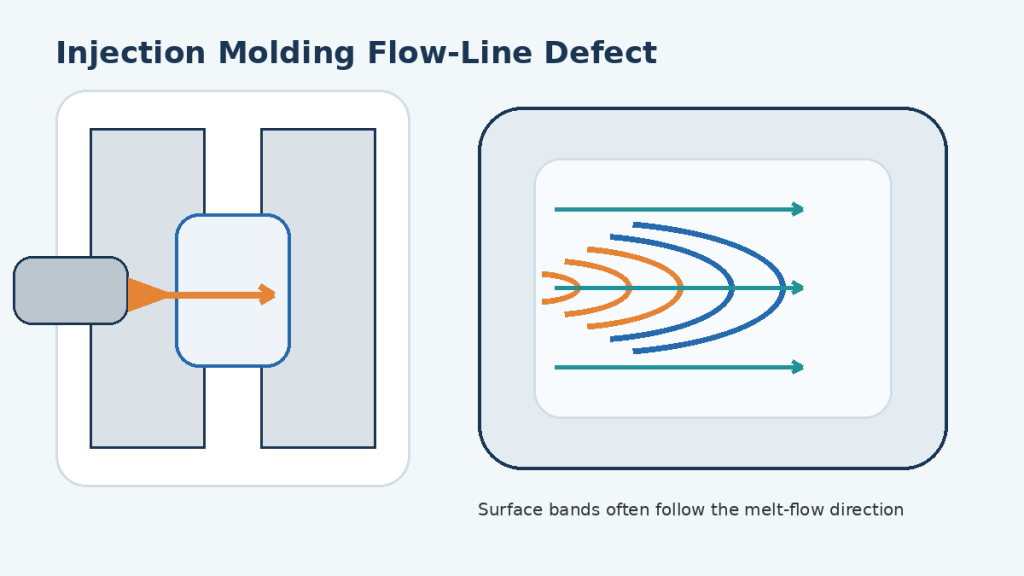
| Weld Lines | Flow fronts meeting at low temperatures | Balanced runner layout, gate placement near high-stress zones |
| Short Shots | High flow resistance or pressure drop | Increase runner diameter or gate size, ensure proper venting |
Design Review Checklist
Before releasing mold designs for manufacturing, review:
- Runner diameter vs. part size and flow length
- Gate placement relative to weld lines and part aesthetics
- Cold slug well locations at all runner ends
- Symmetrical runner layout for multi-cavity molds
- Adequate venting to prevent air traps and burns
A 15-minute design review using this checklist often prevents weeks of trial-and-error during mold testing.
Material Selection: What Works Best with Cold Runner Systems

Material choice plays a major role in deciding whether cold runner injection molding is the right approach. Some materials tolerate long residence times and high temperatures well, while others degrade or discolor if kept hot for too long—making cold runners a better fit for them.
Cold runner systems are often preferred when:
- Heat-sensitive resins like PVC or some elastomers degrade if exposed to long heating cycles in hot runners.
- Frequent color or material changes are required since cold runners purge faster with less waste.
- Recycling of runner scrap is possible, reducing the material cost impact.
Common Materials and Their Cold Runner Compatibility
| Material | Melt Temperature (°C) | Thermal Sensitivity | Runner Scrap Reusability | Typical Applications | Cold Runner Suitability |
| PP (Polypropylene) | 200–250 | Low – stable under heat | High (regrind up to 20–30%) | Packaging, automotive interior, consumer goods | Excellent |
| PE (Polyethylene) | 180–230 | Low – good thermal stability | High (regrind widely acceptable) | Caps, containers, piping | Excellent |
| ABS | 220–260 | Medium – discoloration risk | Limited (<20%) | Electronics housings, automotive trim | Good for low–mid volumes |
| TPE (Thermoplastic Elastomers) | 200–240 | Medium – avoid overheating | Moderate – properties degrade after multiple cycles | Seals, soft-touch grips, gaskets | Very good |
| PVC (Polyvinyl Chloride) | 170–200 | High – degrades if overheated | Low – not recommended for recycling | Medical parts, fittings, profiles | Best with cold runners |
| LSR (Liquid Silicone Rubber) | 160–200 | High – sensitive to contamination | Not applicable | Medical seals, kitchenware, electrical insulation | Often cold runner only |
Tips:
- Heat-sensitive materials like PVC, TPE, and LSR favor cold runners because hot runners’ long residence times risk thermal degradation, burning, or discoloration.
- Commodity plastics like PP and PE work well in either system but benefit from cold runners for frequent color changes or when regrind reuse is acceptable.
- High-cost engineering plastics (e.g., PC, Nylon) often push manufacturers toward hot runners at high volumes to eliminate runner waste.
Applications Across Industries
Take the medical device sector. Here, production runs are often in the 5,000–10,000 parts per year range, and product designs rarely stay frozen for long. A company making surgical instrument housings recently chose a cold runner mold costing $15,000 instead of investing $60,000 in a hot runner system. At that volume, the extra tooling cost would never pay back. The cold runner not only kept upfront costs in check but also allowed them to switch materials between batches in under half an hour—critical when each hospital order came with slightly different specs.

Automotive suppliers face a different challenge: materials like TPE or PVC degrade if held at high temperatures for too long. One door-seal manufacturer stuck with cold runners even after production hit 20,000 parts a quarter because the risk of thermal degradation in a hot runner system would have driven scrap rates and warranty claims through the roof. The runner waste was re-ground at 20% and fed back into the process, trimming resin costs by 15% without affecting part performance.

Consumer electronics tell another story. Color changes are constant—today it’s matte black, tomorrow it’s neon green. A startup making custom phone cases used a three-plate cold runner mold to automate runner separation. They could purge one color and start another in under 20 minutes, compared to the hours it takes to clean a hot runner manifold. That speed kept their production nimble enough to ride fast-changing fashion trends.

Across all these cases, cold runner systems earned their place not because they were the “older” technology but because low-to-mid volumes, sensitive materials, or frequent changeovers made them the most economical and practical choice.
Future Trends: Hybrid Runner Systems and Sustainability
Cold runner systems are evolving in two key directions. Hybrid runner designs combine hot and cold channels in the same mold—hot runners for high-volume, low-changeover parts, and cold runners for flexible, small-batch sections. This balances tooling cost with material efficiency.
At the same time, sustainability pressures are pushing manufacturers to recycle runner scrap and adopt resins that tolerate multiple regrind cycles without losing properties. Automated runner removal and real-time quality monitoring are also becoming standard, reducing labor costs and material waste.
Together, these trends make cold runner systems more cost-efficient, eco-friendly, and better integrated into smart manufacturing workflows.
Conclusion: Making Cold Runner Systems Work for You
Cold runner injection molding remains a practical choice when tooling budgets are tight, production volumes are moderate, or materials are heat-sensitive. It offers design flexibility and faster changeovers while keeping upfront costs far below those of hot runner systems.
If you’re evaluating cold runner systems for your next project, our engineering team can help with design feasibility reviews, cost analysis, and tooling recommendations tailored to your production needs.
Ready to get started? Contact us today for expert guidance and a fast, accurate quote.