For hardware startups, the choice between low-volume and high-volume production directly determines the structure of upfront investment, the cost of design changes, and the upper bound of failure risk. When resources are limited, any mistake in tooling, material procurement, or production scheduling can lock capital into the wrong product version. When demand is uncertain, specification changes, channel shifts, and quality issues are amplified by inventory and lead times.
Low-volume production is typically understood as 100–10,000 units. Its advantages lie in lower upfront investment and more controllable change costs, making it suitable for validating product definition and the manufacturing window through pilot runs and limited market release. The trade-off is a higher unit cost, with efficiency and consistency more dependent on on-site management. High-volume production typically begins at 100,000 units or more. It relies on scale to dilute fixed costs, resulting in a lower unit cost. However, it requires higher upfront investment and is more sensitive to design changes and demand fluctuations. Once the judgment is wrong, losses are often irreversible.
Therefore, this decision should not be based solely on unit price. More importantly: Have you completed demand validation? Have you locked in critical CTQs and assembly logic? Do you have stable yield rates and supply chain capability? Next, we will break costs into calculable components and risks into identifiable failure paths.

Cost Comparison: Low-Volume vs. High-Volume Production
Cost Structure of Low-Volume Production

In the low-volume stage, higher unit costs are usually not caused by material prices, but by the inability to effectively amortize fixed costs. Even when output is only a few thousand units, basic setup, fixture preparation, first article validation, and process verification are still required. These costs are allocated across a limited number of parts, naturally increasing the per-unit cost.
Another factor that cannot be ignored is efficiency. Low volumes often mean frequent changeovers and an unstable production takt, resulting in lower labor and equipment utilization. At the same time, design and process parameters are still converging, making rework, repeated inspections, and temporary adjustments more common. These factors do not always appear explicitly in quotations, but they continuously consume engineering and on-site resources.
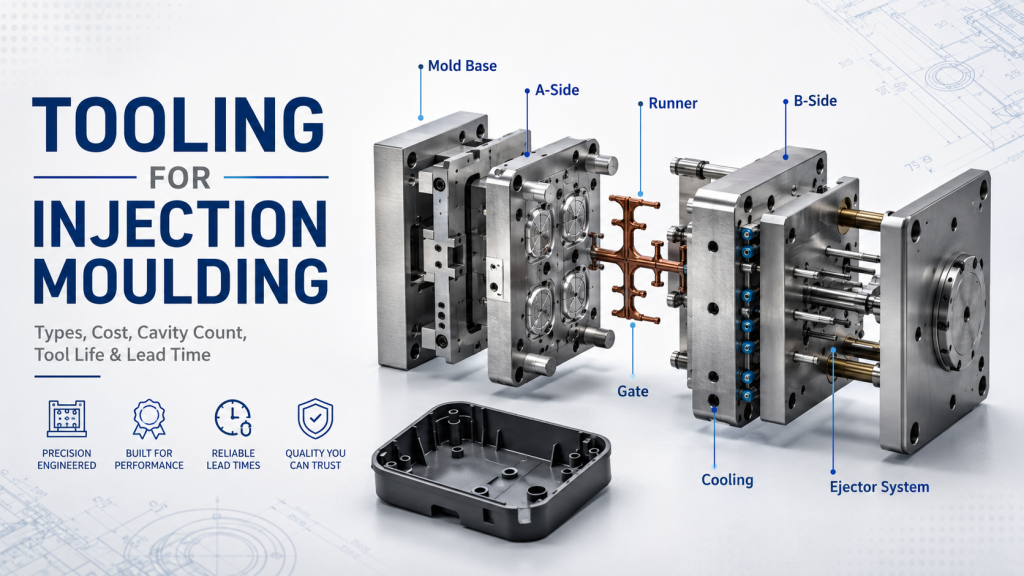
The advantage of low volume lies in controllable upfront investment. In many projects, prototype molds or simplified tooling can be kept within the range of USD 1,000–5,000. Compared to a one-time investment in expensive production molds, this approach concentrates capital in the validation stage rather than locking it prematurely into capacity and inventory. As long as demand has not been validated, this “high unit cost, low total exposure” structure is in fact safer.
Cost Structure of High-Volume Production

When output scales to 100,000 units or more, the cost logic changes. Fixed costs such as molds, fixtures, and process setup are spread over a much larger volume, significantly reducing unit cost. This is the most direct and easily understood advantage of high-volume production.
However, this advantage is built on substantial upfront investment. Production-grade molds often require USD 50,000 or more, and raw materials, work-in-progress, and finished goods inventory must also be prepared. Once production enters a takt-driven rhythm, the cost of line stoppages, rework, or design changes is amplified.
A greater risk comes from overproduction. When demand forecasts deviate, market timing shifts, or version updates occur, produced inventory becomes difficult to absorb. In real projects, scrap, discounting, and inventory backlogs caused by premature scale-up often account for 15–40% of the initial investment. These losses frequently occur outside formal financial reporting but directly erode cash flow.
Practical Impact on Startups
For startups, the key is not achieving the lowest unit cost, but ensuring that total investment aligns with the level of uncertainty. At the stage when demand has not yet been validated, low-volume production can limit failure costs to an acceptable range and avoid the 10–30% budget overruns often caused by premature scale-up.
Once product definition, market demand, and the manufacturing window have stabilized, high-volume production becomes reasonable. At that point, economies of scale can translate into higher gross margins and clearer returns on investment, rather than becoming a multiplier of financial pressure.
There is no inherent superiority in any cost structure. What matters is whether it matches the company’s current stage. The next question is not “Which option is cheaper?” but rather, at the current level of uncertainty, which cost structure is more controllable.
Risk Comparison: Low Volume vs. High Volume
Primary Risks in the Low-Volume Stage

The typical risks in the low-volume stage are mainly concentrated in three categories:
- Insufficient process capability and consistency: In the low-volume stage, risks are more related to capability and consistency than to the scale of one-time losses. Because output is limited, production processes are often not yet fully stabilized. The process window, work standards, and inspection methods are still being adjusted, making quality fluctuations more likely. These issues usually do not result in large-scale scrap, but they increase engineering intervention and management costs.
- Limited scalability: Scalability is another typical constraint of low-volume production. Production methods that rely on manual operations, temporary fixtures, or non-standard processes may be acceptable at small volumes, but once demand increases, they can become bottlenecks to scale-up. If these constraints are not identified early, transitioning to higher capacity later often requires redesigning the process route.
- Supplier and production line dependency: In addition, the low-volume stage is more likely to create dependence on a single supplier or a single production line. Once delivery delays or quality instability occur, alternatives are limited. However, such risks are characterized by fast exposure and reversibility. Through rolling forecasts, batch ordering, and demand coordination, risk exposure can usually be kept within a manageable range.
Primary Risks in the High-Volume Stage

The nature of risks in high-volume production is different. Once large-scale production begins under unstable demand, unfrozen designs, or an immature supply chain, production and material procurement are difficult to stop in time, and losses continue to accumulate. At this point, any forecasting error or version change quickly translates into excess inventory, cash flow occupation, and rework costs.
- Inventory and cash flow risk: In high-volume production, inventory itself becomes a risk carrier. Raw materials, work-in-progress, and finished goods continuously tie up capital. As soon as shipment pace slows, the cash conversion cycle lengthens and capital turnover declines rapidly. For startups, this directly compresses working capital for R&D, marketing, and operations. Cash flow pressure is often more critical than having a slightly higher unit cost.
- Stability-amplified risk: High volume places greater demands on system stability. Any design defect, CTQ drift, incoming material deviation, or supply disruption is magnified by volume, quickly evolving into batch defects, rework and reinspection, or line stoppages. Unlike in low-volume production, high-volume operations are usually already locked into production schedules and delivery commitments, making issues difficult to absorb through simple adjustments. Once rework, reprocessing, or mold modification is required, losses are often irreversible and compounded by delivery risk and potential loss of customer trust.
Risk Exposure Characteristics of Startups
A common characteristic of startups is high demand volatility combined with significant cash flow pressure. Under these conditions, the advantage of low volume lies in limiting failure costs to an acceptable range. Even if judgment errors occur, the impact remains largely at the engineering and management level. In contrast, high volume is only viable when demand, design, and supply chain conditions have stabilized; otherwise, risks concentrate directly at the financial level.
Therefore, the key to risk control is not to eliminate uncertainty entirely, but to choose a level of risk exposure that matches the current level of stability. Low volume reduces the radius of failure. High volume requires systemic stability. Correctly recognizing this distinction often determines whether a project can successfully move to the next stage.
Cost Control Strategies for Startups
For startups, cost control is not the same as simply “driving down prices.” The more critical task is aligning the cost structure with the level of uncertainty, applying different approaches at different stages, and avoiding the premature amplification of risk in pursuit of lower unit costs.
General Cost Control Approaches

Regardless of production volume, several foundational strategies directly influence the cost structure.
- Supplier collaboration: Negotiating tiered pricing based on volume brackets, placing orders in phases, and introducing alternative suppliers can reduce procurement risk without locking in capacity prematurely. For startups, diversification does not mean splitting orders arbitrarily; it means ensuring that critical materials and key processes have switchable alternative paths.
- Outsourcing non-core operations: Outsourcing processes that do not directly define product competitiveness to mature suppliers can typically reduce total costs by 15–30%. The value lies not only in labor savings, but in avoiding premature investment in fixed assets and additional management overhead during early stages.
- Automating repetitive tasks: For repetitive, high-frequency, and rule-based operations, introducing automation or semi-automation can often reduce labor input by 25–60%. However, this presupposes that the process is fundamentally stable. Automating too early, before the process has converged, can amplify problems and waste investment.
Cost Control Priorities in the Low-Volume Stage

In the low-volume stage, the objective of cost control is to reduce ineffective investment, not to pursue the lowest possible unit price.
- Prioritize lean practices to reduce hidden costs: In low-volume production, the value of lean lies not in extreme efficiency, but in preventing the spread of waste. By identifying non-value-added steps, shortening changeover times, and adopting just-in-time inventory, companies can significantly reduce hidden costs caused by excess inventory and repeated operations. At the same time, process standardization and defect analysis help reduce rework frequency, allowing limited engineering resources to focus on issues that truly affect outcomes.
- Choose high-flexibility manufacturing methods: From a technical standpoint, it is more suitable to adopt solutions with high flexibility and low adjustment costs, such as CNC machining, modular fixtures, or reusable tooling. Although the per-unit cost of these methods may not be the lowest, they can respond quickly to design or process changes. From a total-cost perspective, they are more effective in controlling overall expenditure and the cost of experimentation.
Cost Control Priorities in the High-Volume Stage

After entering high-volume production, the focus of cost control shifts toward scale efficiency and stability.
- Scaled procurement and production scheduling optimization: Bulk purchasing of raw materials, logistics optimization, and centralized scheduling can significantly reduce unit cost. However, this only applies when demand and design versions are stable. Otherwise, increased material preparation and inventory can expand capital occupation and obsolescence risk.
- Cost reduction driven by continuous improvement: In the high-volume stage, continuous improvement is often more effective than simply negotiating lower prices. By optimizing takt time through lean production, reducing process variation, and improving yield rates, total costs can often be reduced by an additional 15–40%. At this stage, cost reduction mainly comes from process optimization and loss reduction, rather than supplier price cuts.
- Hybrid factory model to reduce fixed investment: In certain scenarios, a hybrid model of “partial outsourcing + partial in-house concentration” can be adopted. Standardized, capital-intensive, or highly volatile processes can be outsourced, while critical processes and quality control remain centralized internally. This approach helps retain scale advantages while reducing fixed asset investment and management burden.
Hybrid Model: Phased Cost Control
For most startups, a hybrid model is often more practical. Completing market and engineering validation through low-volume production first, then gradually transitioning to high-volume production, allows companies to control risk while releasing scale advantages.
In market segments with short product life cycles and rapid version updates (such as certain electronic products), a high-mix, low-volume production model may offer stronger cost advantages. The key is not the size of production volume itself, but whether the chosen cost control path aligns with market cadence and engineering maturity.
Risk Control Strategies for Startups

Assessment and Planning
Risk control should begin with what is auditable, not with subjective judgment. Before making production decisions, it is advisable to conduct a structured risk audit, focusing on whether three categories of risk are likely to be amplified: demand volatility, version obsolescence, and instability in manufacturing and the supply chain. The purpose of the audit is not to produce a report, but to clarify which assumptions have not yet been validated and which investments would be difficult to reverse once made.
On the supply side, diversification does not mean placing orders with multiple suppliers simultaneously. The priority is to establish switchable paths. For critical materials, key processes, and essential production lines, at least one feasible backup option or alternative supplier evaluation path should be prepared to prevent single-point failures from causing line stoppages or delivery defaults.
At the same time, increasing visibility can significantly reduce the speed at which risk spreads. By using cloud-based tools or digital systems to consolidate orders, inventory, delivery schedules, quality deviations, and rework data into a unified view, deviations can be detected earlier and corrective actions initiated before losses escalate.
Priorities in the Low-Volume Stage
In the low-volume stage, the core task is to obtain real information at lower cost in order to quickly converge demand and manufacturing assumptions. Market testing should form a closed loop: small-scale pilot runs, limited deliveries, rapid feedback collection, and conversion of that feedback into clear version decisions and process adjustments. At this stage, producing more is not the priority. Exposing problems quickly and reaching conclusions quickly is more critical.
Inventory control in the low-volume stage must remain conservative. Because versions may still change, the greater the inventory, the higher the obsolescence risk. A more prudent approach is just-in-time production and phased ordering, using shorter delivery cycles to reduce irreversible losses caused by one-time material preparation and large production commitments.
Focus in the High-Volume Stage
Once entering high-volume production, the focus of risk control shifts from validation to stability. Demand forecasting requires more systematic inputs and constraints, rather than reliance on optimistic expectations. For critical products and key materials, long-term contracts, order-lock mechanisms, or delivery window arrangements can reduce the impact of forecasting errors on inventory and cash flow.
At the same time, investments in the high-volume stage should prioritize improving stability rather than pursuing what is merely “more advanced.” For startups, effective high-quality investments typically concentrate on process control capability, inspection capability, the reliability of critical equipment and tooling, and alternative supply chain paths. The objective of these investments is to balance growth speed with capital occupation, preventing yield ramp-up failures or supply disruptions from being amplified under takt-driven production.
Overall Mitigation Measures
- Leverage external resources to reduce the cost of trial and error: When resources are limited, introducing external support is often more effective than relying solely on internal exploration. By leveraging entrepreneurship support systems such as SBDC, industry technology platforms, or experienced expert networks, startups can obtain more robust inputs in supply chain, financial, and operational decisions, avoiding high-risk judgments based solely on experience at critical points.
- Build risk buffers through stable partnerships: Stable partnerships themselves function as risk buffers. Establishing long-term collaborative mechanisms with core suppliers provides greater flexibility in managing delivery schedules, quality fluctuations, and cost pressures, thereby improving overall profitability rather than passively absorbing shocks when issues arise.
- Continuously monitor return on capital and cash flow: Ultimately, risk control must return to return on capital and cash flow. It is advisable to continuously monitor indicators such as inventory turnover, accounts receivable cycles, cash burn rate, and ROCE. Once these metrics begin to deteriorate, priority should be given to tightening material preparation and production scheduling rhythms, rather than attempting to dilute costs through increased output.
Choosing Between Low Capacity and High Capacity
Choosing between low capacity and high capacity is essentially a judgment about whether the company’s current level of stability can support a higher level of irreversible investment. An executable decision framework must simultaneously account for development stage, demand certainty, and financial tolerance.

Key Influencing Factors
Before entering detailed calculations, the following decisive conditions should first be confirmed:
- Stage of business development: In the early stage, sales volume is limited and product definition is still converging. Lower capacity is more conducive to controlling failure costs. After entering the growth stage, when demand rhythm and delivery expectations become clearer, higher capacity has a basis for expansion.
- Demand stability: It is necessary to distinguish between “realized demand” and “forecasted demand.” Only when order structure, repurchase cadence, and channel ramp-up have been validated by data will high-capacity investments in inventory and production not be rapidly amplified into risk.
- Financial condition and cash flow tolerance: High capacity implies higher upfront investment and slower capital recovery. If cash flow is highly sensitive to inventory levels and payment terms, even a lower unit cost does not justify an early switch to a high-capacity model.
- Market positioning and product cadence: Markets characterized by short product life cycles, rapid version iterations, or high customization are better suited to maintaining lower capacity or a high-mix model. Only products with high standardization and stable demand are truly appropriate for scaled expansion.
Step-by-Step Decision Path
In practice, decisions should reduce risk through phased validation:
- First assess cost and risk boundaries: Clarify fixed costs, inventory occupation, and change costs, and identify which investments would be difficult to reverse once made.
- Validate assumptions through small-scale pilots: Use limited production volume to verify demand, yield rate, takt time, and supply chain stability, rather than relying solely on forecasts.
- Gradually scale based on data: When yield, delivery performance, and cash flow indicators stabilize within predictable ranges, increase production volume progressively instead of switching all at once.
- Adopt a hybrid model during transition: Maintain both low-volume and high-volume paths simultaneously, using hybrid capacity to manage demand fluctuations and version changes, and avoid single-path failure.
Tools and Resources to Support Decisions
The effectiveness of a decision framework largely depends on information quality and execution capability:
- Digitalization and cloud platforms: Use a unified data view to monitor orders, inventory, delivery schedules, quality, and cash flow, reducing delayed decision-making.
- Lean methods and capability building: Through lean training and on-site improvement, enhance the ability to identify waste, bottlenecks, and variation, ensuring that scale-up decisions are based on facts rather than intuition.
- Clear supplier service agreements: Define delivery, quality, and response responsibilities through service level agreements (SLAs), providing enforceable boundary conditions for capacity adjustments.
This decision framework helps determine whether current uncertainty has been reduced sufficiently to support the production scale of the next stage.
Case Studies and Practical Examples

Low-Volume Success Case: Using a High-Mix Model to Manage Obsolescence Risk
An electronics startup faced two practical constraints in its early stage: unstable demand cadence and frequent product version updates. Entering high-volume production directly would have created a high risk of inventory obsolescence. The company chose a high-mix, low-volume production strategy, keeping output within the low-volume range and supporting multiple parallel versions through rapid changeovers and modular tooling.
The key to this strategy was not lowering unit price, but reducing irreversible losses. By shortening production cycles, placing orders in batches, and collecting feedback quickly, the company was able to limit losses promptly when versions were adjusted and avoid inventory backlogs. Results showed that over the product iteration cycle, total manufacturing costs were reduced by approximately 25% compared to the originally planned scale-up approach, while cash flow pressure was significantly alleviated.
Scale-Up Transformation Case: Entering High-Volume Production After Validation
Another manufacturing startup completed multiple rounds of pilot production and market validation, confirming demand stability, design freeze, and controllable yield rates. With these conditions in place, the company chose to gradually transition from low-volume to high-volume production.
The scale-up decision was not executed in a single step, but accompanied by simultaneous validation of yield ramp-up and supply chain stability. Through centralized scheduling, scaled procurement, and continuous improvement, the company successfully diluted fixed costs and achieved approximately a 40% return on investment after increasing production volume. The critical factor was that scale-up occurred only after uncertainty had been sufficiently reduced, rather than as a speculative commitment.
Hybrid Case: Balancing Customization and Efficiency
Some smaller companies did not adopt a single production model, but instead achieved a balance between efficiency and flexibility through a hybrid approach. For example, two small enterprises with complementary products integrated resources, shared portions of production capacity and supply chains, while retaining their respective customization capabilities.
This approach reduced redundant investment and improved equipment and labor utilization. In conditions of high demand volatility, the hybrid model enabled companies to maintain responsiveness while controlling fixed costs, ensuring that customized production was no longer directly opposed to operational efficiency.
These cases share a common insight: success does not result from choosing a particular production scale, but from selecting a decision path that aligns with the level of uncertainty. When production volume decisions are grounded in real data and phased validation, both cost and risk can be controlled simultaneously.
Common Pitfalls and Best Practices
In manufacturing decisions for startups, problems often arise when judgment boundaries are ignored. The following pitfalls and corresponding practices appear in nearly every project that transitions from low volume to scale.

Common Pitfalls
- Ignoring hidden costs and treating low volume as “low risk”: Low volume does reduce the scale of one-time losses, but it does not mean there are no costs. If rework is frequent, inspections are repeated, and engineering intervention is excessive, these hidden costs will continuously erode efficiency. Many projects appear to require limited investment on paper, but are actually slowed by repeated adjustments and management overhead.
- Overcommitting to scale and treating forecasts as confirmed demand: In high-volume stages, the most common mistake is treating pilot sales results, intention orders, or short-term growth as long-term demand. In pursuit of lower unit costs, companies commit to bulk material purchases and production scheduling. When demand cadence shifts, inventory immediately loses its outlet and losses expand rapidly.
- Insufficient planning and underestimating volatility: Whether in low-volume or high-volume production, ignoring volatility amplifies risk. If demand fluctuations, yield variation, and delivery variability are not incorporated into planning, the larger the production volume, the harder deviations are to absorb. Many failures are not due to lack of capability, but to underestimating the paths through which volatility propagates.
Best Practices
- Replace one-time judgment with continuous monitoring: Decisions should not remain at the single moment of “whether to scale.” Instead, a continuous monitoring mechanism should be established. By tracking ROCE, inventory turnover, yield trends, and cash flow changes, companies can identify in time whether expansion has exceeded the system’s tolerance.
- Manage change through an adaptive framework: Using a framework such as the “Six Ms” (Man, Machine, Material, Method, Measurement, Environment) helps systematically identify sources of variation. Before any scale-up decision, key variables should be confirmed as stable rather than relying on a single metric.
- Start lean and expand intelligently: A more prudent path is to begin with lean, low-volume production, use data to validate demand and process capability, and then expand output at a measured pace. Expansion should be based on stability and predictability, not on achieving the lowest possible unit cost.
Mistakes often occur when tooling investment, material preparation, and production commitments are increased before demand, design versions, or yield rates have stabilized. Avoiding these pitfalls does not require complex tools, but rather revalidating whether underlying assumptions still hold before each production volume decision.
Conclusion
Low-volume and high-volume production correspond to rational choices under different stages and different levels of uncertainty. The value of low volume lies in keeping the cost of testing and correction within a controllable range, using real data to converge demand, versions, and process capability. The value of high volume lies in amplifying efficiency once conditions are mature, transforming fixed costs into a sustainable growth advantage.
A more prudent path is often to transition gradually through lean methods, outsourcing, and hybrid models. Throughout this process, continuously evaluating demand stability, cash flow tolerance, and manufacturing stability is more important than simply pursuing lower unit costs. As long as these prerequisites have not been met, scaling itself becomes a risk amplifier.
Therefore, before making production volume decisions, companies should reassess their current stage, actual demand, and whether key assumptions have been validated, and adjust production strategies accordingly. When necessary, leveraging external resources and professional support (such as SBDC and similar institutions) for objective evaluation can help avoid speculative decisions based solely on experience, and build growth on a foundation that is controllable and repeatable.