Cable & Connector Overmolding
Factory-direct cable and connector overmolding for sealed, strain-relieved, and rugged electronic assemblies.
- Overmolded cable assemblies and sealed connectors
- IP67–IP68-ready protection for harsh environments
- DFM support plus in-house tooling and overmolding
Overmolding Solutions for Cables & Connectors
We provide end-to-end overmolding for cables and connectors — from DFM and overmold geometry design to tooling and production. You send us your connector and cable specifications; we design the overmold, build the tools, and deliver finished overmolded assemblies ready to integrate into your product.
- Connector overmolding
- Cable overmolding
- Module overmolding
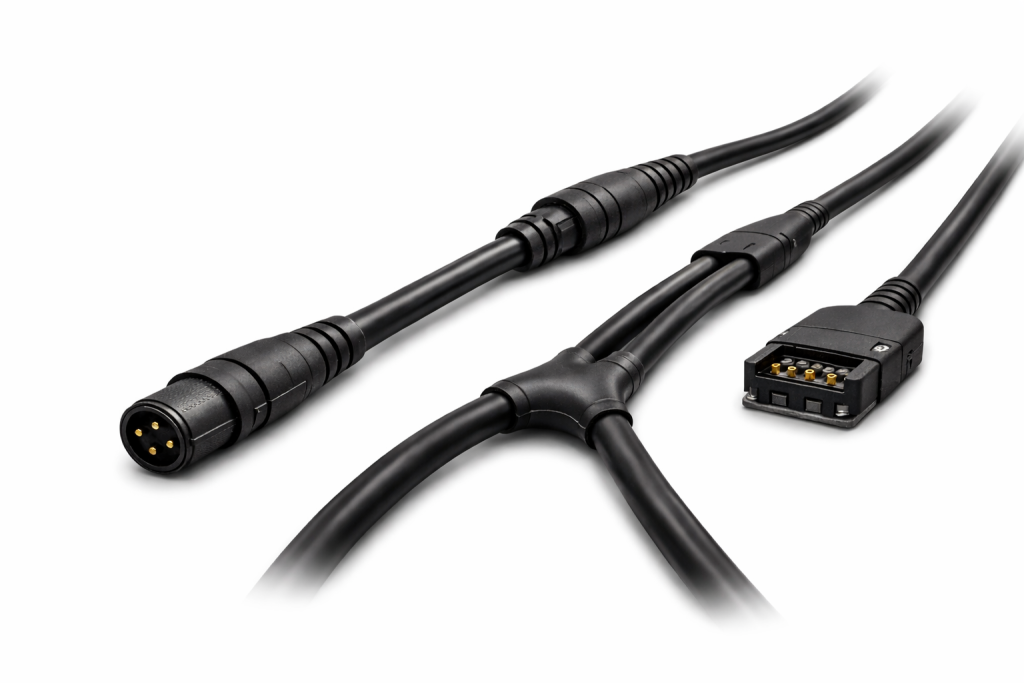
Connector Overmolding for Sealed, Strain-Relief Connectors
Overmolding turns standard connectors into sealed, rugged interfaces with built-in strain relief. We mold directly over the connector body and cable exit, creating a single, robust backshell that protects contacts and improves handling.
What we can do for your connectors
-
Design and mold custom backshells for circular and rectangular connectors
-
Integrate strain-relief boots at the cable exit to reduce bending stress and pull-out failures
-
Shape overmolded housings to support sealing features, anti-tamper requirements, and clean branding surfaces
The result is a connector that is easier to assemble, survives harsh environments, and looks like a finished, production-grade component.
Cable Overmolding for Rugged Cable Assemblies
Cable overmolding reinforces and seals the weak points along a cable or harness, especially at branches and transitions. Instead of heat-shrink, tape, or hand potting, we mold a single, durable “node” around the conductors to protect them in use.
What we can do for your cable assemblies
Overmolded Y / T branches and multi-leg harness junctions
Compact, low-profile junction “nodes” that replace traditional junction boxes
Reinforced transitions between different cable diameters or sheath types
Controlled bend-relief sections to improve pull strength and flex life
This creates clean, robust cable assemblies that are easier to route and install, and far more reliable in automotive, industrial, and outdoor environments.
Why Partner with Kemal for Cable & Connector Overmolding

Predictable Lead Times
Tool design, mold making, trials, and cable/connector overmolding are handled in-house, so schedules are not dependent on outsourced capacity. With our own equipment and planned production slots, we run a clear milestone flow from DFM to T0 and sample approval. Progress updates can be shared during the project to support internal planning and customer review.

Free DFM Review
We provide a free DFM and feasibility review before cutting steel, focused on your connector/cable design and use environment. We check sealing paths, strain-relief geometry, gate/parting-line locations, and key keep-out areas, then return clear recommendations and options to reduce trial loops and avoidable tool rework. Redacted DFM samples can be shared upon request for customer review.

ISO 9001 Quality Control
We operate under an ISO 9001 quality management system and run cable/connector overmolding with defined inspection and release criteria. Key characteristics and typical defects are checked within a controlled process window, with records linked to lots to support repeatable production and fast issue isolation. ISO 9001 certification and selected audit-ready record samples can be provided upon request.
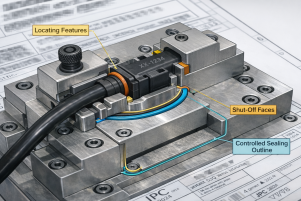
Tooling & Fixturing for Repeatability
We design and build overmolding tools with dedicated fixtures to locate the cable, connector, and terminals in a repeatable position before every shot. Sealing boundaries and keep-out zones are built into the tooling through proven locating and shut-off features to help prevent shifting, flash in sensitive areas, and inconsistent overmold length or exit angle. Fixture visuals and redacted design snapshots can be shared upon request for customer review.

Traceability & ECN/ECR Change Control
We maintain lot-level traceability for cable and connector overmolding and manage drawing/CAD, tooling, material, and key process updates through a documented ECN/ECR workflow. Changes are reviewed and approved before implementation, with revision history linked to samples and production lots to support fast issue isolation and corrective actions. Redacted traceability labels and ECN/ECR records can be shared upon request for customer review.

Proven Experience
We have delivered overmolded cable and connector assemblies beyond straight exits, including Y/T junctions, backshell designs, multi-cable routing, and sealed transitions. Instead of inventing a new structure every time, we start from proven internal baselines for gate strategy, strain-relief geometry, sealing paths, and process windows, then adapt them to your design to reduce trial loops and rework. Representative part photos and redacted program notes can be shared upon request for customer review.
Related Overmolding Services & Support
Overmolding-focused mold design covering shut-offs, cable positioning, strain relief geometry, and keep-out zone protection.
In-house mold manufacturing for overmolded cable assemblies, built for repeatability, durability, and production stability.
Injection overmolding services for connectors, cables, and integrated assemblies with sealing and strain-relief requirements.
Surface textures and finishing options for overmolded areas where grip, appearance, or marking is required.
CTQ-based inspection and validation support for overmolded cable assemblies, including pull-out and sealing verification.
Assembly & Delivery Support
Assembly coordination and pack-out planning aligned with overmolded cable assemblies and production workflows.
Our Customers
Trusted by 500+ Global Innovators & Industry Leaders


FAQ's
What’s the difference between connector overmolding and cable overmolding?
They’re the same overmolding process, applied to different areas of an assembly.
- Connector overmolding: overmold at the connector end to build a backshell + strain relief + sealing around the cable exit and keep-out zones.
- Cable overmolding: overmold on the cable or harness to reinforce junction nodes (Y/T), OD transitions, and wear points for protection and flex life.
Most projects are overmolded cable assemblies, so both may be used in one build.
Can you support both prototype and production cable overmolding?
Yes. We support cable and connector overmolding from prototype and pilot builds through full production. Tooling, fixtures, and DFM are planned upfront so designs validated at prototype stage can transition into stable, repeatable production without rework.
How do you prevent cable pull-out or overmold delamination?
We control pull-out and delamination risks through DFM-led design, not material alone. This includes dedicated fixturing to lock cable position, strain-relief geometry to reduce bending stress, and mechanical locking features within the overmold. Validation methods (such as pull testing) are defined during quoting to confirm performance against your requirements.
Can overmolding achieve IP67 or IP68 sealing for cable assemblies?
Yes, when sealing is designed into the overmold geometry. IP67 or IP68 performance depends on shut-off design, material selection, and cable/connector interfaces, not the overmolding process alone. We support IP67/IP68-ready designs and define validation methods during DFM to confirm sealing performance.
What overmold materials do you use, and how do you ensure bonding to cables and connectors?
We commonly use TPE, TPU, PA, and PBT, selected based on flexibility, environment, and the cable jacket or connector housing material. Bonding reliability is achieved through mechanical locking features, surface geometry, and controlled shut-offs, with material pairing confirmed during DFM to reduce delamination risk over the product life cycle.
What information do you need to quote a cable or connector overmolding project?
To quote connector overmolding or cable overmolding accurately, please share:
Connector datasheet / drawing (mating areas and keep-out zones highlighted)
Cable stack-up (OD, jacket material, conductor count, shielding/drain wire if any)
Overmold target area (backshell/strain relief length, exit angle, junction node details)
Environment requirements (IP target, temperature range, chemicals/UV/abrasion)
Volume + program stage (prototype, pilot, production) and target lead time
Validation needs (pull test, leak test method, any internal standards)
What inspection or validation reports are available for overmolded cable assemblies?
We can provide CTQ-based dimensional inspection records for critical features such as overmold length, cable exit angle, and interface dimensions. For validation, we can support program-defined methods including cable pull-out testing, flex/bend-life checks, and seal integrity verification (test method and criteria confirmed during DFM). Lot-level traceability records can also be provided when required.
Is overmolding better than heat shrink or potting for cable assemblies?
Often, yes—especially for production. Overmolding creates a repeatable, one-piece strain relief and protective shell with consistent geometry and scalable cycle time. Heat shrink and potting can work for low volume or simple protection, but they typically offer less control over shape, sealing interfaces, and repeatability across batches. The best choice depends on your sealing target, durability requirements, and production volume.

