If you work with 3D printing, you already know how fast this field evolves. Yet stereolithography (SLA) continues to stand out in 2025 for one simple reason: it delivers precision and surface quality that most other technologies can’t match.
Today, industries as diverse as dental, medical, automotive, and consumer products use SLA to produce prototypes, tooling, and even functional parts. Market studies show that demand for resin-based 3D printing is growing steadily, driven by better materials, faster curing systems, and fully automated post-processing.
This guide gives you a clear view of where SLA fits into modern manufacturing—how it works, its strengths and limits, and why it remains a practical choice for engineers and designers in 2025.
What Is Stereolithography 3D Printing?
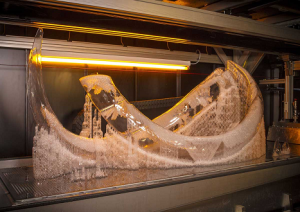
Stereolithography, often abbreviated as SLA, is one of the earliest and most precise 3D printing technologies. Instead of melting plastic filaments like FDM, SLA uses a liquid photopolymer resin that hardens when exposed to a specific wavelength of light—typically ultraviolet (UV).
Here’s how it works in simple terms: a laser or projector traces each cross-section of your 3D model onto the liquid resin. Wherever the light hits, the resin cures and solidifies. Layer by layer, the object takes shape until the entire part is built. After printing, the part goes through cleaning and post-curing to reach its final strength and accuracy.
You may also encounter terms like DLP (Digital Light Processing) and LCD 3D printing. They all fall under the broader category of resin-based, or “vat photopolymerization,” technologies but differ in how they deliver light:
- SLA uses a precisely controlled laser to draw each layer, ideal for high detail and surface quality.
- DLP projects an entire layer at once using a digital projector, making it faster for small to medium parts.
- LCD 3D printing relies on UV LEDs shining through an LCD screen, offering a cost-effective solution for hobbyists and small businesses.
By understanding these differences, you can better match the right technology to your project’s needs—whether it’s the fine detail of SLA, the speed of DLP, or the accessibility of LCD printers.
How SLA 3D Printing Works: Step-by-Step Process
SLA printing turns a digital 3D model into a physical part through a series of well-defined stages. In 2025, the workflow remains familiar but is now enhanced by automation, smarter software, and improved materials handling. Here’s how the process works:
1. CAD Modeling
You start with a 3D design created in CAD software. Modern design platforms now integrate with SLA printers, flagging potential printing issues—like thin walls or unsupported overhangs—before you even export the file. This helps you avoid costly failed prints.
2. Slicing and Print Setup
The 3D model is then sliced into thin cross-sectional layers using specialized software. In 2025, AI-driven slicers go beyond simple layer division: they automatically optimize part orientation, support structures, and resin usage, balancing speed, cost, and part quality without manual trial and error.
3. Layer-by-Layer Photopolymerization
The printer’s laser or projector cures each layer of liquid resin. SLA systems use closed-loop motion control to maintain micron-level precision. New-generation machines even adjust laser intensity in real time for consistent curing across complex geometries.
4. Part Removal and Cleaning
Once printing finishes, the part is removed from the build platform and cleaned—usually with isopropyl alcohol (IPA)—to wash off uncured resin. Many facilities now use automated cleaning stations that reduce manual labor and improve safety.
5. Post-Curing
After cleaning, the part undergoes UV post-curing to achieve its final mechanical strength and thermal stability. In 2025, enclosed curing systems with controlled heat and light exposure ensure consistent material properties across batches.
6. Optional Finishing
If a smooth cosmetic surface is required, sanding, coating, or painting can follow. Some manufacturers now integrate robotic polishing and coating systems directly into their production lines for a fully automated workflow.
With these upgrades, SLA printing has become faster, more consistent, and easier to integrate into industrial-scale additive manufacturing workflows.
SLA 3D Printing Materials: From Standard to Engineering Resins
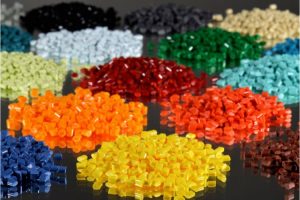
The performance of any SLA-printed part depends heavily on the resin you choose. Over the past decade, resin technology has advanced significantly, and in 2025, you have more options than ever—from low-cost prototyping materials to engineering-grade resins designed for functional end-use parts.
1. Standard Resins
These are the most affordable and widely used materials for general-purpose prototyping. They offer good detail and surface finish but have limited mechanical strength and heat resistance. Standard resins are ideal when speed and cost matter more than durability.
2. Engineering Resins
For functional prototypes or production tools, engineering-grade resins offer higher strength, stiffness, and impact resistance. Variants include:
- Tough resins for load-bearing parts
- Rigid resins with glass or ceramic fillers for dimensional stability
- High-temperature resins for applications requiring heat resistance above 200°C
3. Flexible and Elastic Resins
When you need rubber-like properties—think gaskets, seals, or medical models—flexible and elastic resins deliver high elongation and tear resistance while maintaining SLA’s precision.
4. Biocompatible Resins
In healthcare and dental applications, Class I and IIa certified biocompatible resins allow direct contact with skin or mucous membranes. These materials meet strict regulatory standards for surgical guides, dental aligners, and custom implants.
5. Sustainable and Low-Emission Resins
Environmental concerns are driving the development of bio-based and recyclable photopolymers. 2025 has also seen the rise of low-odor, low-VOC resins, improving workplace safety without sacrificing performance.
Here’s a simplified comparison for quick reference:
| Resin Type | Strength | Heat Resistance | Flexibility | Typical Applications |
| Standard | Low–Medium | Low (≤60°C) | Low | Prototypes, concept models |
| Engineering | High | High (≤200°C) | Low–Medium | Functional parts, tooling, fixtures |
| Flexible/Elastic | Low–Medium | Low | High | Seals, gaskets, medical models |
| Biocompatible | Medium | Medium | Medium | Dental models, surgical guides |
| Sustainable/Low-Emission | Varies | Varies | Varies | Eco-friendly prototyping, consumer goods |
With these options, SLA printing in 2025 supports everything from affordable prototypes to high-performance, regulatory-compliant parts across multiple industries.
Advantages and Limitations of SLA Technology
When you look at SLA 3D printing today, it’s clear why so many engineers keep coming back to it. The technology simply delivers a level of precision and surface finish that few other additive methods can match. If you’re working on prototypes where every curve and edge matters—think dental aligners, surgical guides, or jewelry molds—SLA gives you parts that come out of the printer nearly production-ready. That kind of accuracy can save you hours, sometimes days, of post-processing.
But it’s not just about accuracy. Over the past few years, material science has pushed SLA forward. We now have engineering-grade and biocompatible resins that handle heat, mechanical loads, and even medical regulations. Combined with closed-loop calibration and smarter slicing software, SLA systems in 2025 deliver consistent results across multiple builds. For businesses that need reliability at scale, this consistency is a big deal.
That said, SLA isn’t perfect. Speed remains a trade-off—especially for larger parts—because the laser still traces each layer point by point. Material cost is another factor; resins are pricier than thermoplastics used in FDM or SLS. And while automated cleaning and curing stations are helping, post-processing still adds time and labor compared to powder-based or filament systems.
The good news? Multi-laser engines, low-odor resins, and automated finishing workflows are closing these gaps fast. In 2025, SLA is no longer limited to prototypes. For many industries, it’s already a bridge to low-volume manufacturing where precision and surface quality matter as much as cost and lead time.
SLA vs. Other 3D Printing Technologies
When choosing a 3D printing method, the key question isn’t which technology is “best,” but which one fits your project’s needs. The comparison below summarizes how SLA, FDM, SLS, and MJF perform across key factors:
| Technology | Accuracy & Surface Quality | Material Capabilities | Cost Level | Speed & Throughput | Typical Applications |
| SLA | Very high (±0.05 mm), smooth finish | Engineering resins, biocompatible resins | Medium (resins cost more) | Medium, slower with single lasers | Medical, dental, jewelry, visual prototypes |
| FDM | Moderate, visible layer lines | Thermoplastics (PLA, ABS, etc.) | Low (cheapest option) | Fast, good for concept models | Education, quick prototypes, low-cost modeling |
| SLS | High (±0.1–0.2 mm) | Nylon, composite powders, high strength | Medium–High (powder cost) | Medium–High, batch production | Functional prototypes, small-batch end-use parts |
| MJF | High (±0.1–0.2 mm) | Nylon, TPU, strong mechanical properties | Medium | High speed, high throughput | Functional parts, small-batch custom production |
Decision Guide:
- Use SLA when you need exceptional detail, smooth surfaces, and dimensional accuracy—for instance, in dental models, aesthetic prototypes, or jewelry casting patterns.
- Use SLS/MJF when mechanical strength, complex geometries, or small-batch production are top priorities.
- Use FDM when you need low-cost, fast-turnaround prototypes where surface finish is less critical.
Real-World Applications of SLA in 2025
If you’re wondering where SLA makes the most impact in 2025, the answer spans multiple industries where precision, surface finish, and customization are critical.
Medical and Dental
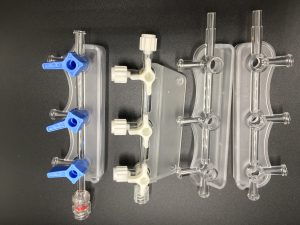
Hospitals and dental labs rely on SLA for surgical guides, dental aligners, and anatomical models. With biocompatible resins meeting Class I and IIa standards, parts can be sterilized and used directly in operating rooms or dental clinics. Faster light engines and automated post-processing have cut turnaround times from days to hours, enabling same-day surgical planning.
Jewelry and Fashion
Jewelry designers use SLA to produce high-resolution casting patterns with micron-level detail. The smooth surface quality reduces finishing work before metal casting, accelerating design iterations for custom pieces.
Automotive and Aerospace
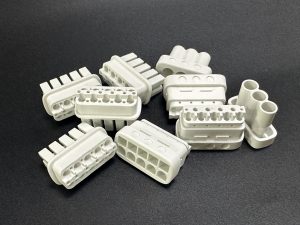
Automotive engineers print functional prototypes, aerodynamic test models, and tooling fixtures using engineering-grade resins. Aerospace manufacturers use high-temperature materials like PEI-based resins for lightweight interior components in low-volume production runs.
Consumer Products and Prototyping
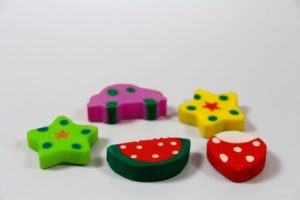
For consumer electronics and household goods, SLA delivers visual prototypes with production-like surface finishes. Startups use it to validate design ergonomics and aesthetics before committing to expensive tooling.
Industrial Equipment and Custom Manufacturing
Factories integrate SLA into low-volume, high-complexity part production, especially where customization or short lead times justify additive manufacturing over traditional methods. Automated print farms now enable continuous production of small-batch components with minimal labor.
By 2025, SLA is no longer limited to early-stage prototypes. It’s a production-ready technology for industries demanding precision, speed, and design freedom.
Design Tips for Successful SLA Printing

Even the best SLA printers can’t fix a poorly designed model. If you want to avoid failed prints and excessive post-processing, it starts with smart design decisions. Here’s what to focus on in 2025:
Plan for Wall Thickness and Structural Integrity
Thin walls might save material, but risk warping or breaking during support removal. Keep walls at least 1–1.5 mm thick for prototypes and 2–3 mm for functional parts. AI-enabled slicing software now flags under-designed sections before you hit “print,” saving both time and material.
Optimize Part Orientation and Supports
SLA parts need support structures for overhangs and complex geometries. Automatic support generation tools in 2025 use AI algorithms to minimize contact points, making removal easier while preventing print failures. Orienting parts at angles often reduces surface imperfections and speeds up resin drainage.
Design Drainage and Escape Holes
If you’re printing hollow parts, add escape holes for uncured resin. Without them, trapped liquid can cause surface defects and cleaning problems. Modern slicers can automatically suggest optimal hole placement based on part geometry.
Control Surface Quality with Smart Settings
Layer height and curing exposure directly affect smoothness and accuracy. Use adaptive layer thickness—thicker layers for internal sections, finer layers for external surfaces—to balance print time and surface finish.
Think Ahead About Post-Processing
Design for easy cleaning and curing. Parts with deep, narrow cavities trap resin and require longer cleaning cycles. In 2025, automated washing and curing stations help standardize this step, but thoughtful design still saves you time.
By combining solid design practices with AI-assisted tools, you can achieve higher accuracy, fewer defects, and faster turnaround—whether for prototypes or production-ready parts.
Future Trends and Innovations in SLA Technology
SLA technology in 2025 is evolving far beyond its prototyping roots. Three developments stand out:
- Faster light engines and multi-laser systems are dramatically reducing print times, making SLA competitive for small-batch manufacturing.
- Sustainable photopolymers are emerging, including low-odor, bio-based, and recyclable resins that meet both performance and environmental requirements.
- Full automation—from AI-driven part orientation to robotic cleaning and curing—is turning SLA into a lights-out manufacturing process for industries with demanding precision standards.
These innovations are lowering costs, improving throughput, and making SLA a practical choice for production environments rather than just design studios.
Conclusion
SLA remains one of the most precise and versatile 3D printing technologies in 2025. With better materials, faster hardware, and automation, it’s expanding from prototypes into end-use parts across medical, dental, aerospace, and consumer industries.
If you’re considering SLA for your projects, start by matching your tolerance, surface finish, and material requirements against what this technology can deliver. From there, you can decide whether to invest in in-house equipment or work with a specialized service provider for industrial-grade results.
Ready to bring your designs to life with professional SLA 3D printing? Explore our SLA 3D printing services for expert engineering support, instant quotes, and production-ready solutions tailored to your needs.