Insert Molding Services
Make durable, production-ready prototypes and end-use parts with Kemal’s custom insert molding service.
- Fast turnaround (as fast as 2 weeks)
- No MOQ, competitive pricing
What is Insert Molding
Insert molding is an injection molding process where a pre-formed component—such as a metal insert, threaded fastener, or electrical connector—is placed into the mold, and plastic is injected around it to form a single, integrated part.
The process eliminates the need for adhesives or secondary assembly, improving strength, accuracy, and long-term durability. Inserts can be placed manually or with automation, making it suitable for both low- and high-volume production.
- Threaded inserts in plastic housings
- PCB supports and sensor mounts
- Conductive terminals, pins, and connectors
- Structural reinforcements in mechanical parts

Kemal’s Insert Molding Capabilities
We offer insert molding solutions that combine advanced tooling, precise material control, and flexible production methods to meet a wide range of part requirements. Below are our typical insert molding capabilities:
| Parameter | Specification |
|---|---|
|
Maximum Part Size |
800 × 1000 × 400 mm / 31.50 × 39.37 × 15.75 in
|
|
Minimum Part Size |
2 × 2 × 2 mm / 0.08 × 0.08 × 0.08 in |
|
Wall Thickness |
0.5 – 3 mm / 0.02 – 0.12 in |
|
Tolerance |
±0.025 mm typical; tighter tolerance on request |
|
Insert Types Supported |
Threaded inserts, terminals, rods, pins, custom metal parts |
|
Insert Placement Method |
Manual or automated loading (robotic arm compatible)
|
|
Mold Validation |
T0, T1, T2 sample trials before production |
|
Certifications |
ISO 9001, ISO 13485, First Article Inspection (FAI) |
|
Certifications & Inspections |
ISO 9001, ISO 13485, First Article Inspection |
|
Lead Time |
15–45 business days from mold to sample delivery |
Need help checking your insert molding design? Upload your CAD
Insert Molding Materials
Insert molding works with a wide range of thermoplastics and embedded components, allowing for strong mechanical bonds and integrated part performance. At Kemal, we support the following materials:
Thermoplastic Materials (Overmold Layer)

ABS
Good toughness and dimensional stability

Polycarbonate (PC)
High impact strength, optical clarity

Nylon (PA6, PA66)
Excellent wear resistance, structural strength

PBT
High electrical insulation and thermal stability
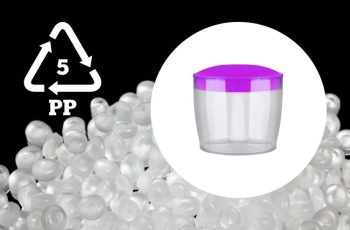
PP
Lightweight and chemical resistant

TPU / TPE
Flexible options for vibration damping or sealing needs
Common Insert Materials

Brass threaded inserts
Precision-machined brass threaded inserts provide enhanced structural support and reusable thread connections for plastic components.

Stainless steel or aluminum pins, rods, terminals
High-precision stainless steel or aluminum inserts provide robust structural support and reliable electrical connections for plastic components.

Copper contacts and grounding tabs
Highly conductive copper contacts and grounding tabs can be securely embedded into plastic structures through insert molding, achieving integration of electrical functionality and structural support.

Custom-machined or pre-fabricated metal parts
Custom-machined or pre-fabricated metal parts are essential functional components in insert molding, widely used for structural reinforcement, electrical connectivity, and precise positioning.

Ceramic or sensor modules (on request)
Ceramic modules and sensor components play a critical role in insert molding processes and are widely used in high-performance applications such as electronics, electrical systems, medical devices, and smart technologies.
We also offer material selection support, bonding evaluation, and DFM reviews to ensure strong adhesion and production success—especially for challenging metal–plastic combinations.
Insert Molding - Tooling Solutions
Kemal provides custom insert molding tooling solutions to meet your needs from prototyping to mass production. Whether you need fast-turnaround testing tools or high-volume molds, our in-house capabilities ensure accuracy and long-term reliability.
Rapid Tooling
Get fast design validation and functional insert-molded samples with cost-effective aluminum or soft steel tools. Perfect for prototyping, small batch runs, and early insert-fit testing.
- Mold delivery in as fast as 7–15 business days
- Ideal for pilot production and design iterations
- Helps reduce risk before full-scale investment
Production Tooling
High-precision steel molds for long-life insert molding in high-volume environments. Designed to support complex geometries, automated insert loading, and repeatable accuracy.
- Supports multi-cavity or family mold configurations
- Insert alignment tolerance up to ±0.01 mm
- Suitable for 100,000+ shots with proper maintenance
Why Choose Kemal for Insert Molding
From precision mold tooling to automated insert placement, Kemal delivers reliable, scalable insert molding solutions trusted by global customers.
In-House Tooling Expertise
We design, build, and validate all molds in-house—ensuring full quality control from day one.
High-Precision Insert Alignment
Our molds achieve insert positioning tolerances down to ±0.01 mm, even for complex parts.
Wide Material & Insert Compatibility
Supports a variety of plastics, metals, ceramics, and specialized electrical inserts.
Flexible Volumes, No MOQ
Whether you need 10 parts or 100,000, we scale to your project—without minimum order limits.
Fast Lead Times
Rapid tooling in as fast as 7–15 business days. Production tooling from 25 days.
Full DFM & Engineering Support
Our engineers provide manufacturability reviews and bonding evaluations to optimize your design before tooling starts.
Insert Molding Design Guide
Design your parts for precision, durability, and production efficiency.
| # | Design Tip | Why It Matters | Recommendations / Notes |
|---|---|---|---|
|
1️⃣ |
Allow clearance around inserts |
Prevents short shots, sink marks, or resin overflow during injection |
Provide 0.2–0.5 mm clearance depending on resin flow |
|
2️⃣ |
Keep uniform wall thickness |
Avoids uneven cooling, warping, and sink marks |
Aim for consistent wall thickness in 1.5–2.5 mm range |
|
3️⃣ |
Use locator pockets or bosses |
Ensures accurate insert placement and prevents shifting |
Add tight-fit features with ±0.05 mm tolerance for positioning |
|
4️⃣ |
Consider material shrinkage mismatch |
Prevents internal stress and dimensional deviation |
Match shrink rates where possible; pre-test critical combinations |
|
5️⃣ |
Avoid sharp corners near inserts |
Reduces stress concentrations and cracking risks |
Use ≥0.5 mm fillets around inserts |
|
6️⃣ |
Reinforce insert zones with ribs/bosses |
Improves load transfer and prevents delamination |
Especially for threaded or load-bearing inserts |
|
7️⃣ |
Plan gate and vent location carefully |
Prevents flow hesitation and air traps around inserts |
Avoid gating directly onto the insert; use side or edge gating |
|
8️⃣ |
Fix inserts during molding |
Prevents inserts from floating or shifting in the mold cavity |
Use fixtures, magnetic support, or undercuts for retention |
Upload your design for a free DFM review from Kemal engineers.
Insert Injection Molding
Insert Injection Molding is an advanced manufacturing process that involves placing metal, ceramic, or other inserts into a mold before injecting plastic to form a single, integrated component. Compared to traditional secondary assembly methods, this technique significantly enhances structural strength and stability while reducing production steps and improving efficiency.
- Widely used in electronic connectors, automotive parts, and medical devices
- Enables multi-material integration and high-precision molding
- Delivering more reliable performance and compact designs

Industries We Served
We provide insert molding solutions across a wide range of industries.
Insert molding plays a vital role in the aerospace sector, where lightweight strength and reliability are paramount. We manufacture components with embedded metal or sensor inserts that meet strict performance standards—ideal for connectors, housings, and structural assemblies operating in high-vibration or thermal environments.
Medical applications demand extreme precision, biocompatibility, and reliability. Our insert molding solutions integrate metal pins, electrodes, or ceramic elements into plastic components, ensuring consistent performance in devices such as surgical instruments, diagnostic equipment, and sensor housings—while meeting regulatory and hygiene standards.
Insert molding is widely used in the automotive industry to enhance component durability and reduce assembly complexity. From molded-in connectors and threaded inserts to sensor bases and mounting features, our solutions support high-performance applications in under-the-hood electronics, lighting systems, and interior components—ensuring mechanical stability and long-term reliability in demanding environments.
In consumer electronics, insert molding enables the seamless integration of miniature metal parts, grounding elements, and sensor modules into compact plastic housings. This process not only improves product strength and precision but also supports sleek, space-saving designs for devices such as smartphones, wearables, headphones, and home appliances.
Our Customers
Trusted by 500+ Global Innovators & Industry Leaders


FAQs
We support a wide range of insert and plastic combinations for insert molding.
🔩 Insert Materials:
- Brass (threaded inserts, terminals)
- Stainless steel
- Copper
- Aluminum
- Ceramics
- PCBs or custom electronic components
🧱 Plastic Materials:
- ABS – good dimensional stability
- Polycarbonate (PC) – impact resistant, clear
- Nylon (PA6, PA66) – strong and wear-resistant
- PBT – great for electrical insulation
- Polypropylene (PP) – chemical resistant, lightweight
- TPU / TPE – flexible and rubber-like for soft interfaces
We also offers material compatibility checks and DFM reviews to help you choose the best combination for your part’s performance and production needs.
Our standard tolerance for insert-molded parts is ±0.05 mm, which covers most general features. For critical areas, such as insert alignment or mating dimensions, we can achieve ±0.01–0.02 mm with proper mold design and processing control.
Tolerances depend on:
- Insert material and fit (e.g., brass vs. steel)
- Part geometry and wall thickness
- Mold precision and tooling material
- Whether inserts are fixed manually or automatically
At Kemal, we evaluate tolerances during the DFM review stage and provides suggestions to ensure consistent, repeatable results in production.
Yes. The recommended minimum wall thickness depends on the type of plastic used and the geometry of the insert.
- For rigid plastics (e.g., ABS, PC, Nylon):
➤ Minimum wall thickness: 0.5–0.8 mm - For flexible materials (e.g., TPE, TPU):
➤ Recommended minimum: 1.0–1.5 mm
Walls that are too thin may result in:
- Incomplete filling or short shots
- Poor bonding to the insert
- Increased risk of warping or sink marks
We suggest maintaining a consistent wall thickness whenever possible. During the DFM stage, Kemal’s engineers will evaluate your design and advise on optimal thickness based on material flow, insert size, and part complexity.
No, Kemal has no minimum order quantity (MOQ) for insert molding projects.
We support:
- Low-volume prototyping
- Bridge tooling
- On-demand production
- High-volume manufacturing
Whether you need 10 units for testing or 100,000 parts for full production, we’ll scale the process to meet your requirements. This flexibility makes insert molding with Kemal ideal for both early-stage development and long-term programs.
Absolutely. Kemal offers free Design for Manufacturability (DFM) reviews before mold fabrication begins.
Our engineering team will:
- Analyze your part geometry and material selection
- Evaluate insert placement, wall thickness, gating, and draft angles
- Identify potential risks like warping, sink marks, or bonding issues
- Provide optimization suggestions to reduce cost and improve moldability
Early DFM review helps avoid costly tooling changes later and ensures your insert molding project runs smoothly from the start.
We accept a wide range of 3D CAD and 2D drawing file formats for insert molding projects.
Supported 3D file types:
- STEP (.step, .stp)
- IGES (.igs, .iges)
- STL
- Parasolid (.x_t, .x_b)
- SolidWorks (.sldprt)
- AutoCAD (.dwg, .dxf)
- Other formats available upon request
To ensure the best DFM review and tooling design, we recommend providing:
- 3D model (STEP or IGES preferred)
- 2D drawing with tolerances (if available)
- Insert specs or datasheets (for custom components)
Lead time depends on part complexity, mold type, and production volume. At Kemal, we offer flexible turnaround options to fit your project schedule:
🕑 Typical lead times:
- Rapid tooling: 7–15 business days (for prototyping or bridge runs)
- Production tooling: 25–45 business days (hardened steel molds)
- Sample delivery (T0/T1): Included in above timeframes
- Mass production: Begins immediately after sample approval
We also support urgent timelines with prioritized scheduling, depending on project feasibility.
Insert molding is widely used across industries where metal and plastic integration enhances functionality, durability, or compactness. It enables structural, electrical, or threaded components to be seamlessly built into plastic parts.
Common applications include:
- Threaded inserts in plastic housings and enclosures
- Electrical connectors and terminals with integrated plastic bodies
- Sensor and PCB mounts for medical or industrial electronics
- Cable strain reliefs and wire harness components
- Metal shafts, pins, or bushings embedded in load-bearing parts
- Plastic casings with reinforced internal structures
- Automotive brackets or under-hood components requiring strength and lightweighting
Insert molding is ideal for reducing post-assembly steps, improving part strength, and achieving compact multi-functional designs.
Insert molding works by placing a pre-formed component—such as a metal insert—into a mold cavity, then injecting molten plastic around it. Once cooled, the plastic solidifies, locking the insert in place as part of a single, integrated part.
Basic process steps:
- Insert placement: The insert is loaded into the mold (manually or automatically)
- Mold closing: The mold clamps shut, securing the insert in position
- Plastic injection: Thermoplastic resin is injected around the insert
- Cooling and ejection: The finished part is cooled and ejected, with the insert permanently embedded
This process creates strong mechanical or functional bonds between the insert and the plastic, without requiring adhesives, fasteners, or secondary assembly.

