Vacuum casting has become one of the most practical methods for producing high-quality prototypes and low-volume parts. It bridges the gap between early design iterations and full-scale manufacturing, allowing engineers to validate designs, test materials, and deliver functional parts quickly without the high cost of metal tooling.
In 2025, the process continues to evolve. New polyurethane resins, automated casting equipment, and distributed manufacturing networks are expanding its capabilities, reducing lead times, and improving part performance. At the same time, companies are using vacuum casting not only for visual prototypes but also for functional testing and small-batch production, where surface quality and mechanical properties matter.
This guide explains how vacuum casting works, what materials are available, its cost structure, advantages and limitations, and the latest industry trends, helping you decide when and how to use this method effectively.
What Is Vacuum Casting?
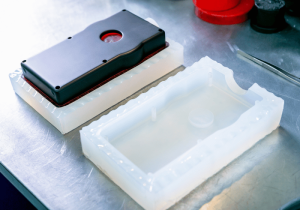
Vacuum casting is a low-volume manufacturing process that uses a silicone mold and a vacuum environment to produce high-quality polyurethane resin parts. The process begins with a master model—often made by CNC machining or 3D printing—used to create a silicone mold. Liquid polyurethane resin is then poured into the mold under vacuum to remove air bubbles and ensure accurate surface replication. After curing, the part is removed, and the mold can be reused multiple times to produce identical parts.
Unlike CNC machining, which removes material from a solid block, or 3D printing, which builds parts layer by layer, vacuum casting creates parts by replicating the master model’s geometry inside the mold cavity. This gives it a unique balance of surface finish, dimensional accuracy, and cost efficiency for small production runs.
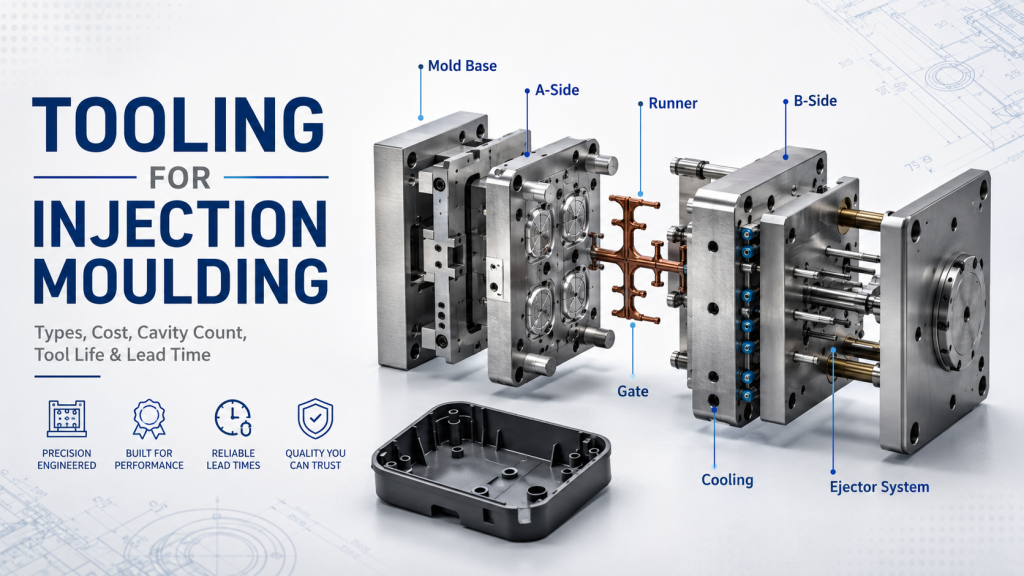
Compared with injection molding, vacuum casting requires no expensive metal tooling and is suitable for 5–50 units, where injection molding’s high upfront costs are not justified. While injection molding offers higher throughput and tighter tolerances, vacuum casting is the faster, more economical choice for prototypes, design validation, and early-stage production.
How Vacuum Casting Works: Step-by-Step Process
The vacuum casting process follows a structured workflow that ensures consistent part quality and repeatability. Each step directly influences accuracy, surface finish, and production efficiency.
- Master Model Preparation: A high-quality master model is created, typically using CNC machining or SLA 3D printing. Its surface finish directly determines the quality of the final parts, so polishing and finishing are done before mold making.
- Silicone Mold Creation: The master model is placed in a casting frame and surrounded by liquid silicone rubber. Once cured, the mold is cut open along predefined parting lines to remove the master model, leaving a precise negative cavity.
- Vacuum Casting: Polyurethane resin is mixed and poured into the silicone mold under vacuum. This eliminates air bubbles, ensuring smooth surfaces and accurate reproduction of details.
- Curing Process: The filled mold is cured in an oven at controlled temperatures. Curing time varies depending on resin type, part size, and performance requirements.
- Demolding and Finishing: After curing, the part is removed from the silicone mold. Finishing operations such as trimming, sanding, or painting are performed if required.
Modern production setups integrate automated resin mixing, robotic demolding, and fast-curing technologies. These reduce labor costs, improve repeatability, and cut lead times, making vacuum casting even more competitive for low-volume production.
Materials for Vacuum Casting: Options and Performance
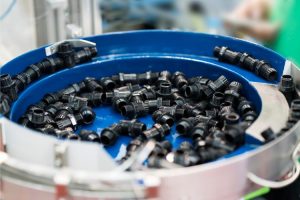
Vacuum casting relies on polyurethane resins that simulate the properties of common engineering plastics. These materials offer a balance of mechanical strength, surface quality, and production flexibility.
ABS-like Resins: These are the most widely used materials for vacuum casting. They provide good dimensional stability, impact resistance, and surface finish. ABS-like resins are ideal for functional prototypes, product housings, and components requiring strength and durability.
PP-like Resins: For parts needing flexibility, chemical resistance, or living hinges, PP-like resins replicate the properties of polypropylene. They are common in automotive parts, consumer goods, and packaging prototypes.
Transparent Resins: These materials allow optical clarity similar to PMMA or polycarbonate. They are often used for light covers, fluidic components, or visual design models where transparency and aesthetics matter.
Flexible and Rubber-like Resins: When parts require soft-touch surfaces or elastomeric properties, flexible polyurethane resins simulate TPE or TPU. Applications include grips, seals, gaskets, and overmolded components.
High-Temperature and Flame-Retardant Resins: For under-the-hood automotive parts or electronics housings, heat-resistant and UL-rated flame-retardant resins ensure safety and performance under demanding conditions.
Choosing the right resin depends on mechanical requirements, environmental conditions, and part function. For instance, ABS-like works for structural prototypes, transparent resin for optical parts, and PP-like for flexible components. Many manufacturers also offer custom resin formulations in 2025 to meet specific regulatory or performance needs.
Advantages and Limitations of Vacuum Casting
Vacuum casting has earned its place in prototyping and low-volume production because it offers a unique balance of cost, quality, and speed. One of its biggest advantages is the low mold cost. Unlike injection molding, which requires expensive metal tooling, vacuum casting uses silicone molds that can be produced quickly and affordably. This makes it possible to validate designs and deliver small batches without heavy upfront investment.
Another strength lies in surface quality and detail reproduction. Because the process captures every feature of the master model, the resulting parts often look and feel close to injection-molded components. Combined with the material versatility of polyurethane resins—ranging from ABS-like rigid plastics to flexible or transparent grades—it allows engineers to test parts under conditions very similar to final production materials.
However, the process has clear limitations. Silicone molds wear out after 15–25 cycles, so vacuum casting is not intended for mass production. Its dimensional accuracy, while sufficient for most prototypes, does not reach the tolerances of CNC machining or injection molding. And because pouring, curing, and demolding often require manual steps, the process lacks the high automation and throughput of other manufacturing methods.
The good news is that 2025 is bringing notable improvements. High-durability silicone now extends mold life beyond 40 cycles, while automated resin mixing, robotic demolding, and faster curing systems are reducing labor costs and lead times. These innovations are helping vacuum casting close the gap with traditional methods, especially for low- to mid-volume production where speed, flexibility, and cost efficiency are critical.
Cost Structure: When Vacuum Casting Is Cost-Effective

The economics of vacuum casting revolve around mold cost, per-part material cost, labor, and post-processing. Unlike injection molding, where expensive metal tooling dominates upfront investment, vacuum casting uses silicone molds that are quick and inexpensive to produce. This makes the process attractive when you only need 5 to 50 parts before moving to full production.
At very low volumes—say under five parts—3D printing is often cheaper because it avoids mold-making altogether. But as soon as you need more than a handful of parts, the per-part cost in vacuum casting drops significantly since the same silicone mold can produce multiple identical pieces with consistent quality. The initial mold investment is quickly spread out over each part, while 3D printing costs remain nearly linear because every part is built individually.
Compared to injection molding, vacuum casting reaches its cost ceiling much later. Injection molding’s high tooling cost only becomes economical at hundreds or thousands of parts, while vacuum casting fills the gap for low-volume batches where quality matters but budgets are tight. For many companies, the break-even point often falls between 20 and 50 units—beyond that, switching to injection molding becomes more cost-effective despite the higher tooling cost, because the marginal cost per part drops dramatically at scale.
What this means in practice: vacuum casting offers a sweet spot for prototypes, functional testing, and early-stage market validation. It balances upfront cost, part quality, and turnaround time in ways neither 3D printing nor injection molding can fully match at these volumes.
Typical Applications in Prototyping and Low-Volume Production
Vacuum casting has become a go-to choice for companies that need functional prototypes and small production runs without committing to the cost and lead time of full-scale injection molding. In product development, it often plays a critical role right after initial design validation. For instance, automotive engineers use vacuum casting to produce dashboard panels and interior components for fit checks, ergonomic testing, and early-stage performance evaluations. These parts replicate the look and feel of injection-molded plastics but can be delivered in a fraction of the time.
In consumer electronics and medical devices, vacuum casting supports aesthetic and functional prototypes that closely resemble final products. Design teams can assess surface finishes, color accuracy, and assembly tolerances before investing in expensive tooling. Medical startups, for example, use vacuum casting to create enclosure prototypes for diagnostic equipment where both appearance and biocompatibility are critical.
The method also serves as a bridge to market for companies that need limited runs of production-quality parts. Trade show samples, pilot production batches, or early customer shipments often rely on vacuum casting because it combines professional-grade appearance with faster turnaround times than traditional manufacturing. By enabling quick iterations and small-scale launches, it helps businesses test market responses before scaling to mass production.
Design Tips for Successful Vacuum Casting

Design choices often decide whether a vacuum casting project goes smoothly or leads to higher costs and delays. A few key considerations can help you avoid problems while improving part quality:
- Keep wall thickness uniform: Aim for walls between 1.5–5 mm depending on part size. Consistent thickness ensures even curing, reduces warping risks, and keeps material usage under control. Very thin sections may fail to fill completely, while overly thick areas increase curing time and part weight.
- Add draft angles for easier demolding: A small taper—typically one or two degrees—on vertical walls helps parts release smoothly from the silicone mold. This extends mold life and reduces the risk of tearing during part removal.
- Plan parting lines carefully: Placing parting lines along natural design features or less visible edges minimizes cosmetic issues and reduces the amount of post-processing needed after demolding.
- Simplify internal features: Design ribs, bosses, and undercuts with mold separation in mind. Eliminating unnecessary undercuts or using modular inserts prevents damage to the mold and improves overall accuracy.
- Prepare for efficient finishing: Smooth transitions, minimal sharp corners, and good access points for sanding or painting lower labor costs during post-processing. Even with automated trimming systems now available in 2025, a well-prepared design makes finishing faster and more consistent.
Considering these points early in the design phase helps you achieve better part quality, longer mold life, and lower per-part costs across the entire production run.
2025 Trends and Innovations
Several developments are shaping how vacuum casting is applied in prototyping and low-volume production today. These innovations are reducing costs, improving efficiency, and expanding the process’s role in modern manufacturing:
- Automated Casting and Smart Curing: In 2025, more manufacturers are adopting automated resin mixing, robotic pouring, and intelligent curing systems. These technologies reduce labor needs, ensure consistent part quality, and shorten production cycles. Real-time monitoring now adjusts curing parameters automatically, improving dimensional accuracy and material performance.
- Sustainable Materials: Environmental regulations and corporate sustainability goals are driving the use of eco-friendly polyurethane resins and recyclable silicone mold materials. These new formulations lower carbon footprints while maintaining the mechanical strength and surface quality needed for functional parts.
- Distributed and Digital Manufacturing Networks: Digital manufacturing platforms now link multiple production sites into on-demand manufacturing networks. By producing parts closer to end-use locations, companies cut shipping times and costs while enabling flexible scaling for regional markets. Integration with CAD/CAM systems also allows direct digital transfer of designs, reducing errors and lead times.
Together, these trends are pushing vacuum casting toward a faster, greener, and more connected manufacturing future, making it a competitive choice even as other technologies continue to evolve.
Conclusion
Vacuum casting offers a practical balance of cost, speed, and quality for prototypes and low-volume production. It fills the gap between 3D printing and injection molding, delivering parts with near-production aesthetics and functionality without the high upfront investment of metal tooling.
Before starting a project, evaluate three things clearly: required part quantity, performance needs, and budget constraints. If you need small batches with professional-grade finishes, vacuum casting often provides the best return on investment.
For accurate pricing and lead times, work with suppliers who offer design-for-manufacturing feedback and online quoting tools. This ensures you get a realistic cost breakdown before committing and helps identify design changes that could save time and money.
Ready to bring your prototypes to life? Explore our vacuum casting services to get expert guidance on cost, materials, and production timelines tailored to your project.
FAQs
How many parts can one silicone mold produce?
A typical silicone mold in vacuum casting can produce 15–25 parts before it starts losing dimensional accuracy and surface quality. The exact number depends on factors like part geometry, resin type, curing temperature, and handling practices.
For simple designs with uniform wall thickness, you might get closer to the upper limit, while complex parts with deep undercuts or high-temperature curing cycles can reduce mold life. In 2025, improved silicone formulations and automated demolding systems are helping extend mold durability to 30–40 parts in some cases, but vacuum casting remains best suited for prototyping and low-volume production rather than mass manufacturing.
What materials are best for functional prototypes?
For functional prototypes produced with vacuum casting, the most common materials are polyurethane resins designed to simulate engineering plastics. The best choice depends on the part’s mechanical, thermal, and aesthetic requirements:
- ABS-like resins work well for prototypes needing strength, impact resistance, and dimensional stability—for example, enclosures, housings, or structural components.
- PP-like resins provide flexibility, chemical resistance, and fatigue strength, making them suitable for living hinges, snap-fit parts, and automotive interior components.
- Transparent resins mimic the look of acrylic or polycarbonate and are often used for light covers, lenses, or fluidic components where optical clarity matters.
- High-temperature or flame-retardant resins are ideal for under-the-hood automotive parts or electrical housings, where heat and safety standards apply.
In 2025, suppliers also offer specialty polyurethane grades with enhanced durability or biocompatibility, enabling prototypes that closely match final production requirements while keeping costs low for small runs.
When should you switch from vacuum casting to injection molding?
Vacuum casting is most cost-effective when you need 5–50 parts with production-like quality and a fast turnaround. It allows you to validate designs, test materials, and deliver early batches without the high tooling cost of injection molding.
However, once your production volume grows beyond 50–100 units or you need tighter tolerances, shorter cycle times, and long-term mold durability, injection molding becomes the better choice. Its metal tooling can withstand thousands of cycles, spreading the initial cost over a much larger number of parts and reducing the per-part price significantly at scale.
In short, use vacuum casting for prototyping, functional testing, and low-volume pilot runs, but switch to injection molding when you reach higher production volumes or require precision and consistency for mass manufacturing.
How does vacuum casting compare to 3D printing for small batches?
Both vacuum casting and 3D printing serve low-volume production, but they differ in cost, surface quality, materials, and scalability.
For very small runs—typically fewer than five parts—3D printing is often cheaper because it avoids mold-making costs and can deliver prototypes within days. It’s also ideal for complex geometries that would be difficult to mold, since additive manufacturing can produce internal channels and lattice structures directly.
Vacuum casting, on the other hand, becomes more cost-effective as volumes increase beyond 5–10 parts. A single silicone mold can produce 15–25 identical parts with better surface finish, improved mechanical properties, and production-like aesthetics compared to most 3D printing processes.
Companies often use both methods strategically—3D printing for initial design iterations and vacuum casting for functional prototypes or pilot batches that require higher quality and consistency before scaling up to injection molding.
Can vacuum casting produce production-grade parts?
Yes, vacuum casting can produce production-grade parts, but it’s most suitable for low-volume manufacturing rather than mass production. The process delivers parts with near-injection-molding surface quality, dimensional accuracy, and material properties, making it ideal for pilot runs, trade show samples, early customer shipments, or limited-market releases.
However, silicone molds typically last only 15–25 cycles, so once you need hundreds or thousands of identical parts, injection molding or other high-volume processes become more economical and consistent. Many companies now use vacuum casting as a bridge manufacturing method—perfect for moving from prototyping to full-scale production while keeping lead times short and costs manageable.
What factors affect the cost of vacuum casting?
Several variables determine the total cost of a vacuum casting project. Part geometry plays a major role—complex designs with thin walls, deep undercuts, or tight tolerances require more labor, careful mold design, and potentially multiple iterations.
Material selection also affects pricing. Standard polyurethane resins are cost-effective, but specialty materials—such as transparent, flame-retardant, or high-temperature grades—carry a premium.
Batch size influences cost per part. A single silicone mold can produce 15–25 parts, so ordering more units spreads the mold cost across multiple parts, reducing the per-part price.
Finally, finishing requirements and lead times add to the total expense. High-quality surface finishes, painting, or expedited delivery typically increase labor and production costs.
In short, optimizing design complexity, material choice, and production planning can help control costs without sacrificing quality or performance.
Is vacuum casting cheaper than 3D printing?
It depends on the production volume and part requirements. For very low volumes—typically fewer than five parts—3D printing is usually cheaper because it avoids the cost of making a silicone mold and can deliver parts quickly.
However, once you need multiple identical parts, vacuum casting often becomes more cost-effective. The initial cost of the mold is spread over 15–25 parts, bringing the per-part cost down significantly while offering better surface finish, material properties, and consistent quality compared to most 3D printing processes.
In practice, many companies use both: 3D printing for early design iterations where speed and flexibility matter, and vacuum casting for functional prototypes or small pilot runs that require production-like quality at a reasonable cost.