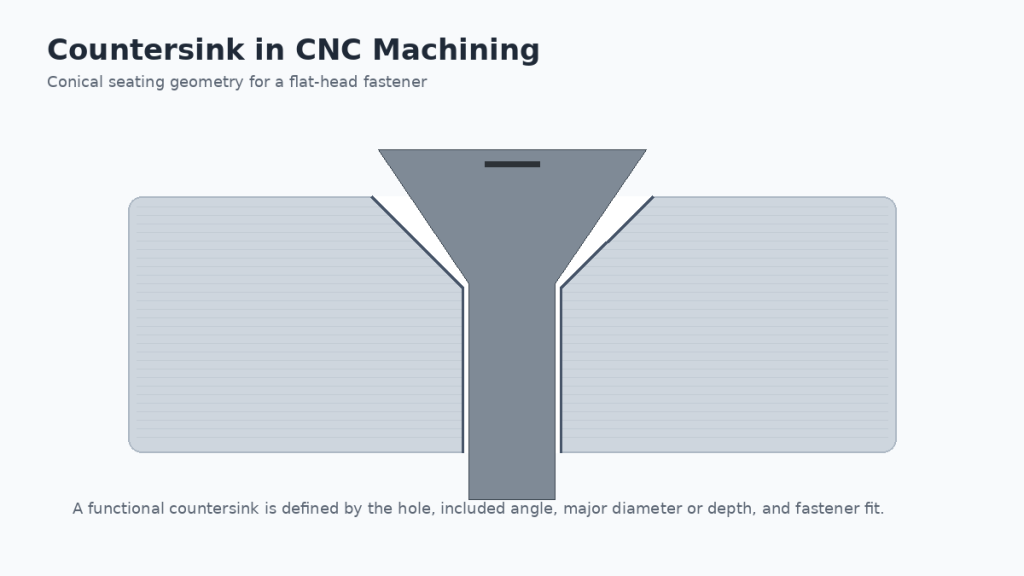
Nylon (PA) and Polypropylene (PP) are two of the most common plastics used in injection molding. They may look similar on an RFQ, but they perform differently in real parts. Key differences include strength, heat resistance, chemical resistance, moisture sensitivity, and dimensional stability.
This guide compares PA vs. PP from a manufacturing perspective. It helps you choose the right material and reduce rework, delays, and quality risk.

What is Polypropylene (PP)?
Polypropylene (PP) is a non-polar, semi-crystalline thermoplastic made by addition polymerization of propylene. Its repeating unit is $–[CH_2–CH(CH_3)]_n–$, which gives PP low surface polarity, strong chemical stability, and very low moisture uptake.
In injection molding, these characteristics translate into a resin that is lightweight, generally easy to process, and dimensionally stable in humid or wet service. This is why PP is widely specified for high-volume molded parts where cost efficiency, chemical resistance, and consistent fit are key requirements.

Common Polypropylene (PP) Grades for Injection Molding
In injection molding specifications, “PP” typically refers to a grade family rather than a single resin. The grade selection directly affects stiffness, impact behavior, clarity, and dimensional stability, and those differences carry through to molding performance.
- Homopolymer PP (PP-H): Built from propylene units only, with higher crystallinity. This is typically the stiffest and most “rigid-feel” PP option, and it’s often used as the baseline PP for general molded parts. In molding, it’s commonly chosen when you want a stable, economical grade with predictable stiffness.
- Impact Copolymer PP (Block Copolymer): Contains ethylene in block segments, creating a two-phase structure that improves impact resistance, especially at low temperatures. Compared with PP-H, it usually trades a bit of rigidity for toughness. In molding, it’s frequently specified for parts where drop/impact performance matters more than maximum stiffness.
- Random Copolymer PP: Ethylene units are distributed more randomly along the chain, which disrupts crystallization. This often improves clarity and ductility and reduces a brittle feel, while stiffness is usually lower than that of PP-H. In molding, it’s commonly used when appearance (translucency/clarity) and flexibility are priorities.
- Filled PP (Mineral/Talc-filled PP): Mineral fillers raise stiffness and can improve heat deflection and “panel stiffness.” These grades are used when unfilled PP is too flexible. In molding, fillers also change shrink behavior, so part flatness and warpage response can differ from unfilled PP.
- Glass-Filled PP (GF-PP): Glass fiber reinforcement boosts stiffness more significantly than mineral fillers and improves dimensional stability under load. In molding, fiber orientation becomes part of the performance story (anisotropy), so the molded part can behave differently along and across the flow direction.
Key Properties of Polypropylene (PP) for Injection Molding
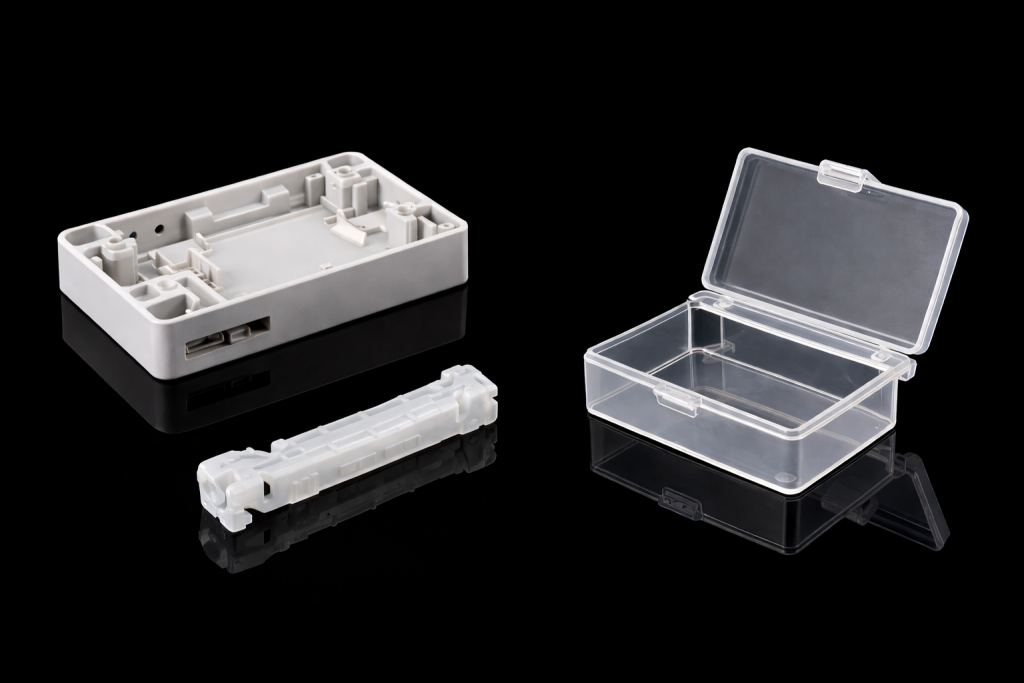
PP’s basic polymer structure drives its performance in molded parts. The properties below are the ones that most directly influence material selection and how PP behaves during injection molding.
- Low density (lightweight): PP has one of the lowest densities among commonly molded plastics (~0.90–0.92 g/cm³). This supports lightweight parts and resin-efficient designs, especially in volume production.
- Fatigue resistance (living-hinge performance): PP holds up well under repeated flexing. That’s why it’s widely used for molded-in hinges, snaps, and compliant features.
- Chemical resistance (non-polar backbone): PP resists many acids, bases, salts, and oils. In material selection, chemical exposure often becomes a first-pass filter before tooling decisions are finalized.
- Very low moisture absorption (dimensional stability): PP is hydrophobic and absorbs virtually no moisture. Parts tend to stay more dimensionally stable across storage and humid service compared with hygroscopic polymers.
- Thermal capability (practical limits vs. Nylon): PP melts lower than Nylon and typically has a lower continuous-use temperature. It can handle hot-water exposure, but higher-temperature or sterilization scenarios depend on grade selection and allowable creep/warpage.
- Semi-crystalline shrink behavior: PP is semi-crystalline and can show relatively higher, direction-dependent shrinkage. In molded parts, this is often where flatness and warpage sensitivity show up most clearly.
What Is Nylon (Polyamide)?
Nylon (Polyamide, PA) is a semi-crystalline engineering thermoplastic defined by polar amide groups (–CONH–) in its molecular backbone. These groups form strong intermolecular hydrogen bonds, which give Nylon high mechanical strength, good thermal resistance, and excellent wear performance. In injection molding, this molecular structure also introduces moisture sensitivity and tighter process control requirements compared with non-polar plastics.
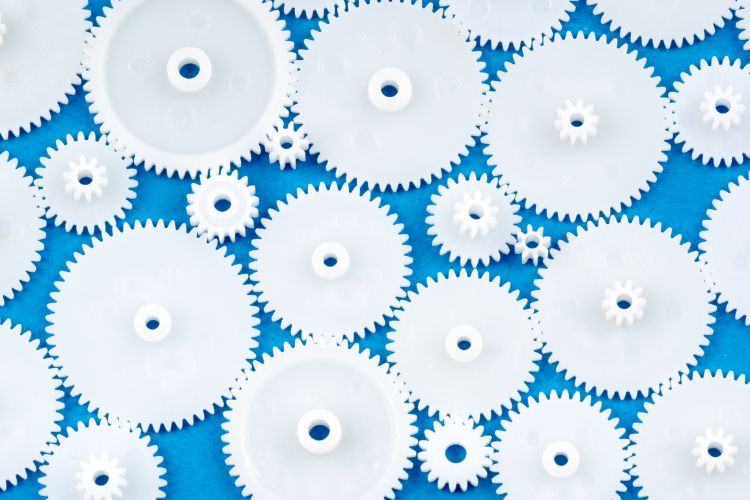
Common Nylon Grades for Injection Molding
Nylon is specified in multiple grade families, each with different moisture behavior, heat resistance, and molding characteristics. Grade selection directly affects part strength, dimensional stability, and processing window.
- PA6 and PA66: These are the most widely used Nylon grades for molded structural parts. PA66 offers higher melting temperature, better creep resistance, and improved performance at elevated temperatures, while PA6 provides better flow, surface finish, and impact resistance at lower temperatures. In injection molding, PA6 is often easier to process, whereas PA66 is chosen when thermal and mechanical margins are tighter.
- PA12: PA12 has longer hydrocarbon segments, resulting in significantly lower moisture absorption than PA6 or PA66. This makes it a preferred choice for precision-molded components where dimensional stability matters over time. In molding, PA12 also shows lower shrink stress and improved consistency, though at a higher material cost.
- Reinforced Nylon (Glass- or Carbon-Filled PA): Fiber reinforcement increases stiffness, strength, and Heat Deflection Temperature (HDT), allowing Nylon to replace metal in many structural housings. In injection molding, fiber-filled grades introduce anisotropy and flow-direction–dependent properties, so gate location and fiber orientation become part of performance control.
Key Characteristics of Nylon in Injection Molding
Nylon’s material properties strongly influence how it behaves during molding and in finished parts.
- High mechanical strength and stiffness: Nylon supports load-bearing and thin-wall designs that would deform or creep in lower-strength plastics. In injection molding, this allows more compact geometries but increases sensitivity to stress concentration and gate placement.
- Excellent wear and tribological performance: Nylon’s self-lubricating behavior makes it suitable for gears, bushings, and sliding interfaces. Molded surface finish and fiber content can further influence wear behavior in service.
- Moisture absorption and dimensional response: Unlike PP, Nylon is hygroscopic. Moisture uptake affects dimensions and mechanical properties after molding, which must be accounted for in part tolerances, conditioning, and functional testing.
- Thermal capability: Nylon maintains mechanical performance at higher temperatures than PP, particularly PA66 and reinforced grades. In molding, higher melt and mold temperatures are required, and thermal requirements often drive grade selection.
- Chemical resistance profile: Nylon performs well with oils, fuels, and hydrocarbons, which supports its use in automotive and industrial parts. However, exposure to moisture and certain chemicals can alter properties over time, influencing long-term performance expectations.
Nylon is therefore treated as a true engineering plastic in injection molding—selected when strength, wear resistance, and heat performance outweigh the added complexity of moisture control and tighter processing requirements.
Chemical Structure Differences Between Polypropylene (PP) and Nylon (PA)
Although both are semi-crystalline thermoplastics, polypropylene and Nylon differ significantly in their underlying chemical structure. These differences directly influence how they perform as molded materials.
| Structural driver | Polypropylene (PP) | Nylon (PA) |
| Polymerization type | An addition polymer with a hydrocarbon backbone | Condensation polymer with amide (–CONH–) linkages |
| Molecular polarity | Non-polar | Polar |
| Interaction with moisture | Hydrophobic; negligible water uptake | Hygroscopic; absorbs moisture from the environment |
| Crystalline structure | Semi-crystalline | Semi-crystalline with strong intermolecular hydrogen bonding |
| Thermal behavior | Lower melting temperature and heat resistance | Higher melting temperature and improved heat resistance driven by hydrogen bonding |
The key difference lies in Nylon’s amide groups. Hydrogen bonding between polymer chains increases strength and heat resistance, but it also leads to moisture absorption and greater dimensional sensitivity compared with non-polar materials like PP.
Nylon vs Polypropylene Properties: Key Differences for Injection Molded Parts
The differences between Nylon and PP become most apparent when comparing their mechanical, thermal, and environmental performance. These properties explain why the two materials often appear on the same RFQ—but are rarely interchangeable in final part design.
Mechanical Performance
Strength and stiffness
Nylon offers significantly higher tensile strength than PP (typically ~60–100 MPa unfilled, versus ~30–40 MPa for PP). This higher modulus allows Nylon to support load-bearing features and thinner wall sections. PP, by contrast, is more flexible and is often chosen where controlled deformation or repeated flexing is required.
Impact and toughness
Unfilled Nylon—especially PA66—provides higher impact resistance under structural loading. PP trades peak strength for ductility and fatigue resistance, which is why it performs well in snap features and living hinges rather than rigid, load-carrying parts.
Thermal Performance
Melting and heat resistance
Nylon melts at substantially higher temperatures (~215–265 °C) than PP (~160–170 °C). This difference extends to service conditions: Nylon can maintain mechanical performance at higher operating temperatures, while PP is typically limited to applications below ~100 °C continuous use.
Design implication
Parts exposed to sustained heat, under-hood environments, or thermal cycling generally favor Nylon, while PP is better suited to moderate-temperature service.
Moisture Interaction and Dimensional Stability
Nylon is hygroscopic, with moisture absorption typically ranging from ~2–10% depending on grade. This affects both dimensions and mechanical properties over time. PP, by contrast, absorbs virtually no moisture (<0.1%), which helps molded parts maintain dimensional stability in humid or wet environments.
This difference is often decisive for parts with tight tolerances, long storage times, or exposure to varying humidity.
Chemical Resistance
PP shows excellent resistance to acids, bases, solvents, and many oils due to its non-polar backbone. Nylon performs well with hydrocarbons, oils, and fuels, but is more sensitive to strong acids, bases, and hydrolytic environments.
Material choice here is usually driven by the specific chemical exposure rather than mechanical requirements alone.
Wear and Tribological Behavior
Nylon’s self-lubricating nature and low friction make it suitable for gears, bushings, and sliding interfaces. PP has limited wear resistance and is generally not selected for high-friction or abrasive contact without modification.
Electrical Properties
Both PP and Nylon are electrical insulators. However, Nylon’s insulation performance can degrade as moisture content increases, while PP remains largely unaffected by humidity.
Nylon vs Polypropylene Injection Molding: Processing Differences
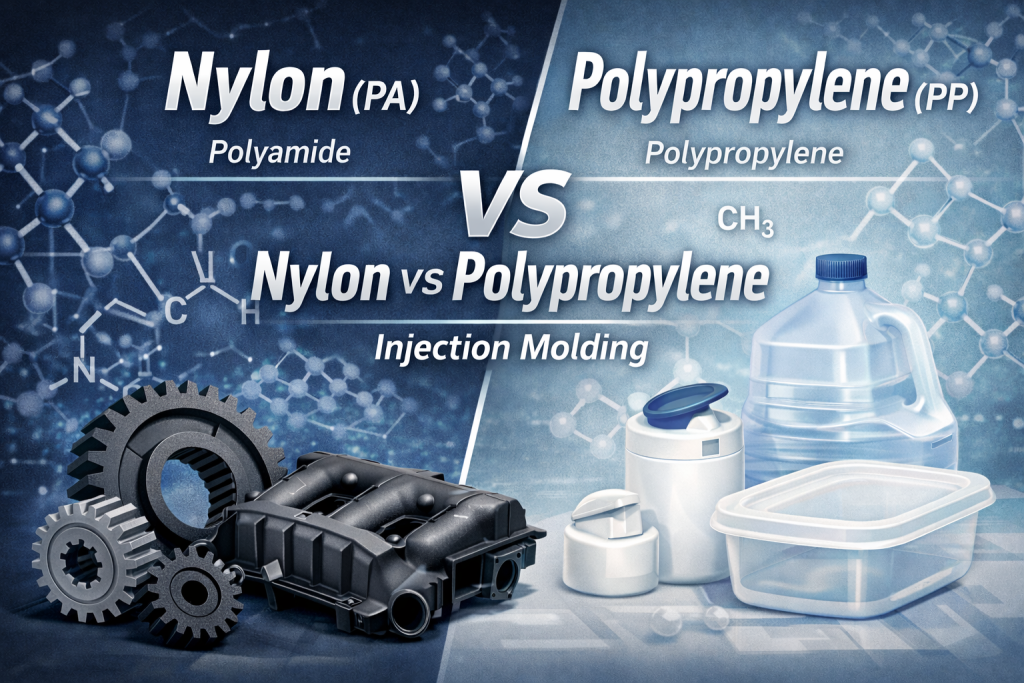
PP and Nylon process differently, mainly because of polarity and moisture behavior. PP is non-polar and moisture-stable, while Nylon is hygroscopic and more sensitive to moisture and temperature control.
Polypropylene (PP)
PP is generally easier to process than Nylon because its non-polar, moisture-stable structure removes moisture as a dominant variable. Most PP molding challenges are therefore geometry- and shrink-driven, not resin-condition-driven.
Melt behavior and temperature sensitivity
PP runs at relatively lower melt temperatures (typically ~180–250 °C), and its viscosity is less sensitive to small temperature shifts than Nylon. In practice, this means fill consistency is usually easier to maintain once a stable grade is selected. However, flow behavior varies significantly with MFI/MFR, so grade selection has a stronger impact on fill, surface appearance, and shrinkage than fine temperature tuning.
Moisture and material handling
PP does not absorb moisture, so resin drying is normally unnecessary, and moisture-related defects are rare. When surface defects appear, the root cause is often additives, color masterbatch, regrind, or contamination, not the PP base resin. For appearance-critical parts, control of secondary materials matters more than resin conditioning.
Processing window and robustness
PP has a relatively wide processing window. Parts can often be molded across a broader range of temperatures and packing conditions without immediate cosmetic failure. The risk is not short-term process instability, but assuming dimensional consistency without defining it. For tolerance-sensitive parts, the inspection state (as-molded vs. after stabilization) should be defined even though PP is moisture-stable.
Shrinkage and warpage behavior
PP is semi-crystalline and exhibits direction-dependent shrinkage, which becomes visible on large flat parts, long flow paths, and asymmetric geometries. Warpage in PP is more strongly influenced by part geometry, wall thickness transitions, rib layout, and cooling balance than by small process adjustments. Design decisions usually dominate the outcome.
Cycle time and productivity
Lower melt temperatures and stable handling allow PP to support efficient cycle times. In many cases, cycle time is limited by part thickness and cooling uniformity, not by resin sensitivity. Attempts to shorten cycles by aggressive cooling can increase internal stress and warp on flat parts.
Stiffness limits in thin sections
In thin walls, PP stiffness is fundamentally material-limited. If rigidity is insufficient, process changes alone rarely solve the issue. Stiffness typically requires geometric reinforcement (ribs, curvature, return flanges) or a filled PP grade, with corresponding effects on shrink behavior and surface finish.
Nylon (PA)
Nylon processes differently from PP because of its polar molecular structure and hygroscopic nature. In Nylon molding, moisture content and thermal control are primary process variables that directly affect appearance, mechanical performance, and dimensional stability.
Moisture sensitivity and drying discipline
Nylon absorbs moisture from ambient air, and that moisture becomes a critical factor once the resin is melted. If drying is insufficient, absorbed water vaporizes in the melt and can cause splay, surface streaking, internal voids, and reduced mechanical strength. Unlike PP, these defects are not cosmetic-only; they can compromise part performance. For Nylon, drying is not a preparation step but a continuous process requirement, including sealed material handling between the dryer and the machine.
Melt behavior and temperature control
Nylon typically runs at higher melt temperatures (roughly ~230–290 °C, grade-dependent) and is more sensitive to both temperature and residence time. Small deviations can affect viscosity, surface finish, and thermal degradation. Compared with PP, Nylon has a narrower effective processing window, which means process stability depends more on disciplined control than broad tolerance.
Dimensional behavior after molding
A defining difference for Nylon is that dimensions can change after molding, not just during cooling. As parts equilibrate with ambient humidity, moisture uptake can alter size and stiffness. This post-mold behavior must be accounted for when defining tolerances, inspection timing, and functional fits. In many Nylon projects, the critical question is not “Does the part meet spec at ejection?” but “Does it meet spec at its conditioned state?”
Shrinkage and warpage characteristics
Like PP, Nylon is semi-crystalline and exhibits directional shrinkage. However, warpage in Nylon is often compounded by moisture-driven stress relaxation rather than cooling alone. Reinforced grades increase stiffness and thermal capability but introduce fiber orientation effects, making flow direction a key factor in final part shape.
Cycle time and process trade-offs
Higher melt and mold temperatures often increase cycle time compared with PP. Attempts to shorten cycles by reducing cooling time can increase residual stress, which later shows up as dimensional drift or distortion during conditioning. For Nylon, cycle optimization must balance throughput with long-term dimensional stability.
Surface quality and defect sensitivity
Nylon is more sensitive than PP to process cleanliness and consistency. Moisture, degradation, or excessive shear can quickly appear as visual defects or property loss. On the positive side, Nylon’s polar chemistry generally supports more reliable welding and bonding, which can simplify downstream assembly compared with PP.
Bonding & welding
Bonding and welding behavior between PP and Nylon differ primarily due to surface polarity and molecular interaction, not molding conditions alone. These material-level differences strongly influence which joining methods are practical or reliable in production.
Polypropylene (PP)
PP has a non-polar, low-surface-energy chemistry. As a result, most adhesives do not wet or anchor well to untreated PP surfaces. In practice, this makes adhesive bonding inconsistent unless surface activation (such as plasma or flame treatment) is applied, or the joint is designed with mechanical interlocks.
Ultrasonic welding of PP is possible, but energy transfer can be less efficient than with polar polymers, especially on thicker or heavily filled sections. For PP assemblies, reliable joining often depends more on joint geometry than on material affinity.
Nylon (PA)
Nylon’s polar amide groups give it higher surface energy and stronger intermolecular interaction. This makes Nylon generally more receptive to adhesive bonding and ultrasonic welding without surface treatment. Weld strength and bond consistency are typically easier to achieve, particularly in precision or load-bearing assemblies.
However, moisture content still plays a role. Excess moisture can affect weld quality and consistency, so drying and material handling remain relevant even at the joining stage.
Practical implications for molded assemblies
For parts that rely heavily on bonding, welding, or secondary assembly operations, Nylon usually offers more predictable and robust joining behavior. PP can still be used effectively, but joining success depends more on surface treatment strategy or mechanical joint design, which should be considered early in part development.
Nylon vs Polypropylene: Pros and Cons
Polypropylene (PP) Advantages and Limitations
PP is typically chosen when cost efficiency, moisture stability, and chemical resistance are the primary drivers. Its low density supports lightweight designs, and its non-polar chemistry allows parts to remain dimensionally stable in humid or wet environments. These traits make PP well-suited for high-volume molded components where consistent fit and long-term environmental stability matter more than structural strength.
The trade-off is mechanical performance. PP has lower stiffness and heat resistance than engineering plastics like Nylon, which limits its use in load-bearing or high-temperature applications. Abrasion resistance is also limited, so PP is generally not selected for sliding or wear-intensive interfaces. At low temperatures, unmodified PP can become brittle, which needs to be considered in impact-critical designs.
Nylon (PA) Advantages and Limitations
Nylon is selected when mechanical strength, wear resistance, and thermal capability are required. Its molecular structure provides higher stiffness and strength, enabling thinner sections and more compact structural designs. Nylon’s tribological behavior also makes it suitable for gears, bushings, and other components with repeated sliding contact.
These performance advantages come with added material sensitivity. Nylon absorbs moisture, which can affect both dimensions and mechanical properties over time. This requires tighter control of conditioning, inspection state, and tolerance definition. Nylon also carries a higher material cost and, without stabilization, can be sensitive to hydrolysis or UV exposure in certain environments.
Nylon vs Polypropylene Applications: When to Use PA or PP
The mechanical load, operating temperature, and chemical exposure of the end-use environment determine the choice between Nylon (PA) and Polypropylene (PP).
1. Typical Nylon (PA) Applications
Specify Nylon when the application requires structural integrity and abrasion resistance under thermal stress.
- Automotive Power Units: Intake manifolds, radiator end tanks, and engine covers (requires high Heat Deflection Temperature).
- Mechanical Transmissions: Industrial gears, bushings, and cam followers (leverage self-lubricating properties).
- Structural Hardware: Power tool housings, heavy-duty zip ties, and load-bearing brackets.
- Friction Components: Conveyor wear strips and slide bearings.
2. Typical Polypropylene (PP) Applications
Specify PP when chemical inertness, low density, and moisture resistance are the primary technical requirements.
- Chemical Handling: Battery cases, laboratory equipment, and caustic storage tanks (requires acid/base resistance).
- Dynamic Flexing: Living hinges for packaging closures and flip-top caps (PP withstands repetitive fatigue better than PA).
- Fluid Management: Marine fittings, plumbing manifolds, and pump impellers (requires zero-swelling in water).
- Weight-Sensitive Parts: Automotive interior trim and high-volume consumer containers.
PA vs PP Application Selection Table (Injection-Molded Parts)
| Application / Part Type | Primary driver | Typical pick | Notes |
| Gears, bushings, wear strips, slide bearings | Wear + low friction | Nylon (PA) | PA is preferred for moving contact; PP is rarely used for high-wear interfaces. |
| Load-bearing brackets, structural housings | Strength + stiffness | Nylon (PA) | Use PA when geometry alone can’t provide stiffness margin. |
| Under-hood housings, hot-zone components | Heat resistance + creep control | Nylon (PA) | PA66 / reinforced PA commonly used when temperature margin is required. |
| Oil/fuel-exposed functional parts | Hydrocarbon resistance | Nylon (PA) | PA performs well with oils/fuels; confirm chemical environment if acids/bases are present. |
| Battery cases, lab fixtures, caustic-contact parts | Acid/base chemical resistance | PP | PP is often the baseline for strong acids/bases and aqueous salts. |
| Living hinges, flip-top caps, snap-lid packaging | Fatigue under repeated flex | PP | PP is the common hinge material; PA is not the default for hinges. |
| Wet/humid service fittings, water-contact parts | Moisture stability | PP | PP has negligible water uptake; dimensional stability is usually better in wet service. |
| High-volume containers, lightweight trim panels | Cost + low density | PP | PP is typically used when cost/weight dominate and loads are modest. |
Cost, Sustainability, and Recyclability: PA vs. PP
Economic and environmental factors often dictate the final material selection for high-volume production. Below is a breakdown of how Polypropylene and Nylon compare in terms of total cost of ownership and lifecycle impact.
1. Cost Analysis: Resin & Processing
In the current global market, Polypropylene (PP) is consistently more cost-effective than Nylon (PA).
- Resin Price: PP is typically 20% to 50% cheaper per kilogram than standard PA6 or PA66.
- Volume Advantage: Due to PP’s lower density ($0.90\text{ g/cm}^3$ vs. $1.14+\text{ g/cm}^3$), the “cost per cubic inch” is even lower, as less material is required to fill the same mold volume.
- Processing Costs: PP generally requires lower processing temperatures, leading to reduced energy consumption during injection molding.
2. Sustainability & Carbon Footprint
Sustainability is a critical KPI in modern B2B procurement.
- Energy Intensity: Nylon production is more energy-intensive due to the complexity of the step-growth polymerization process, resulting in a higher carbon footprint per ton compared to PP.
- Recyclability: Both materials are 100% recyclable (Category 5 for PP; Category 7 for Nylon). However, PP has higher global recycling rates because of its dominance in the packaging sector and established post-consumer waste streams.
- Bio-based Alternatives: For carbon-neutral goals, Bio-based Nylons (such as PA11 derived from castor oil) are available, though they command a significant price premium over petroleum-based versions.
3. Emerging Trends in Circular Economy
- Post-Consumer Recycled (PCR) Grades: Both PCR PP and PCR Nylon are increasingly used in automotive and consumer electronics to meet “green” mandates without sacrificing part performance.
- Reinforced Hybrids: New glass-filled PP grades are attempting to bridge the performance gap, offering a low-cost alternative to unreinforced Nylon in mid-range temperature applications.
Practical Selection Guide: Strategic Engineering Checkpoints
To optimize part performance and production cost, the final selection between Nylon and Polypropylene should follow a logical exclusion process based on your application’s physical limits.
1. Thermal & Mechanical Thresholds
If your operating environment exceeds 90°C–100°C, Nylon is the default choice. Polypropylene suffers from significant loss of structural integrity as it approaches its lower melting point, whereas Nylon’s hydrogen-bonded structure maintains stiffness at elevated temperatures.
- Priority: High Load & Heat $\rightarrow$ Nylon (PA6/PA66)
- Priority: Low Stress & Ambient Temp $\rightarrow$ Polypropylene (PP)
2. Environmental Compatibility
The trade-off between chemical resistance and moisture absorption is the most common point of failure in material selection.
Conclusion
Nylon and Polypropylene solve different engineering problems and should not be treated as interchangeable materials. The right choice is defined by how a part functions in service, how stable it must remain over time, and how it will be produced at scale. When material behavior is matched correctly to application demands, both PA and PP deliver reliable, cost-effective results in injection-molded parts.