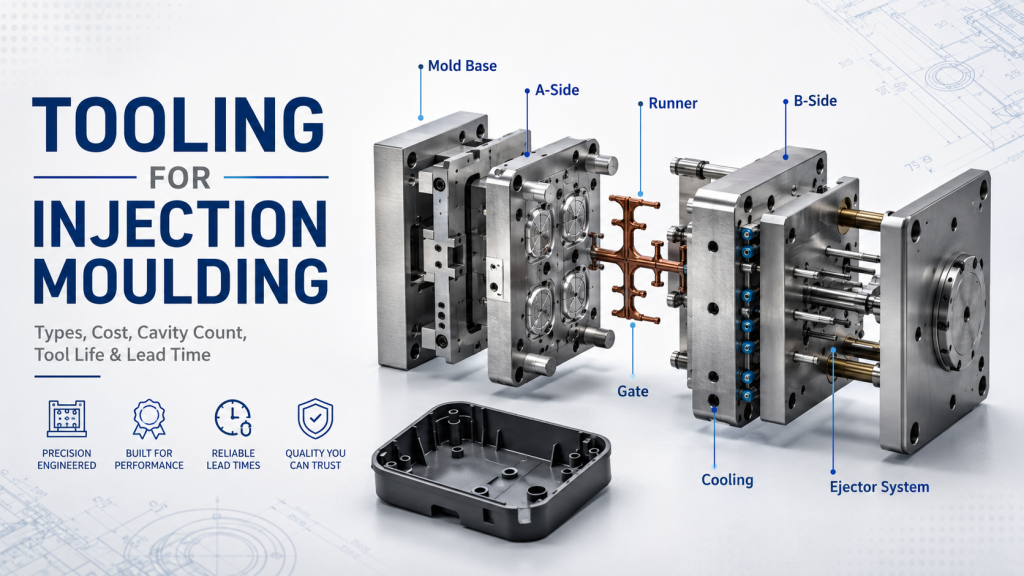
Shut-offs control the flow of molten plastic into the mold cavity. They ensure the precise shaping of features like holes, hooks, and intricate shapes in molded parts.
The shut-off works via a closing mechanism in that when the mold closes, the shut-offs prevent plastic from oozing into unwarranted areas defining the product’s final design. Generally, shut-offs assist in achieving accurate and consistent part dimensions, improving overall quality, and reducing production errors.
In this article, we’ll explore everything you need to know about shut-offs in injection molding.

What are Shut-Offs in Injection Molding?
Shut-offs serve as barriers within the mold cavity that control the flow of molten plastic during the process. When the mold is closed, the shut-offs prevent plastic from entering specific areas; this allows the creation of detailed complex shapes.
These molds can create various features in molded parts including but not limited to through-holes, undercuts, and internal cavities. Through-holes are described as openings that go completely through the part, often applied for assembly or ventilation purposes.
Undercuts on the other hand are sunken areas or protrusions on the part’s surface that cannot be directly pulled out of the mold and will often require shut-offs to form. Finally, internal cavities are hollow spaces found within the part and they can be in composite shapes and require precise shut-off control for accurate molding.
Shut-offs have an important role in attaining the desired design and functionality of molded parts. They bring about the expansion of possibilities for product innovation and performance through the production of components with complex geometries and precise details.
Understanding the capabilities of shut-offs allows designers and manufacturers to create parts with greater versatility and efficiency in the injection molding process.
Types of Shut-Offs and Their Applications
Different types of shut-offs can be used to control how precise and complex the molded parts can be. We will discuss the different types of shut-offs below :
1. Flat Shut-Offs
We can say that Flat shut-offs are mold components that create precise flat closures within molds. They retain molten plastics ensuring that they do not flow into designated areas, resulting in clean, flat surfaces on molded parts. Applied in areas that have tight tolerances and smooth finishes, these shut-offs are commonly used in the application of electronic components and medical devices.
The usage of flat shut-offs offers several advantages in injection molding. They offer excellent control over the flow of molten plastic thus resulting in consistent part dimensions and minimal flash. Additionally, flat shut-offs enable the production of parts with smooth, uniform surfaces, reducing the need for post-molding finishing processes.
2. Wipes Shut-Offs
Wipes shut-offs are another type of shut-off that function by scraping excess plastic from the mold cavity as it is being closed down, thus ensuring precise part information. These shut-offs have a progressively changing and adaptable nature that adjusts to variations in part geometry and mold conditions. They enhance polishing and finishing part surfaces giving them a brilliant appearance and quality.
This adaptable nature allows shut-offs to adapt to changes in part geometry, ensuring uniform material distribution and eradicating defects such as weld lines. This happens by continuously wiping the mold surface during the injection process, these shut-offs help in achieving high-quality finishes with minimal surface imperfections.
3. Saddles Shut-Offs
Saddle shut-offs are mold components with the capability of simultaneously creating multiple pictures. They are made up of contoured surfaces that align with complex part geometry standards, allowing the creation of undercuts, holes, and other intricate features. Saddle shut-offs are commonly used in the automotive, aerospace, and consumer electronics industries.
These shut-offs facilitate the production of complex part features by conforming to the part geometry and preventing plastic from flowing into specific areas. They ease the possibility of creating undercuts and internal cavities without the need for additional tooling or secondary operations.
4. Radiused Saddle Shut-Offs
Radiused saddle shut-offs have rounded edges that are used to seal and reduce wear during the molding process. To achieve an improved material flow that results in better quality parts, the shut-offs have a curved profile which also allows for smoother mold closure. They are commonly used in applications requiring tolerances and high surface finish requirements.
Mold parts built with the help of round-edged radiused shut-offs create a more uniform seal reducing the risk of flash and part defects. Furthermore, the smooth contours of these shut-offs help in minimizing friction and wear, ensuring a long lifespan of the mold and ensuring consistent part production. They are mostly preferred for precision molding since they contribute to the overall process of efficiency and part quality.
Design Considerations for Effective Shut-Offs
To ensure the durability of parts in injection molding, shut-offs are designed with precise draft angles to minimize wear. What are draft angles? It can be said that angles that are added to the vertical surfaces of the shut-offs, make it easy to release the molded part from the mold cavity. An adjustment of a minimum of 3 degrees is recommended to ensure proper sealing and function of the shut-offs.
During ejection, including draft angles helps reduce friction between the molded parts and shut-offs preventing damage and extending their lifespan. With insufficient draft, the shut-offs may be bound against the part, leading to excessive wear and potential mold damage over time. By integrating at least 3 degrees of the draft, the shut-offs maintain proper clearance and functionality.
When the angles are properly drafted too, they ensure the seal between the shut-offs and the mold cavity is closed effectively, thus minimizing the risk of flash and part defects. Insufficiently drafting the angles can result in incomplete sealing, usually leading to material leakage and compromised part integrity.
Incorporating precise draft angles is a simple yet essential aspect of mold design that directly impacts the performance and longevity of shut-offs. By adhering to the recommended minimum of 3 degrees draft, molders can mitigate wear, enhance sealing, and prolong the lifespan of shut-offs, ultimately improving production efficiency and part quality in injection molding processes.
Materials and Maintenance of Shut-Offs
Choosing the right materials for shut-offs is important for enduring high pressures and temperatures in injection molding. Below are some guidelines to consider for selecting materials:
- Strength and Heat Resistance: Check for the availability of materials with durable strength and resistance to heat, ensuring they will not be weak or melt during molding.
- Prioritize Durability: Select materials that can withstand repetitive use without wearing down, maintaining reliability over time.

Best Maintenance practices for Shutoffs
By implementing regular maintenance practices, you can prolong the lifespan of shut-offs and optimize production processes.
- Regular Cleaning: Clean shut-offs after each molding cycle to remove any leftover plastic or debris that could cause damage.
- Inspect for Wear: Regularly check shut-offs for signs of wear, such as scratches or dents, and promptly address any issues to prevent further damage.
- Lubrication: Applying lubricants to shut-offs reduces friction and extends their lifespan.
- Proper Storage: Store shut-offs in a clean, dry environment to prevent corrosion and maintain their integrity between uses.
- Implement Preventive Maintenance: Establish a schedule for routine inspections and maintenance to ensure shut-offs remain in optimal condition for reliable performance.
Troubleshooting Common Issues with Shut-Offs
While shut-offs are regarded as useful in injection molding, they often encounter problems here and there that impact their performances.
1. Improper Sealing
Improper sealing is often a common problem with shut-offs where the shut-offs fail to create a tight seal with the mold cavity. This can result in leakage and flash formation, thus hindering part quality.
2. Excessive Wear
Excessive wear occurs when the shut-offs experience continued friction and abrasion during the molding process. Excessive might result in dimensional inaccuracies, defects on the surface, and reduced lifespan of the shut-offs.
Solutions to Common Shutoff Issues
1. Adjust Shut-Off Design
Handling improper sealing requires adjustment of the shut-off design to ensure proper alignment and contact with the mold cavity to improve sealing efficiency.
2. Use High-Quality Materials
Using high-quality materials resistant to abrasion and friction can prolong the shut-off lifespan by minimizing wear.
3. Implementing Regular Maintenance
Regularly cleaning and lubricating shut-offs, as well as conducting routine inspections for signs of wear, can prevent issues and maintain optimal performance.
Case Studies
Shut-offs are applied for injection molding in various industries. Let’s explore real-world examples demonstrating the successful application of shut-offs.
Automotive Industry
In the automotive sector, shut-offs are important for crafting features in car components. For example, when making dashboard panels, shut-offs assist in molding intricate designs and ensuring tight tolerances.
Improved product quality is evident with the integration of shut-offs in dashboard panel molding. The precise features created enhance both the aesthetics and functionality of the panels, effectively meeting the stringent requirements of the automotive industry.
Medical Sector
Within the medical devices sector, shut-offs help in molding complex components with tight tolerances. For example, when producing syringe bodies, shut-offs are instrumental in making them more detailed and ensuring proper sealing.
The incorporation of shut-offs in syringe body molding has led to notable improvements in product quality and reliability. These features enhance the functionality and safety of the medical devices.
Consumer Electronics
In the consumer electronics industry, shut-offs are used to mold intricate components with fine details. For example, in manufacturing smartphone cases, shut-offs enable the creation of complex shapes and textures.
Using shut-offs in smartphone case molding has resulted in products with better aesthetics and performance. These fine details and smooth finishing are achieved through shut-offs enhance the appeal of the cases to consumers.
Innovations and Future Trends in Shut-Off Technology
Shut-off technology in injection molding is evolving fast with new designs and smart features. Some of these innovations include:
1. Advanced Shut-Off Design
In recent years, there have been significant advancements in shut-off design and manufacturing. New materials with improved strength and heat resistance are being developed, allowing for more durable shut-offs that can withstand harsh molding conditions.
2. Innovative Manufacturing Techniques
Emerging manufacturing techniques such as additive manufacturing (3D printing) have revolutionized shut-off production. These techniques make it possible to design complex shut-offs with intricate features that were previously difficult or impossible to achieve using traditional methods.
3. Integration of Smart Technologies
Integrating smart technologies, such as sensors and actuators, into shut-off systems is another exciting trend. These technologies enable real-time monitoring of shut-off performance and can automatically adjust shut-off settings to optimize molding processes.
4. Predictive Maintenance Systems
Predictive maintenance systems are becoming common these days as they use data analytics and machine learning algorithms to predict when shut-offs are likely to fail, allowing for proactive maintenance to prevent costly downtime.
5. Enhanced Surface Treatments
Recent improvements in surface treatments such as coatings and platings have enhanced the performance of shut-offs. These treatments reduce friction thus smoothening the molding process,
6. Integration with Industry 4.0
Industry 4.0 is defined as the integration of intelligent digital technologies into manufacturing and industrial processes. It encompasses a set of technologies that include industrial IoT networks, AI, Big Data, robotics, and automation.
Shut-offs are increasingly being integrated into Industry 4.0 systems, enabling seamless communication and data exchange between shut-offs and other manufacturing equipment.

Conclusion
As highlighted in this article, achieving high-quality, complex injection-molded parts is important especially when helped with the shut-offs. They ensure accurate molding of the features no matter how complex they are and can withstand tolerance contributing to the overall quality of finished parts.
Continuous refining of shut-off designs is essential for your quality parts. Furthermore, exploring techniques advanced by technology can help optimize shut-off performance, minimize defects, and improve the overall success of the injection molding process.