Medical CNC Machining Services
ISO 13485-aligned CNC machining services for tight-tolerance medical components.
- Documentation & traceability support
- Critical-feature tolerance control
- Fast quoting with free DFM review
CNC Machining for Medical Parts
Medical CNC machining services support medical device components from prototypes to low-volume production. We support common medical component types such as instrument parts, device structural components, and validation fixtures.

Medical CNC Machining Capabilities
| Capabilities | Details | Notes / Options |
|---|---|---|
|
CNC Processes |
3-axis / 4-axis / 5-axis milling; CNC turning; mill-turn (if applicable) |
Suitable for multi-face machining, complex contours, and precision interfaces |
|
Tolerance |
Typical: ±0.05 mm; Critical features: ±0.01 mm; Ultra-critical (case-by-case): down to ±0.005 mm |
Ultra-tight tolerances depend on feature type, material, and inspection method; confirmed during drawing review. |
|
Surface finish |
As-machined: Ra 3.2–1.6 μm; Fine machining: Ra 1.6–0.8 μm; Polished functional surfaces: Ra 0.4–0.2 μm (as required) |
For sealing, mating, sliding, and cosmetic surfaces; surface requirements should be called out on the drawing |
|
Min feature |
Thin wall (metal): 0.5–1.0 mm; Micro holes: Ø0.3–0.8 mm (subject to depth/ratio); Slots: 0.5–1.0 mm |
Burr control and edge-break can be applied per specification to reduce handling/assembly risk. Micro holes are subject to depth-to-diameter ratio and tool access. |
|
Part size |
Milling up to 500 × 500 × 300 mm; Turning up to Ø300 × 500 mm |
Final envelope depends on part geometry and fixturing approach |
|
Volume |
Prototype: 1–20 pcs; Engineering / pilot: 20–200 pcs; Bridge low-volume: 200–2,000 pcs |
Practical ranges depend on material, complexity, and inspection/documentation requirements |
|
Inspection |
CMM; height gauge; pin/thread gauges; calipers/micrometers; surface roughness (Ra) checks; visual standards |
Dimensional/CMM reports available upon request |
|
Documentation & Traceability |
Available upon request: FAI/First Article records; dimensional/CMM reports; material certificates (MTC/CoC); inspection records; job/lot identification and revision control linkage |
Provide the required documentation set per PO/spec for supplier qualification, internal review, and audit readiness |
|
Burr/Edge Control & Clean Handling |
Deburring and edge-break per drawing/spec; controlled edge condition for handling and assembly; cleaning and protective packaging available upon request |
Supports functional interfaces and reduces assembly risk; cleanliness/packaging to be defined by customer requirements |
|
Materials |
Stainless steel (e.g., 316L, 17-4PH); titanium (Grade 2/5); aluminum (6061/7075); engineering plastics (e.g., PEEK) (as specified) |
Material grade to be confirmed per drawing/PO; feasibility depends on geometry, tolerance, and finish requirements |
Why Choose Kemal for 5-Axis Machining

Free DFM Report
Our quotes include a free DFM report, so manufacturability is confirmed before production. We review critical features, tolerances, and material/finish requirements, then flag common risks such as thin walls, deep pockets, micro holes, and burrs. You receive clear recommendations to reduce iterations and speed up part approval.

Predictable Lead Times
We machine medical CNC parts in-house, so capacity, programming, machining, and inspection stay under one controlled workflow. Before cutting metal, we confirm critical features and documentation needs, then lock the setup and inspection plan to reduce rework and schedule slips. You get clear milestones from DFM to first article, inspection reporting (as requested), finishing, and shipment, with proactive updates throughout.

Medical Quality Certifications
We are ISO 13485 certified for medical manufacturing. Certificates can be shared to support supplier qualification and internal audits. For medical CNC projects, we can also provide supporting quality documentation upon request—such as material certificates (MTC/CoC), dimensional or CMM inspection reports, and first-article documentation when required.

Cleanroom Manufacturing
For components that require controlled handling, we can support cleanroom-compatible workflows—defined cleanliness, cleaning steps, and protective packaging per your specification, with inspection and documentation options as needed.

First Article Readiness
We support first-article builds with a controlled workflow. We confirm critical features and inspection checkpoints before machining. First-article documentation and dimensional/CMM reports are available upon request for approval and repeat builds.

Critical Surface & Edge Condition Control
We machine functional surfaces to drawing requirements where fit, sealing, and motion depend on interface quality. Edge breaks and deburring are applied per spec to prevent burrs, sharp edges, and assembly interference. This improves handling safety and helps keep critical interfaces consistent across builds.
Typical Medical Components We Support
A quick look at typical 5-axis work—multi-face features, complex surfaces, deep pockets, and compound angles.
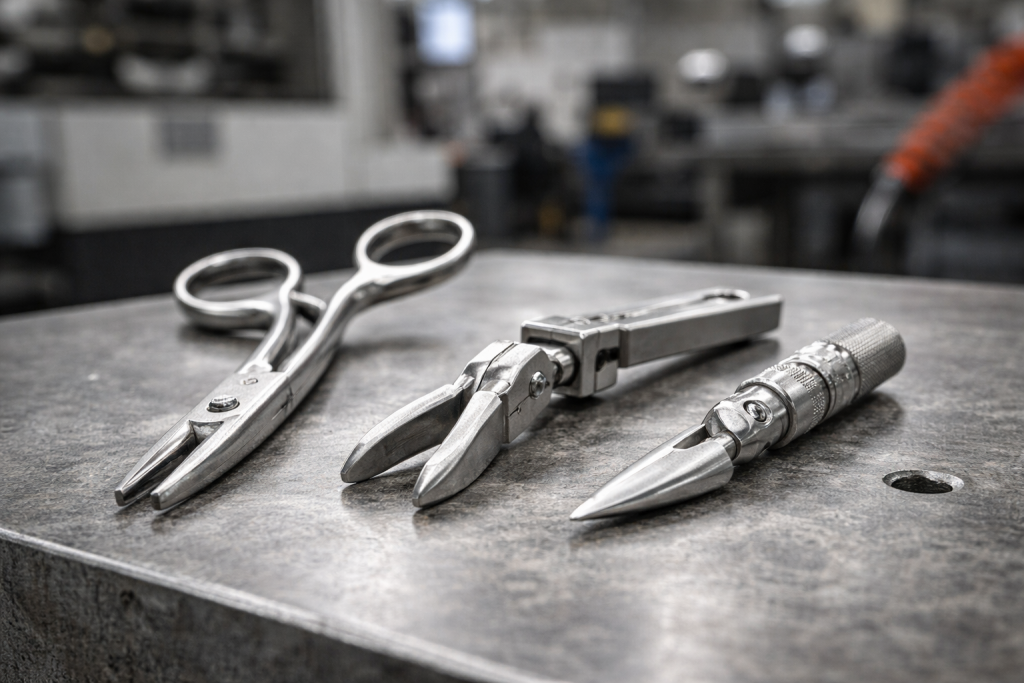
Surgical Instrument Components
Clamping, hinge, and tip structures where precise interfaces and clean edges affect handling and performance.
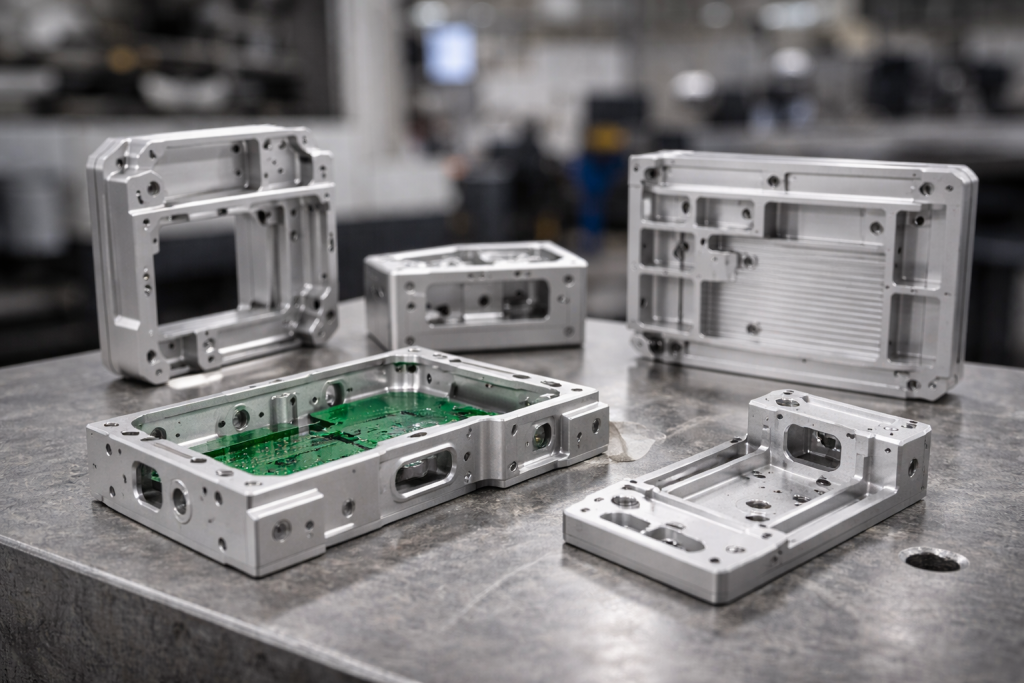
Device Housings & Structural Frames
Brackets, panels, frames, and internal structures built for stable assembly, alignment, and durability.

Fixtures & Checking Gauges
Workholding and inspection tools that repeatably locate parts and verify critical dimensions for medical assemblies.

Engineering Plastic Components
Precision plastic parts for insulation, lightweight structures, and chemical-resistant applications.

Low-Volume Bridge Production Components
Short-run parts to support NPI timelines and early production ramps before full-scale manufacturing.

Plastic Insulators & Hybrid Interfaces
Plastic brackets, spacers, and locating features used alongside metal parts to control alignment, clearance, and electrical isolation in assemblies.
Related Medical Part Manufacturing Services

CNC Machining Services
Precision CNC milling and turning services supporting tight tolerances, controlled datums, and repeatable results for medical components and device programs. Documentation options include dimensional/CMM reports and material certification upon request.

Prototype CNC Machining Services
Prototype CNC machining for medical programs, supporting fit and functional validation, CTQ feature verification, and early-stage DFM feedback before pilot and low-volume production. Optional FAI and dimensional reporting available.
FAQ's
What types of medical components can you CNC machine?
We CNC machine a wide range of medical and medical-device–adjacent components, from early prototypes to low-volume production parts. Typical categories include:
Surgical instrument components: handles, jaws, brackets, linkages, clamps, guide blocks
Implantable / non-implantable device housings & frames: enclosures, covers, structural frames, mounting plates
Fluid-path & diagnostic parts (non-implant): manifolds, valve blocks, pump housings, adapters (as specified)
Precision interfaces: alignment features, mating faces, sealing grooves, bearing seats, press-fit bores
Connector / sensor mounts & small mechanical parts: sensor brackets, terminal/connector retainers, shields, standoffs
Medical fixtures & tooling: assembly jigs, test fixtures, inspection fixtures, calibration blocks
Thin-wall and micro-feature parts (geometry-dependent): small bores, slots, fine ribs, miniature components
To quote accurately, we typically need the 2D drawing with tolerances/CTQs, material/grade, surface finish requirements, quantity, and any required documentation (e.g., dimensional report/CMM, FAI, material certs).
Are you ISO 13485 certified for medical manufacturing?
Yes. We operate under an ISO 13485–aligned quality management system for medical manufacturing and support medical CNC machining programs with controlled documentation and traceability.
Upon request, we can provide ISO 13485 certification details and support typical supplier-qualification requirements, including material certifications, dimensional/CMM reports, first article inspection (FAI), and lot-to-drawing revision traceability, as specified by your purchase order and quality requirements.
What tolerances can you hold for medical parts?
For medical CNC–machined parts, achievable tolerances depend on geometry, material, feature type, and inspection method. Typical ranges are:
General machining tolerances: ±0.05 mm
Fit-critical or functional interfaces (alignment, sealing, bearing seats): ±0.01 mm
Ultra-critical features (case-by-case, inspection-defined): down to ±0.005 mm
Final tolerance capability is confirmed during quoting based on CTQ features, material selection, part size, and measurement method (e.g., CMM or dedicated gauges). Where required, tolerances can be verified and documented through dimensional or CMM inspection reports.
Can you machine titanium, 316L stainless, and medical-grade plastics like PEEK?
Yes. We regularly CNC machine medical-industry–relevant metals and engineering plastics, with material selection and process parameters defined per drawing and application requirements.
Titanium: Grade 2 and Grade 5 (Ti-6Al-4V) for strength-to-weight–critical and corrosion-resistant components
Stainless steel: 316L for corrosion resistance and cleanability; 17-4 PH for higher strength where specified
Medical-grade plastics: PEEK, as well as other engineering plastics such as UHMW-PE, acetal (POM), and nylon (material grade per specification)
Material certifications (MTC/CoC) can be provided upon request, and machining strategies are selected to control surface finish, dimensional stability, and critical-feature integrity for medical applications.
What inspection reports can you provide?
We can provide a range of inspection and quality documentation for medical CNC–machined parts, based on your purchase order and quality requirements, including:
Dimensional inspection reports with CTQ features clearly identified
CMM (Coordinate Measuring Machine) reports for complex or tight-tolerance geometries
First Article Inspection (FAI) reports for initial builds or engineering validation
Material certifications (MTC / Certificate of Conformance) tied to the production lot
Lot and revision traceability records linking parts to drawing revision and job history
Inspection scope and reporting format are confirmed during quoting to ensure alignment with your medical quality and supplier-qualification requirements.
Do you support first article inspection (FAI)?
Yes. We support First Article Inspection (FAI) for medical CNC machining programs.
FAI can include defined inspection checkpoints, full or CTQ-focused dimensional verification, and documented results aligned to your drawing, revision level, and quality requirements. Where specified, FAI packages can be supported with CMM reports, material certifications, and lot-to-revision traceability to facilitate engineering approval and downstream production readiness.
Can you support clean handling and protective packaging?
Yes. We can support clean handling and protective packaging for medical CNC–machined parts as specified.
Cleaning, deburring, and edge-condition control are applied per drawing or specification to reduce contamination and handling risk. Protective packaging methods—such as part separation, surface protection, and controlled pack-out—can be defined to support inspection readiness, assembly compatibility, and shipment protection in line with your medical quality and handling requirements.
What information do you need to quote medical CNC machining services?
To quote medical CNC machining services quickly and accurately, we typically need:
2D drawing (PDF) with tolerances, GD&T, and CTQ notes (3D CAD is helpful for complex geometry)
Material and grade (e.g., Ti Grade 5, 316L, PEEK grade) and any required material certs (MTC/CoC)
Surface finish requirements (e.g., Ra target), cosmetic requirements, and any edge/burr limits
Critical features to control (mating faces, sealing grooves, press fits, alignment datums) and preferred inspection method if specified
Quantity and schedule: prototype qty, pilot/low-volume qty, and target lead time
Secondary processes (if needed): deburring standard, polishing, passivation/anodize, marking, cleaning, etc.
Documentation package required: dimensional/CMM report, FAI, material certs, traceability expectations
Packaging and handling requirements: surface protection, part separation, clean pack-out, labeling
If you send a drawing set plus CTQ and documentation requirements, we can align the quote to your quality, inspection, and supplier-qualification expectations from the start.
Can you support the prototype to low-volume production?
Yes. We support programs from prototype builds through pilot runs and low-volume production for medical CNC machining.
Typical workflow:
Prototype / engineering builds: DFM feedback, CTQ identification, and initial process planning
Pilot / validation builds: stabilized machining approach, defined inspection plan, and optional FAI
Low-volume production: repeatable process control with lot-to-revision traceability, consistent inspection reporting (as specified), and controlled packaging/handling requirements
If you share your expected phase plan (prototype qty → pilot qty → low-volume demand) and required documentation package, we’ll structure the quote and inspection plan to match each stage.

