
When you need to turn a design into a physical part, one question comes up again and again: should you choose 3D printing or CNC machining? Both methods are widely used for prototyping and low-volume production, but they differ in cost, precision, lead time, and material capabilities. Making the wrong choice can slow development or drive up costs unnecessarily.
This article gives you a practical decision-making framework instead of a simple technical comparison. We’ll break down cost thresholds, design considerations, production timelines, and real-world applications to help you choose the right process for your project.
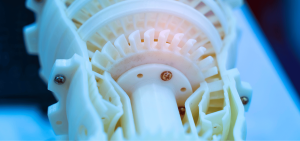
Understanding the Core Difference: Additive vs. Subtractive
3D printing and CNC machining approach part manufacturing in completely different ways. 3D printing builds parts layer by layer, adding material only where needed. This additive process makes it easy to create complex geometries, internal channels, and lightweight structures that would be difficult or impossible to machine. It requires minimal setup, which is why it’s often chosen for rapid prototyping and design iterations.
CNC machining, on the other hand, starts with a solid block of material and removes what’s not needed. This subtractive process delivers high precision, smooth surface finishes, and consistent material properties because parts are cut from solid stock rather than built layer by layer. CNC machining is often preferred for functional prototypes, tight tolerances, and production-grade components, such as steering racks and universal joint CV joints, because strength and precision are critical in these cases.
The choice between additive and subtractive manufacturing often comes down to your priorities: speed and geometric freedom on one side, precision and material performance on the other.
Cost Analysis: When Each Method Makes Financial Sense
Cost is often the first factor teams consider when deciding between 3D printing and CNC machining. The economics of the two methods look very different once you break them down.
Upfront investment is where 3D printing has a clear advantage. Most 3D printing processes require little setup—no custom tooling, minimal programming—which makes it easy to go from a CAD file to a physical part in hours. CNC machining, by contrast, involves CAM programming, toolpath generation, and sometimes custom fixtures, so the first part off the machine typically costs more.
But the picture changes as volumes rise. With 3D printing, the cost per part remains fairly stable no matter how many you produce, because every part is built individually. CNC machining behaves differently: once the setup is done, the per-part cost drops significantly as you produce more pieces. For example, if you only need five prototypes, 3D printing usually wins on price. For 50 parts, the two methods might be comparable. At 500 units, CNC machining often becomes more economical because the upfront cost is spread across a much larger batch.
Another factor is material efficiency. 3D printing generates little waste since it only deposits material where needed, while CNC machining produces chips from subtractive cutting. When materials are expensive—such as titanium or specialty plastics—this difference can shift the cost balance even further in favor of 3D printing for low volumes.
Understanding these dynamics helps you avoid surprises: 3D printing shines for early-stage prototypes or small batches, while CNC machining starts paying off when precision parts are needed at moderate to high volumes.
Precision, Surface Quality, and Material Capabilities
One of the clearest differences between 3D printing and CNC machining lies in dimensional accuracy and surface finish. CNC machining routinely achieves tight tolerances down to ±0.05 mm or even tighter with the right equipment and setup. Parts come off the machine with smooth surfaces, often requiring little to no additional finishing before use. That makes CNC the go-to choice for functional prototypes, end-use parts, and assemblies where every dimension must fit perfectly.
3D printing has improved significantly in recent years, but most additive processes still deliver lower precision and rougher surfaces compared to CNC machining. Technologies like SLA and SLS can produce fine details, but often need post-processing steps—such as sanding, polishing, or coating—if appearance or dimensional accuracy is critical.
Material choice is another deciding factor. CNC machining works with a wide range of plastics and metals—from aluminum, steel, and titanium to engineering plastics like PEEK and ABS. Because the material properties remain identical to the raw stock, you get predictable mechanical strength, thermal stability, and chemical resistance.
3D printing offers growing material options as well, especially for polymers and some metals through processes like DMLS. It also enables lightweight lattice structures, internal channels, and custom geometries that machining simply can’t produce. Still, printed parts often have anisotropic properties—they’re weaker along the layer lines—and may not match the structural performance of machined components unless carefully designed and post-processed.
For projects where tight tolerances and production-grade materials are mandatory, CNC machining remains the safer bet. When geometric freedom and rapid iterations matter more, 3D printing can save time and open up design possibilities CNC can’t match.
Lead Times and Design Iterations
When development speed is critical, 3D printing has a clear edge. The process requires minimal setup—no custom tooling, little to no programming—and can deliver parts within hours or days. This speed makes it ideal for concept models, early prototypes, and design iterations where requirements might change frequently, and getting quick feedback is more valuable than achieving perfect surface finish or dimensional accuracy.
CNC machining, by contrast, usually involves CAM programming, fixture setup, and more rigorous quality checks before the first part is produced. While this means the initial lead time can be longer, the payoff comes when you need functional prototypes or low-volume production runs with consistent accuracy. Once the setup is complete, CNC machining can produce parts quickly and repeatably, especially when designs have stabilized.
In practice, many companies combine the two methods: 3D printing for early iterations, where speed matters most, and CNC machining for later-stage prototypes or pilot production, where part performance and reliability become the priority.
Geometry and Complexity Considerations
Part geometry often decides whether 3D printing or CNC machining makes more sense. 3D printing excels when designs include internal channels, lattice structures, or organic shapes that would be impossible or prohibitively expensive to machine. Since the process builds parts layer by layer, it doesn’t require cutting tools to physically reach every surface, allowing for lightweight designs, complex internal cavities, and consolidated assemblies that reduce the need for multiple components.
CNC machining, on the other hand, has inherent limitations based on tool access and part orientation. Every surface must be reachable by a cutting tool, so features like deep internal channels or enclosed cavities require creative workarounds—or simply aren’t feasible at all. Thin walls and fine details can also be challenging because machining forces can cause deflection, vibration, or surface chatter if not carefully managed.
However, CNC machining produces stronger, more isotropic parts because they’re cut from solid stock, with no layer adhesion issues. This makes it better suited for structural components or parts under load, even if the design must be simplified compared to a 3D printed equivalent.
In practice, designers often modify parts to fit the chosen process: adding generous radii, avoiding enclosed voids, or adjusting wall thicknesses for CNC, or optimizing support structures and layer orientation for 3D printing. Choosing the right method early in the design stage can save both time and cost later in production.
When to Use Which: Practical Decision Guide
The choice between 3D printing and CNC machining often depends on where you are in the product development cycle.
- Concept and early prototypes: At this stage, speed and flexibility matter most. Designs change frequently, and the goal is to validate form, fit, or basic function. 3D printing works well here because it allows you to iterate quickly without investing in complex tooling or setups.
- Functional testing and pilot production: As the design stabilizes, parts need to withstand real-world conditions. CNC machining becomes more attractive because it offers production-grade materials, tighter tolerances, and consistent mechanical properties.
- Small-batch production: If you need dozens of units for early customer trials or internal testing, CNC machining typically provides the right balance of cost and quality. For highly complex parts, 3D printing might still be used, but secondary finishing or hybrid approaches are common.
- Full-scale manufacturing: Neither 3D printing nor CNC machining is always the final step when you reach high production volumes. At this point, injection molding, die casting, or other mass production methods often become more economical.
Industry examples make this clearer:
- Automotive suppliers often 3D print prototype housings for rapid design reviews, then machine metal brackets or functional components for road testing.
- Medical device companies use 3D printing for anatomical models but rely on CNC machining for surgical instrument prototypes where precision and biocompatibility are essential.
- Consumer electronics firms frequently combine the two methods: printing early prototypes for ergonomics and CNC machining the final prototypes for durability and pilot runs.
The most cost-effective approach is often hybrid: print fast to validate, then machine for performance before moving to full production.
Emerging Trends in Hybrid and AI-Driven Manufacturing
Manufacturing technologies are moving toward greater integration and intelligence. One clear trend is the rise of hybrid manufacturing systems, where additive and subtractive processes run on the same machine. These systems allow manufacturers to 3D print complex geometries and then CNC machine critical surfaces or tight-tolerance features without moving the part to another workstation. It reduces setup time, improves accuracy, and opens up design possibilities that neither process could achieve alone.
AI-driven optimization is also transforming how parts are designed and produced. Modern CAD/CAM software can now suggest lightweight structures for 3D printing, generate toolpaths for CNC machining automatically, and even simulate part performance before production begins. By analyzing geometry, material properties, and cost constraints together, AI helps engineers find the best balance between manufacturing speed, material efficiency, and final part quality.
Finally, distributed manufacturing networks are shortening lead times and cutting logistics costs. Instead of shipping prototypes or small-batch parts across continents, companies can produce them closer to the point of use by tapping into local 3D printing and CNC suppliers connected through digital platforms. This approach speeds up delivery and provides more flexibility when production needs shift rapidly.
Together, these innovations are making manufacturing faster, more adaptive, and more collaborative, giving engineers more freedom to choose the right combination of processes for each stage of product development.
Conclusion: Making the Right Choice for Your Project
Choosing between 3D printing and CNC machining comes down to balancing cost, precision, lead time, and part complexity. 3D printing gives you speed and design freedom, making it ideal for early prototypes and parts with complex geometries. CNC machining delivers higher accuracy, stronger materials, and better consistency, especially for functional testing and small-batch production.
The smartest approach is often a combination of both: print early iterations to validate designs quickly, then move to CNC machining for final prototypes or pilot runs before scaling to mass production methods.
Before starting your next project, consider getting a detailed cost analysis and design-for-manufacturing review from your suppliers. Their expertise can help you identify the most efficient path from concept to production without sacrificing quality or budget.
FAQs
How do materials differ between 3D printing and CNC machining?
CNC machining works with a wide range of industrial-grade materials because it starts with solid blocks of metals or plastics. You can machine aluminum, steel, titanium, and engineering plastics like PEEK or ABS with properties identical to those used in final production. This makes CNC parts suitable for functional prototypes, tight-tolerance components, and end-use applications where strength, heat resistance, or chemical durability matter.
3D printing offers growing material options but with some limitations. Polymers like ABS, nylon, and resin-based materials dominate the space, and metal additive manufacturing is expanding through processes like DMLS. However, 3D-printed parts can have anisotropic properties, meaning they may be weaker along layer lines, and often require post-processing to achieve the same mechanical performance or surface finish as machined parts.
In short, if you need maximum strength and consistency, CNC machining provides more proven material choices. For lightweight structures, rapid iterations, or complex geometries, 3D printing materials often give you the flexibility you need.
Which process is better for functional prototypes?
For most functional prototypes, CNC machining is the better choice. Because it starts with solid blocks of metals or engineering plastics, CNC machining delivers parts with production-grade materials, tight tolerances, and high structural integrity. These qualities are essential for functional testing, assembly verification, and real-world performance evaluations where strength, accuracy, and durability matter.
That said, 3D printing can still play an important role in early design stages. It offers fast turnaround and lower upfront costs, making it ideal for quickly validating form, fit, and ergonomics before investing in CNC-machined prototypes. In some cases, certain additive technologies like SLS or metal 3D printing can produce functional parts, but they often require post-processing or design optimization to match the reliability of machined components.
Many companies use a hybrid approach: start with 3D printing for initial iterations, then transition to CNC machining when prototypes need to perform like final production parts.
How fast can I get parts with 3D printing vs CNC machining?
3D printing typically offers shorter lead times because it requires minimal setup. Once you have a digital model, parts can often be produced within hours or a few days, making it ideal for early prototypes or rapid design iterations.
CNC machining generally takes longer for the first part because it involves CAM programming, tooling setup, and quality checks before production begins. However, once the setup is complete, CNC machines can produce multiple identical parts quickly and consistently, especially for small-batch production or pilot runs.
In practice, many teams use 3D printing to validate designs quickly, then move to CNC machining when they need functional prototypes or low-volume production with tighter tolerances and stronger materials.
When should I switch from 3D printing to CNC machining?
You should consider moving from 3D printing to CNC machining once your design stabilizes and you need parts that meet functional, dimensional, or production-grade requirements.
3D printing is ideal for early-stage prototypes where speed and flexibility matter most. It lets you quickly test form, fit, and basic function without investing in complex setups. However, as you move into functional testing, pilot production, or low-volume manufacturing, CNC machining becomes the better choice. It provides tighter tolerances, stronger materials, and repeatable quality, which are essential when prototypes need to perform like final parts.
Many companies use 3D printing for initial iterations and switch to CNC machining when they need higher accuracy, better surface finishes, or more robust material properties before scaling to mass production methods like injection molding.


